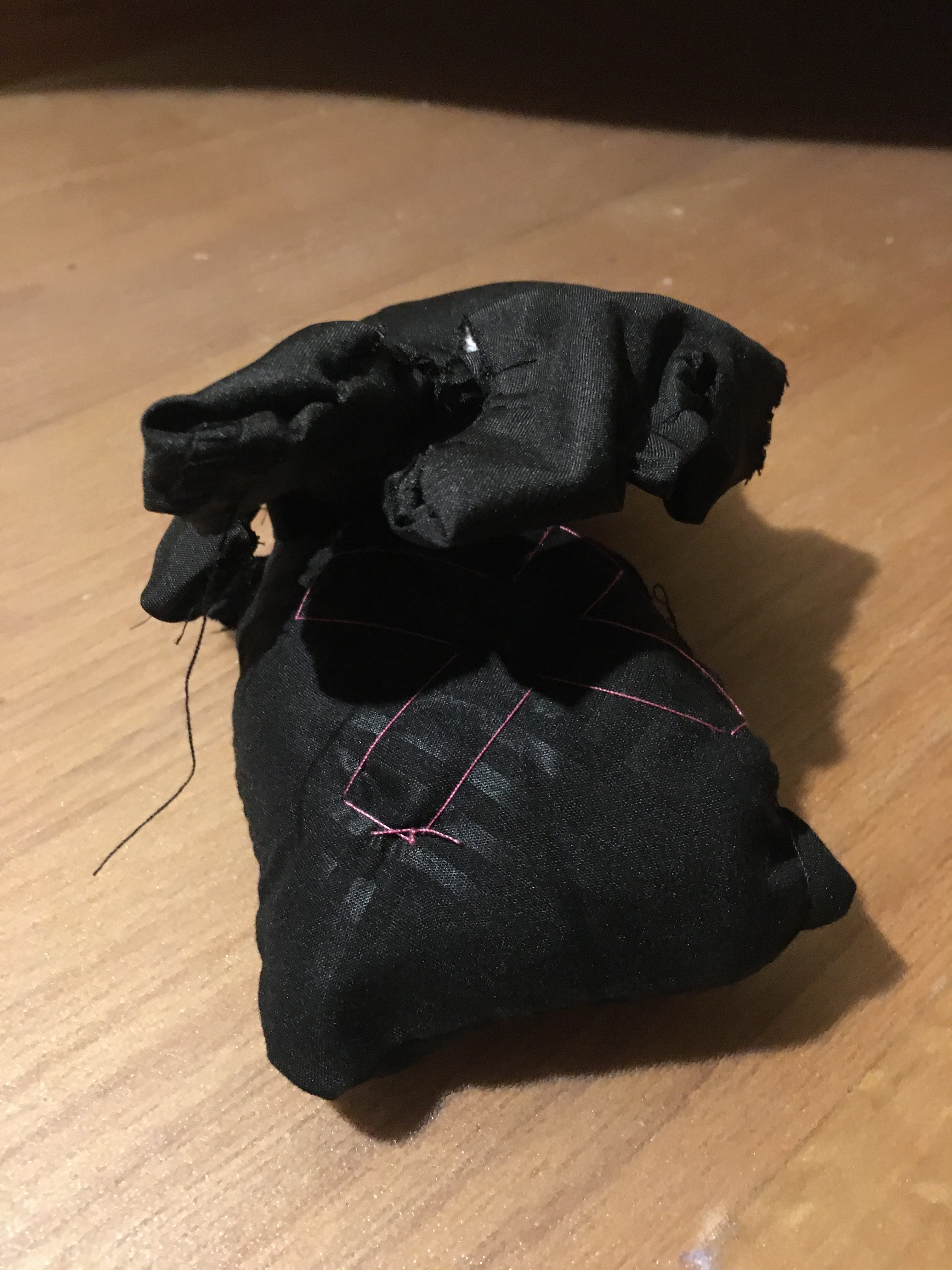
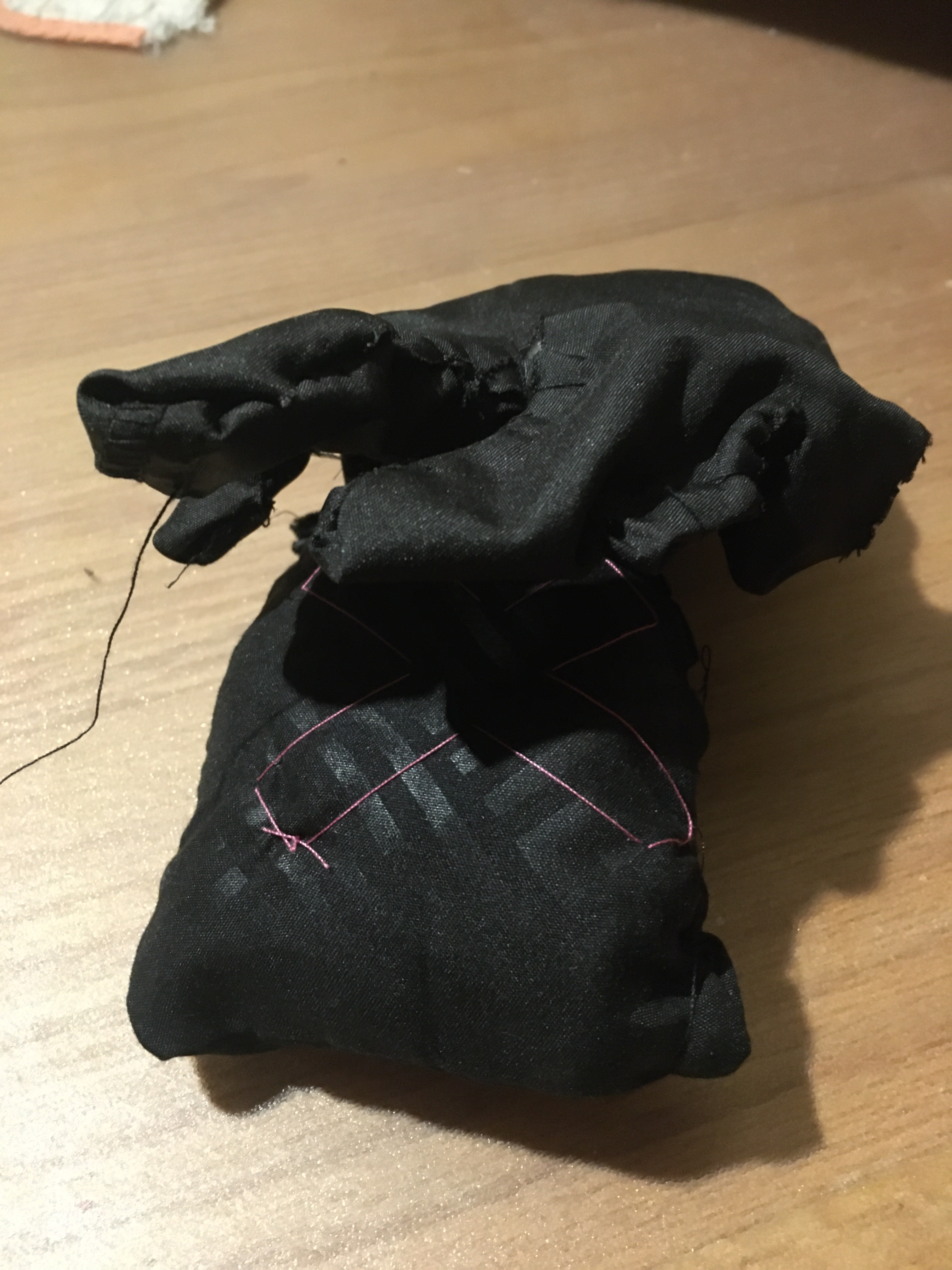
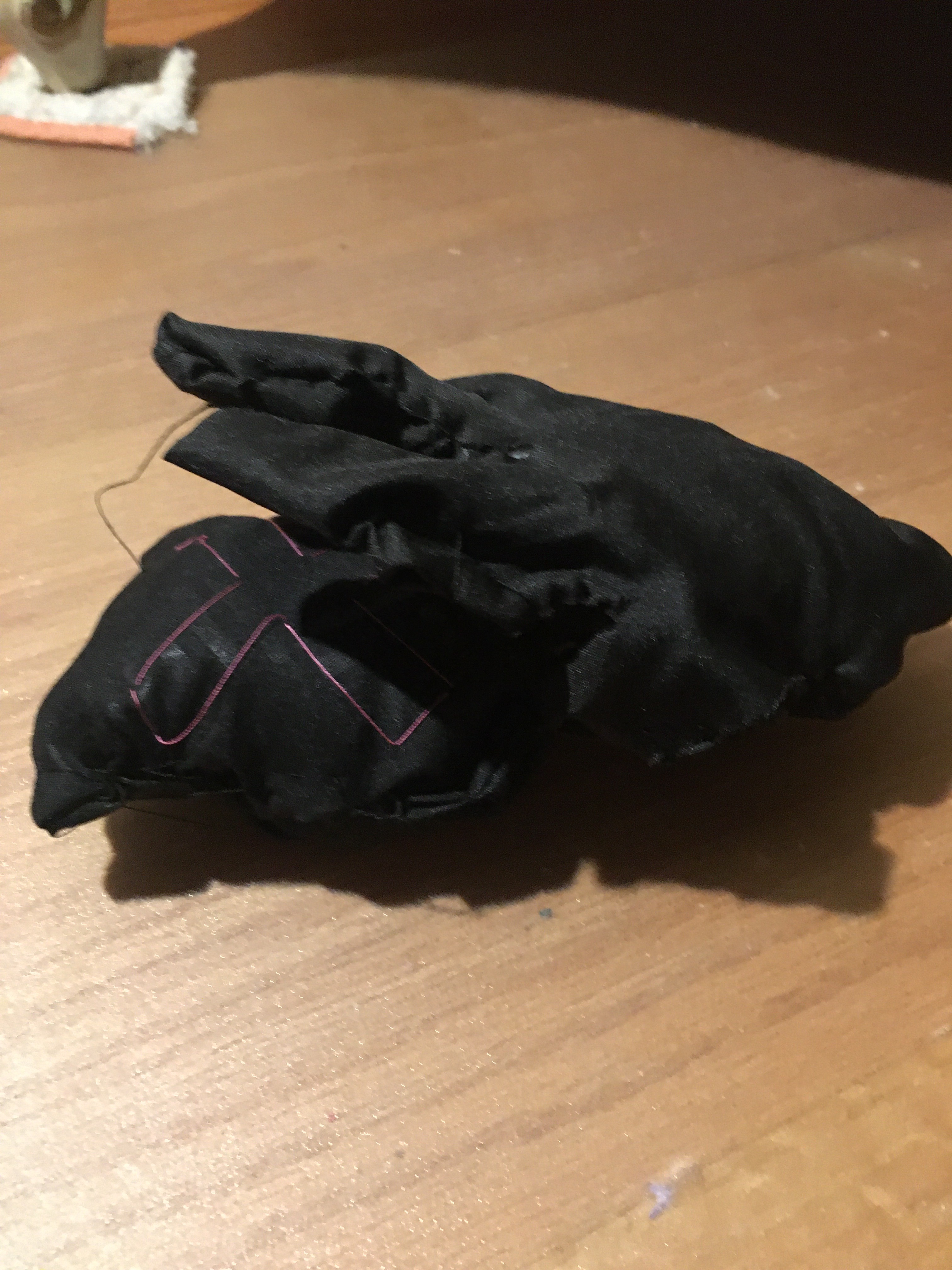
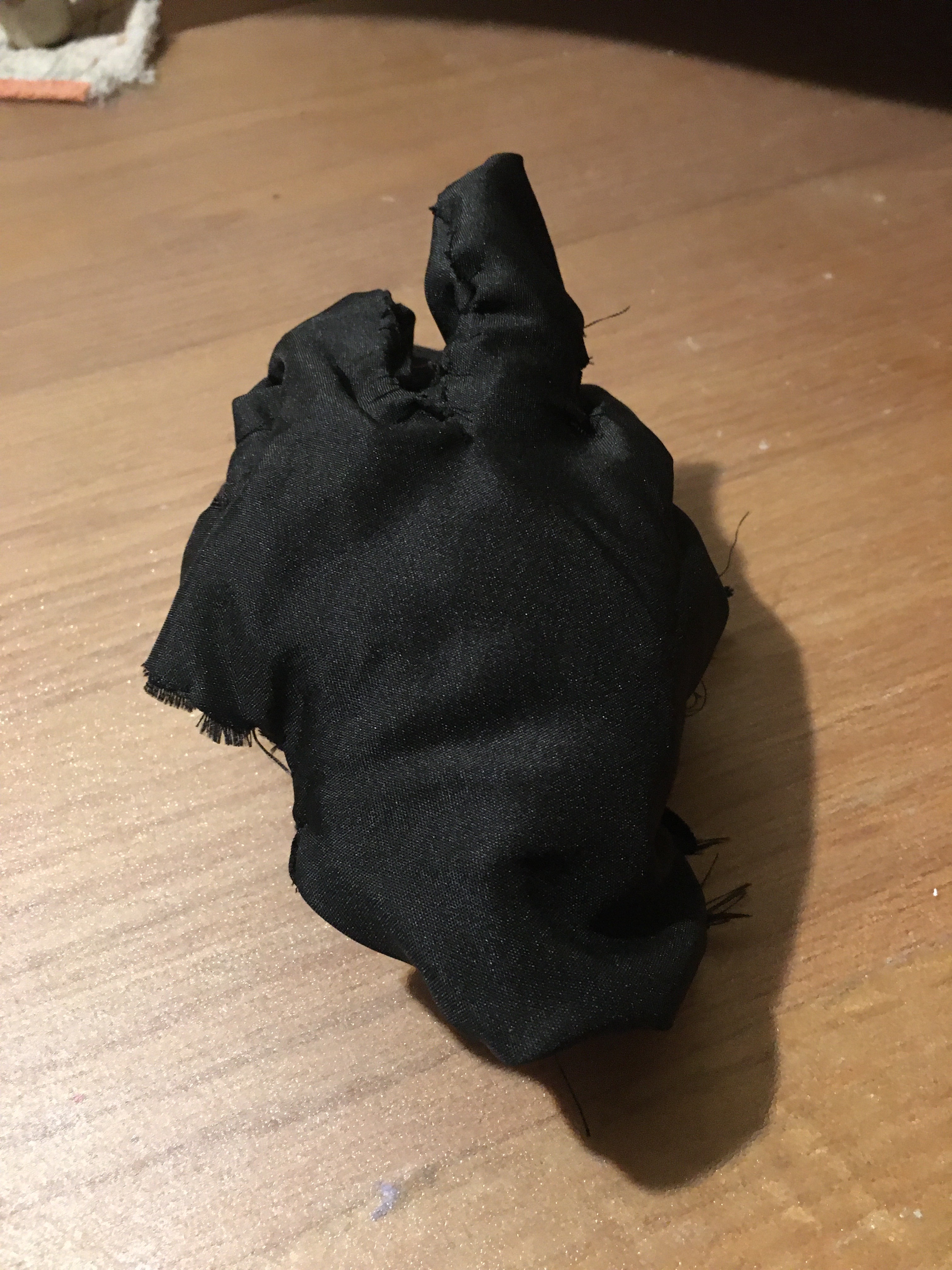
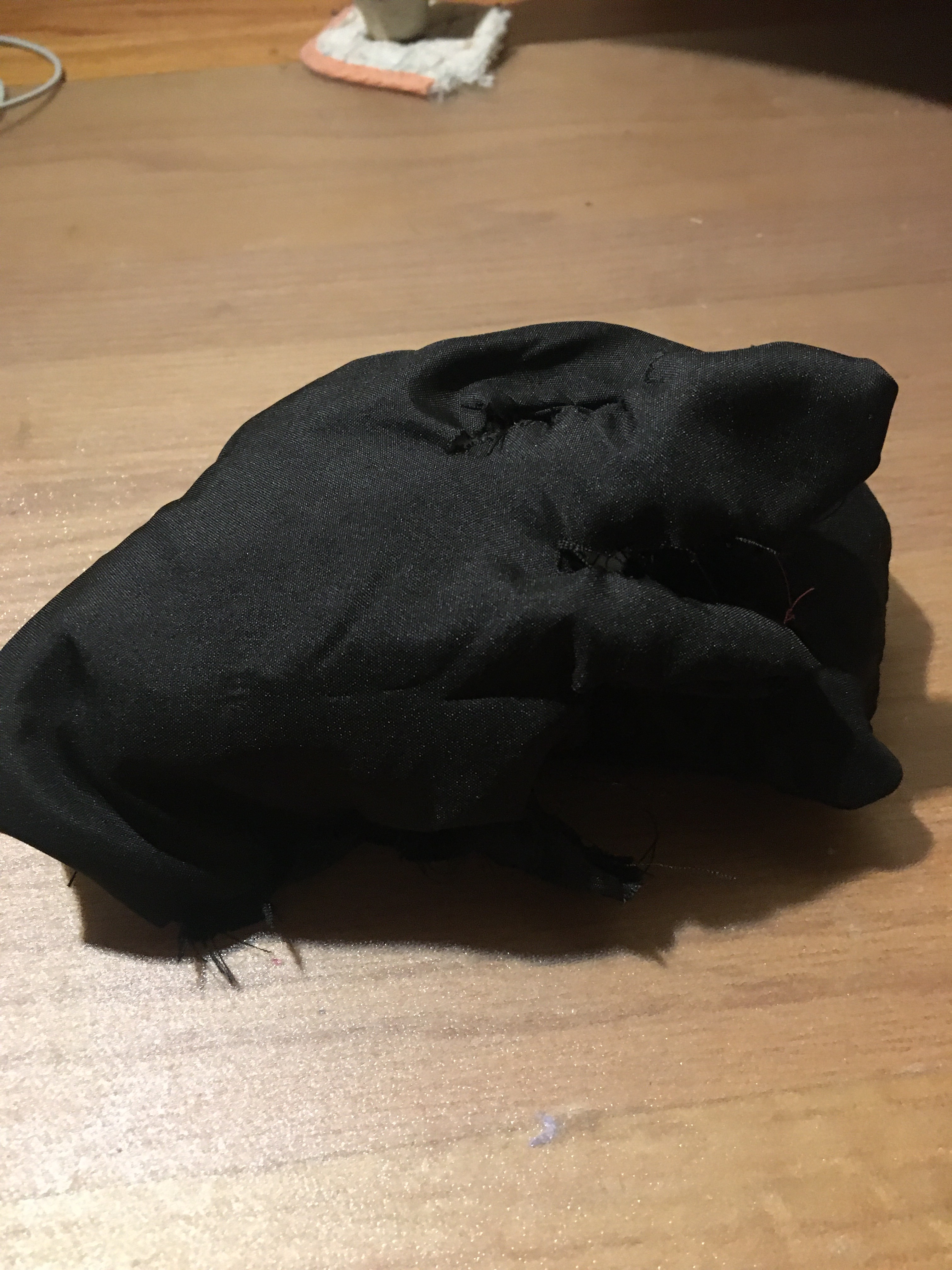
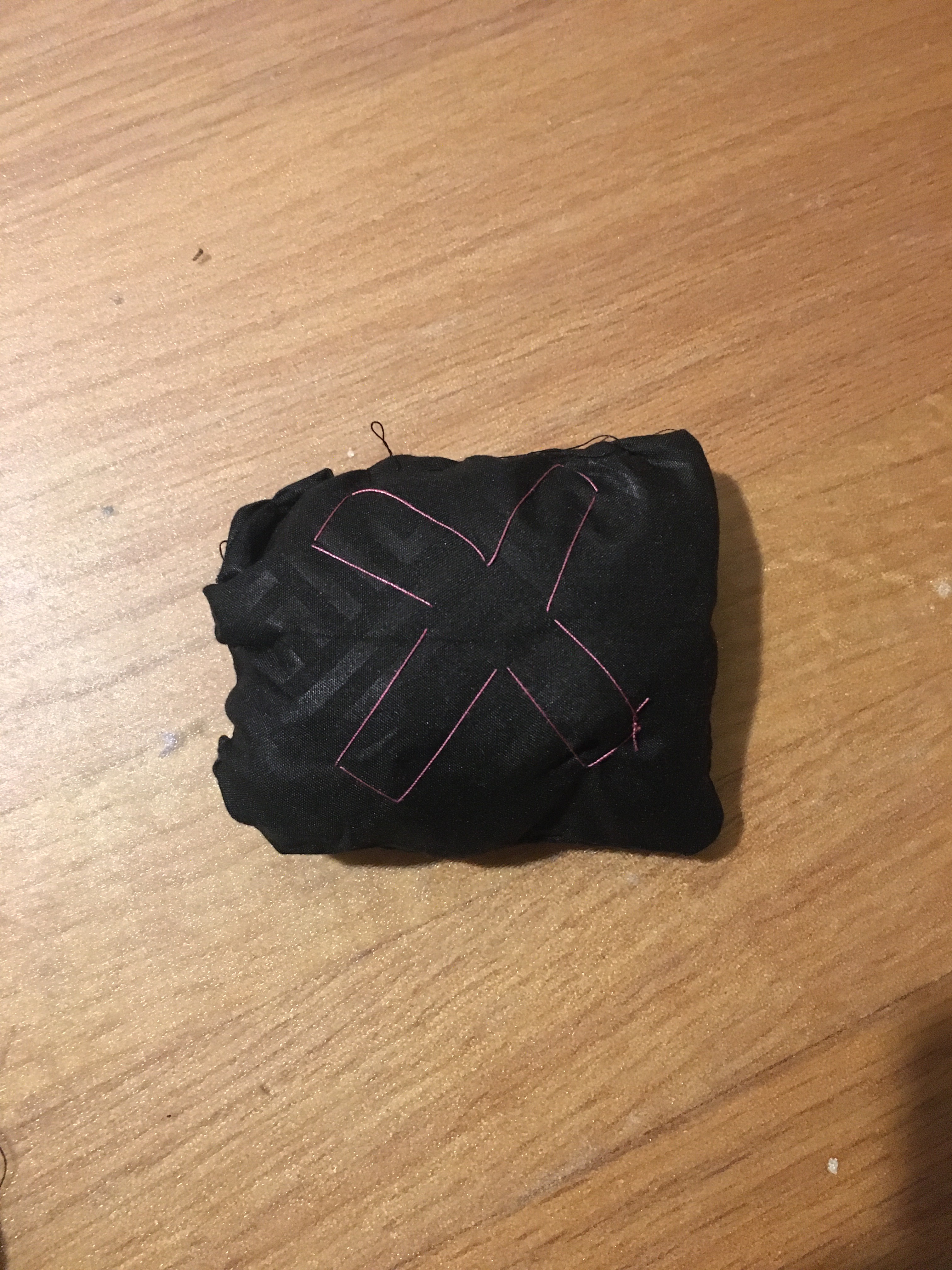
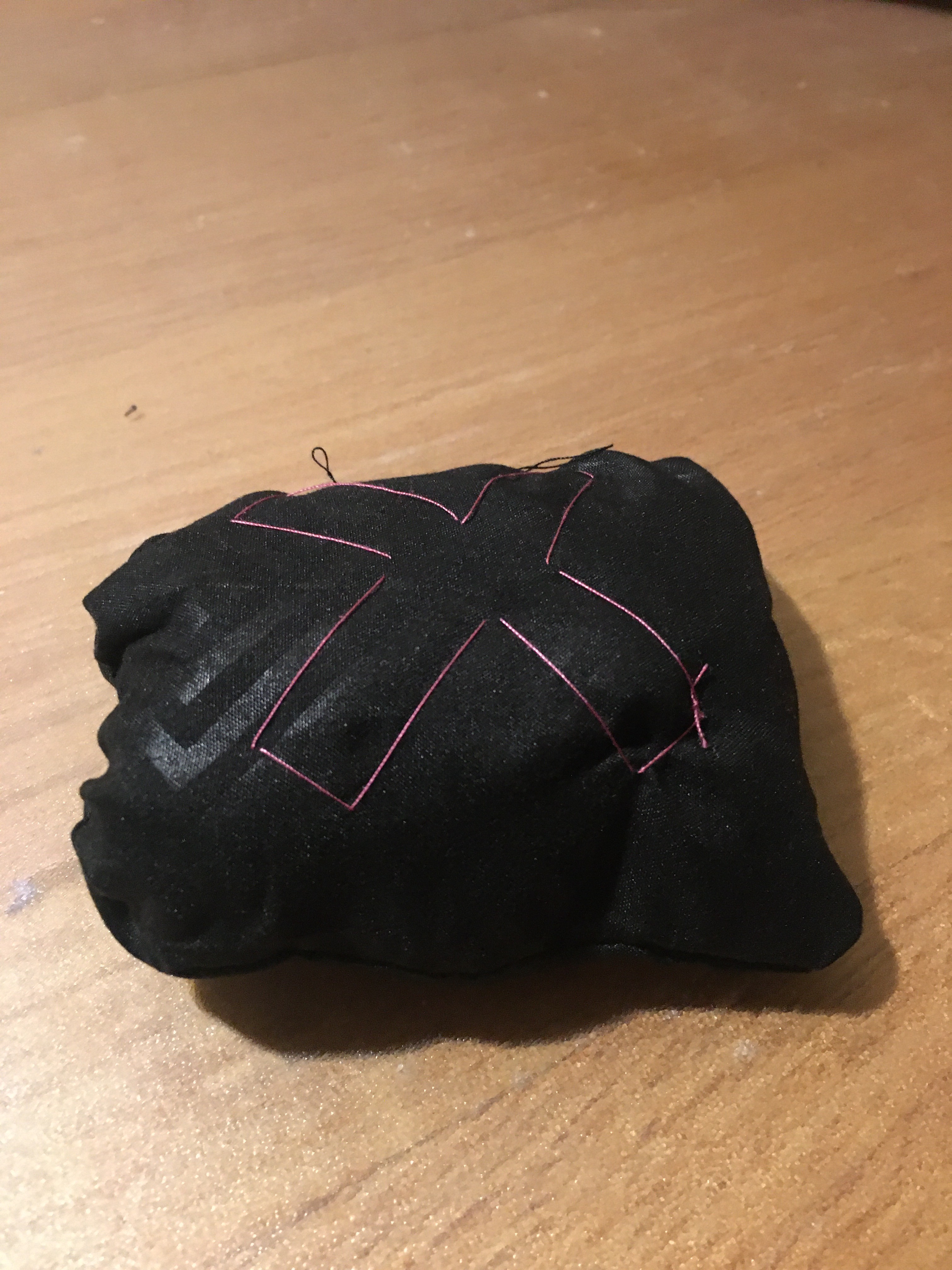
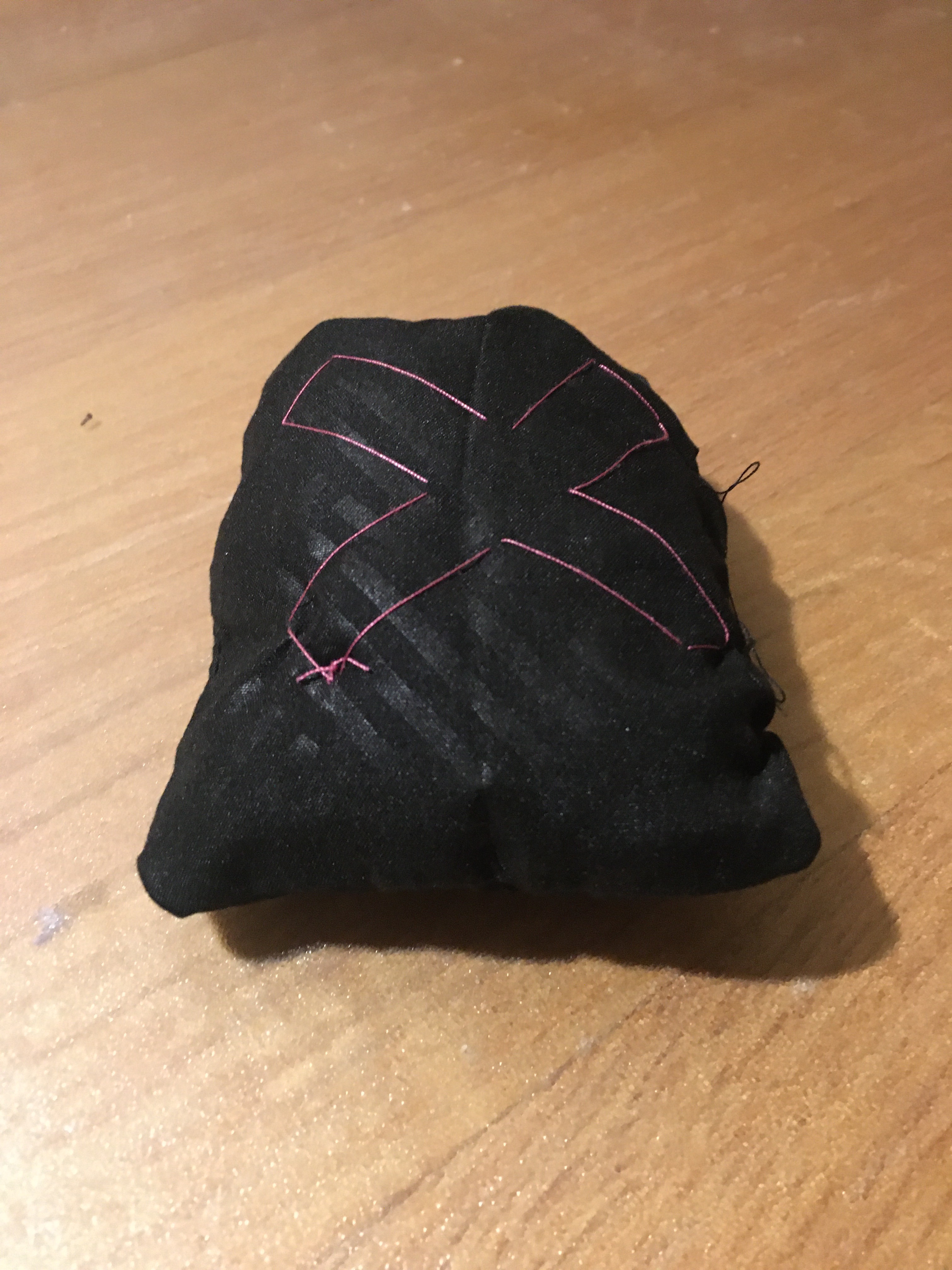
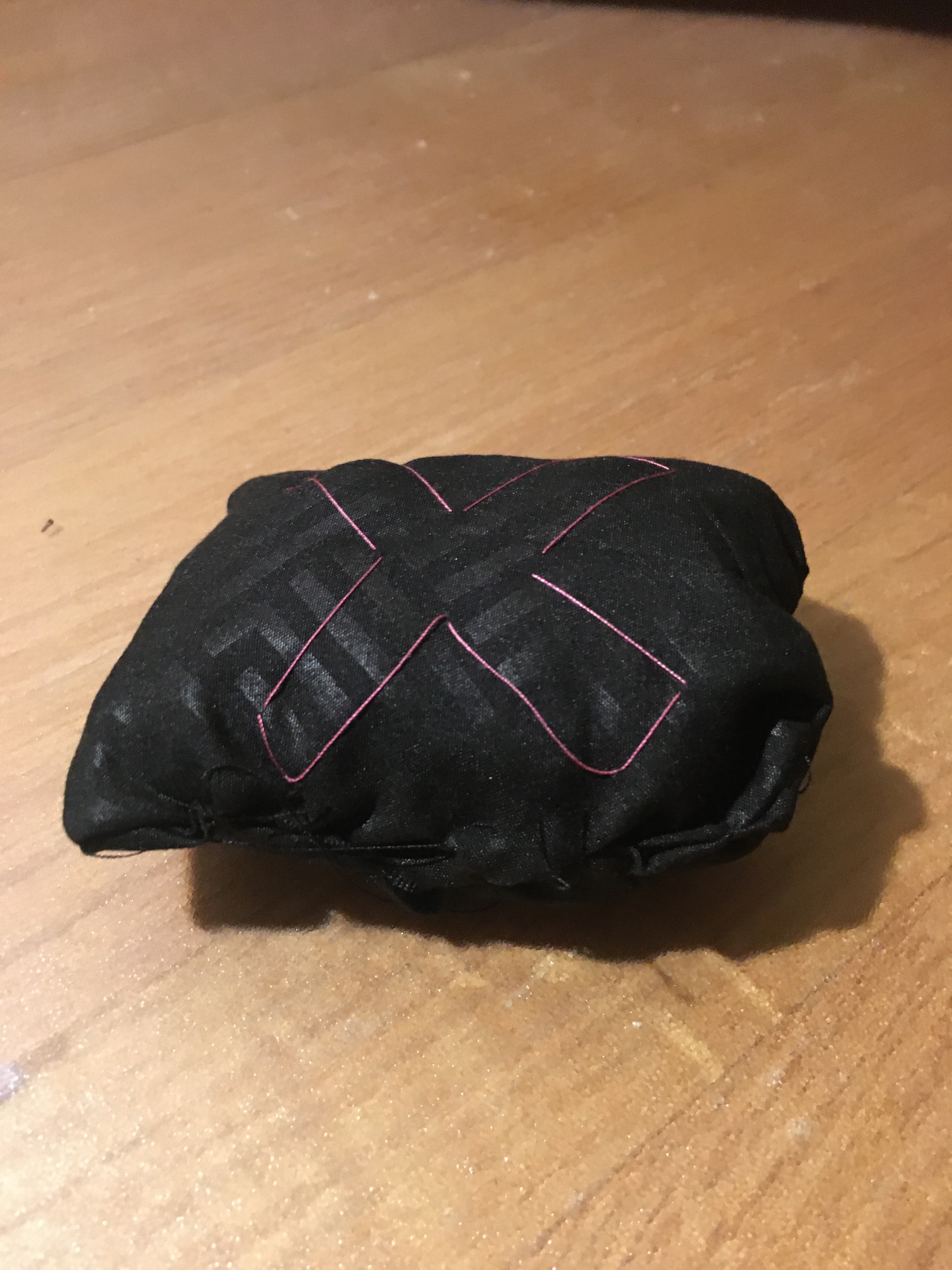
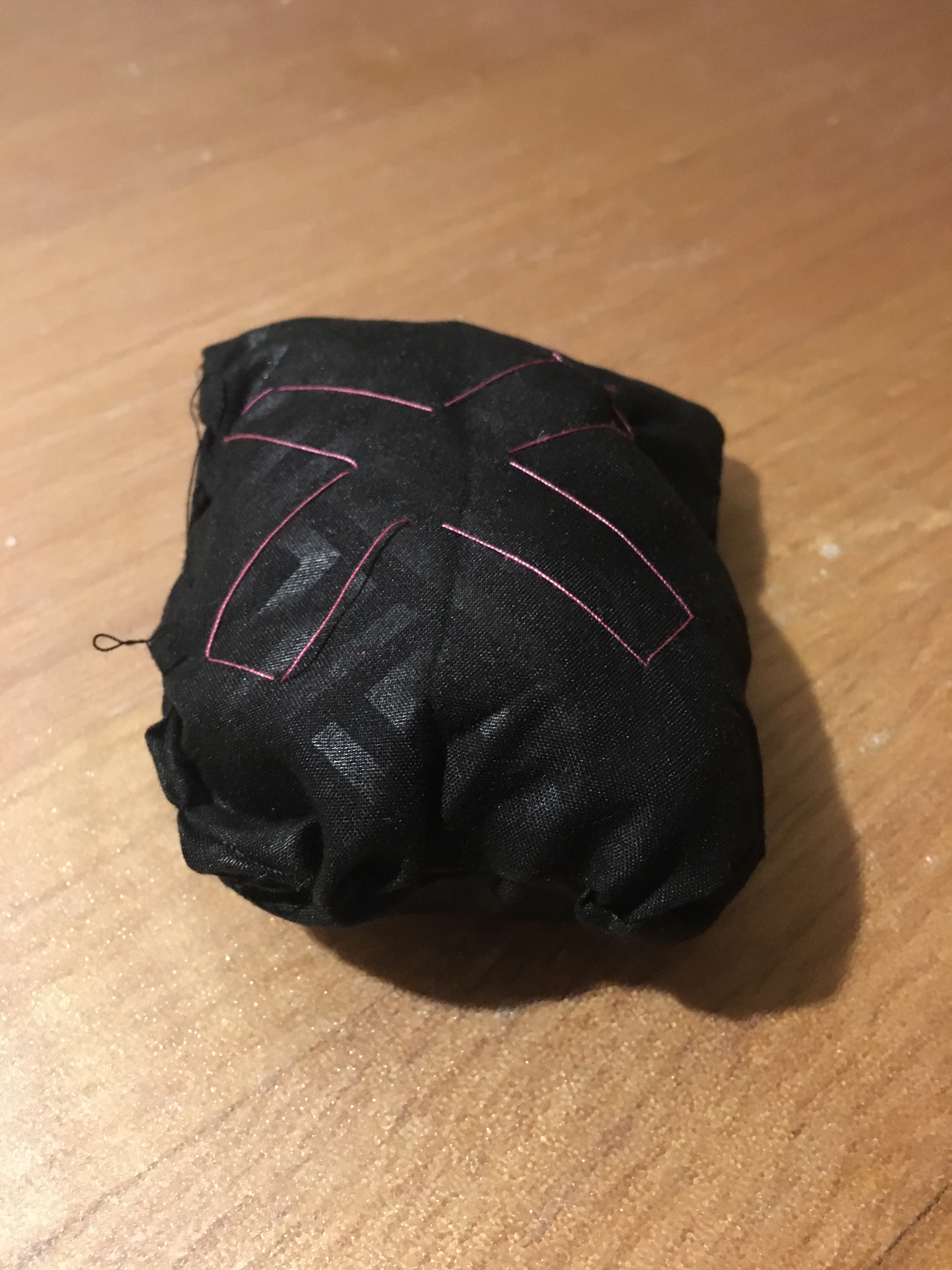
My initial goal was to sew two fully black gloves and intertwine them with a pillow in grasp. This was to mimic hardships of the very pandemic that restricted this progress. COVID-19 has been nothing short of harrowing for myself, my peers, family who if not worried are very much drained from our current daily lives. My skills are not quite eloquent, which made the glove’s process a lot more difficult to handle as I ran into several questions turned roadblocks. How would I measure the glove and fabric needed? Do I sew starting from the base or its fingers? How much yarn is needed and how can I make my strands even slightly neater than last time I tried sewing? The gloves blocky, undone texture is resonating, however, as it does very much sew my hardships, fears, and incomplete feelings of COVID-19 and how it’s affected me in one tiny little pillow and glove. I hope this messy, messy process gives the same effect.
11/9 Worn Object Concept Sketches
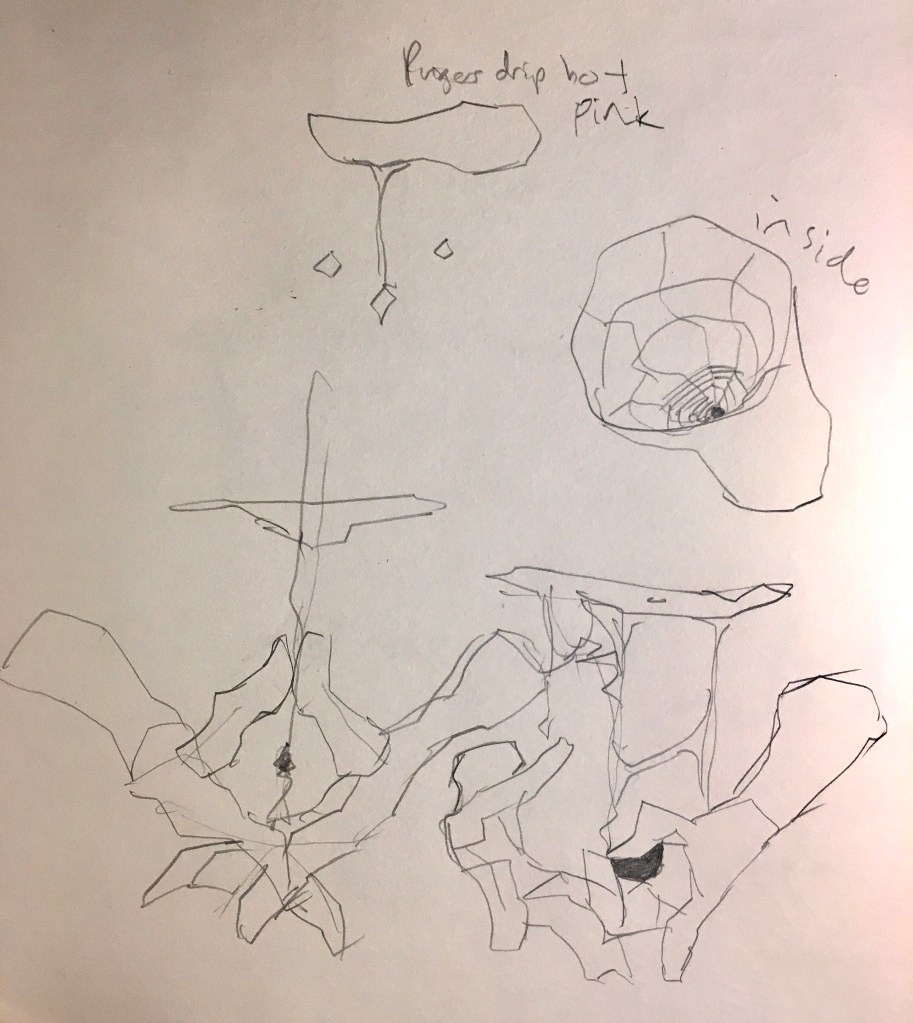
My driving concept bleeds of hot pink blood and black hand figures worn as gloves. I’d like for the gloves to pose similarly to a cusp grasp, the pink blood piling onto palms, spilling to the floor and mirroring the overflowing and overwhelming affects I’ve had since quarantining and experiencing a pandemic on campus. I’ll search for black, preferably thin and breathable fabric such that my hands feel just how tangibly open and vulnerable this whole experience was. I will also search for hot pink thread. (cotton muslin and universal pink thread)
One thing I quickly realized immediately in sewing my test material (a finger glove) is making sure enough fabric wraps around my entire finger. I also may want to consider One Size Fits all options if I want my finished wearable gloves to fit anyone. Another note was deciding what pattern / method I should sow my finger in place as to make my thread invisible as possible. I decided to sew in a back in forth motion compared to circle like, and then turn the cloth inside out to hide any messy seams to the best of my ability.
11/2 – Artist Research: Lucy McRae

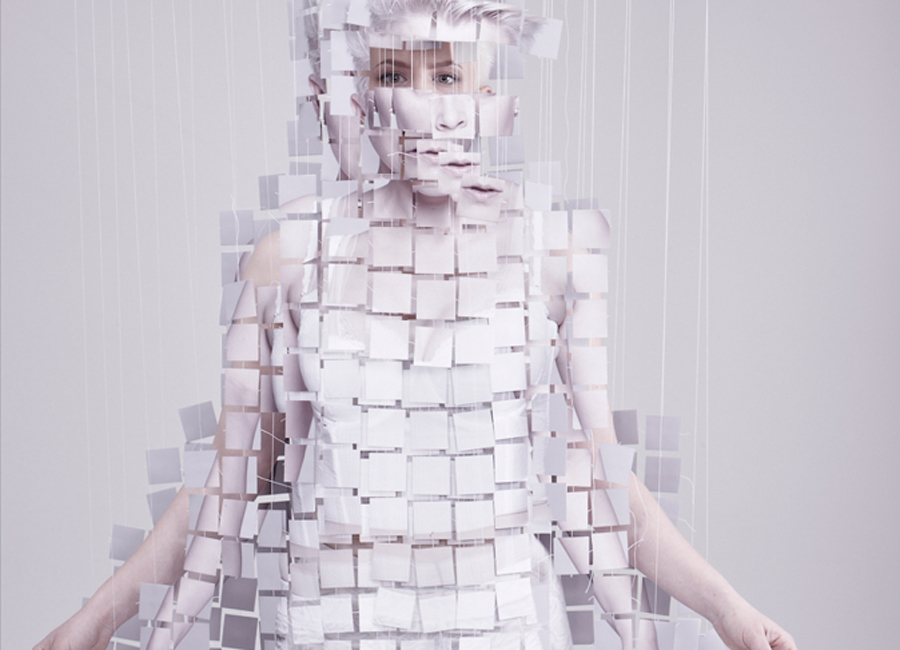
- What is the purpose or function of the object they’ve made?
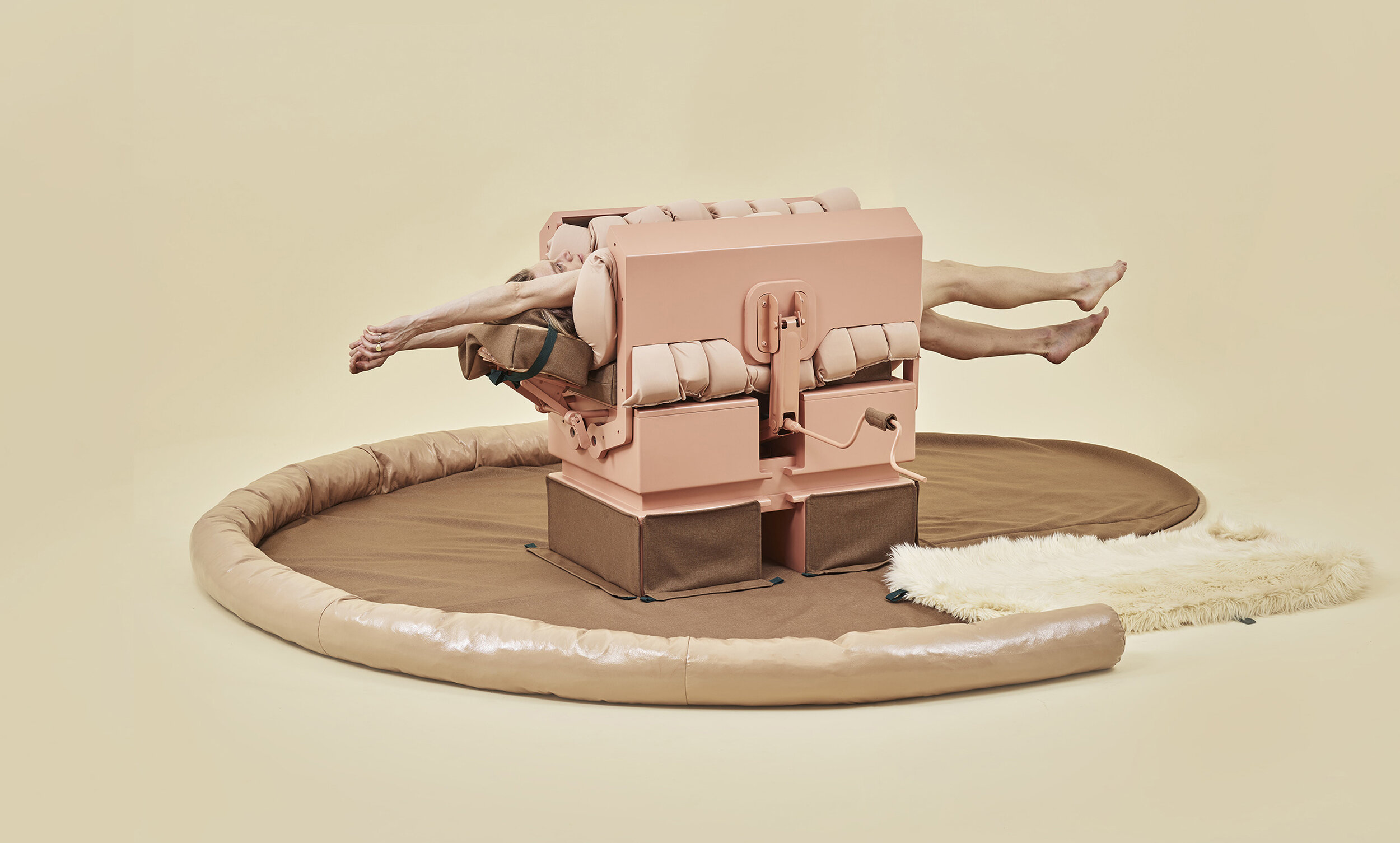
- Lucy McRae specializes in depicting morphed forms of the self to functional systems already in place in the world,. The first and second image store human bodies in churn-like pillowy machines to mimic “our submissive nature towards technology” as an example. I do enjoy how heavily our dependence on technology is squished onto the person, thus painted here.
- Pick three pieces, post photos of them with citation information.
- “Future Survival Kit,” “Robyn Music Video,” Lucy McRae.
- For each object, describe how it manipulates the body?
- First image includes heavy plush (?) layers on a fallen body to depict overwhelming-ness / suffocation / the pressure of survival. Second image furthers this suffocation by directly squeezing a stressed body likely to paint as “preservation” for survival. Third image sheds several tinier human body photographs that dangle a real human body, creating an almost glitchy, futuristic and illusory human body.
- What materials have been used in each work?
- At least fur, plastic, rubber, and photographic material were presumably used within all three images.
- What do you think is possible through this way of making? How can you imagine transforming the body?
- A valid criticism on world disparity, over consumerism, captialism, and overdependency on engineered products can spring in myriads from McRae’s work. McRae could solidly criticize the consequences of overconsumption of our current technical products (gas, pollution, capitalism, poverty) geared towards our means for survival.
Object of Affection: Project Recap
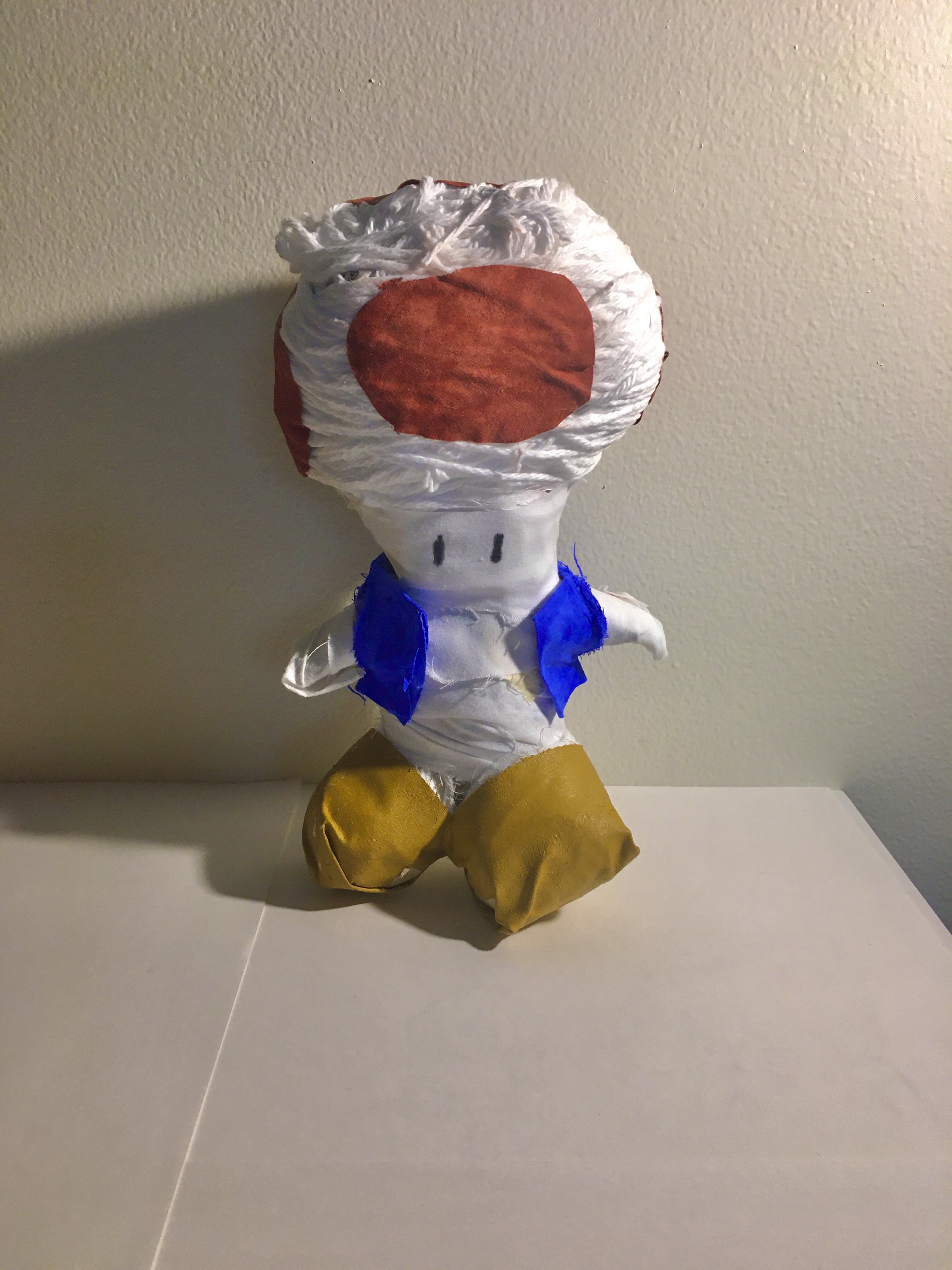
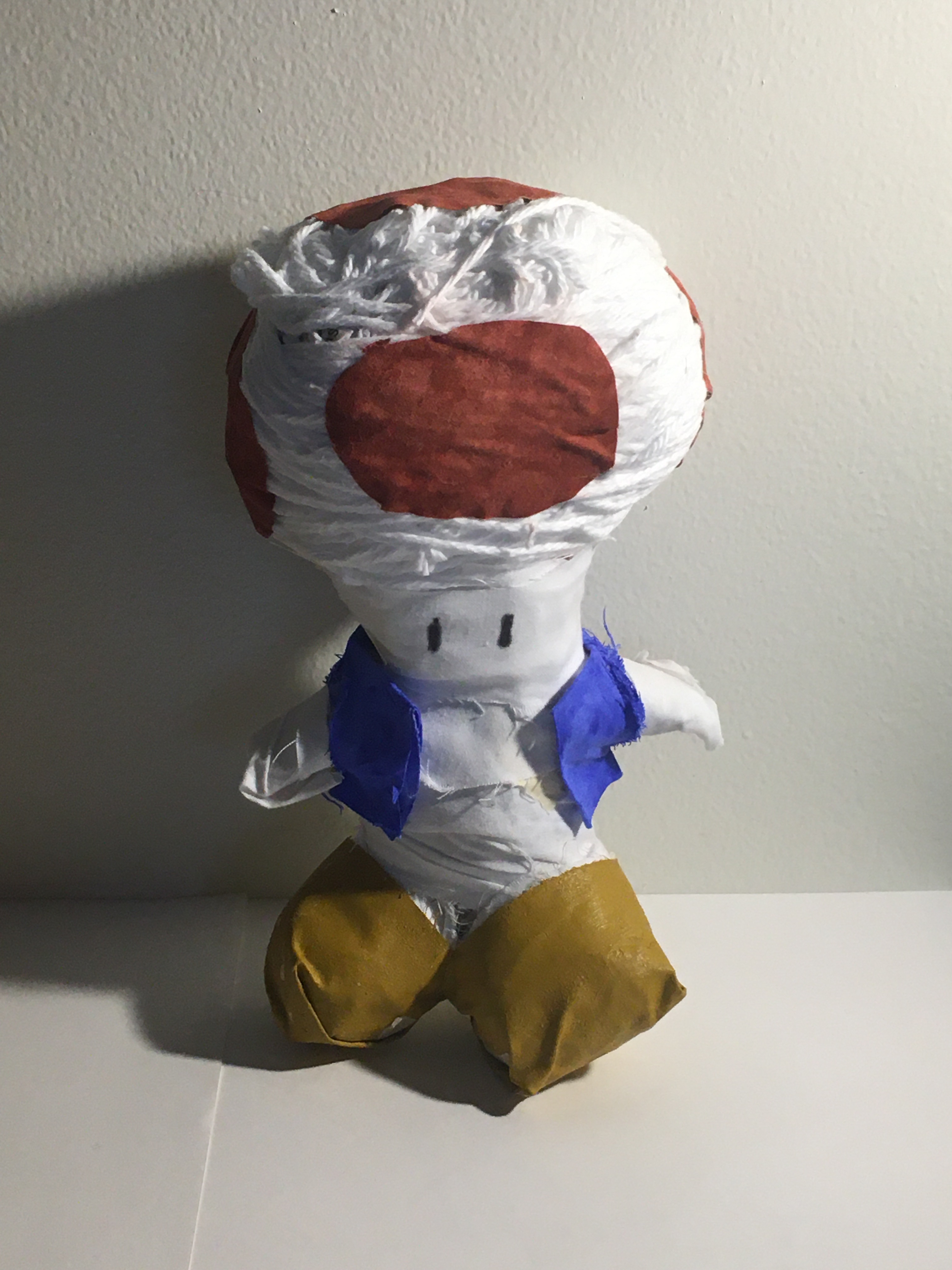
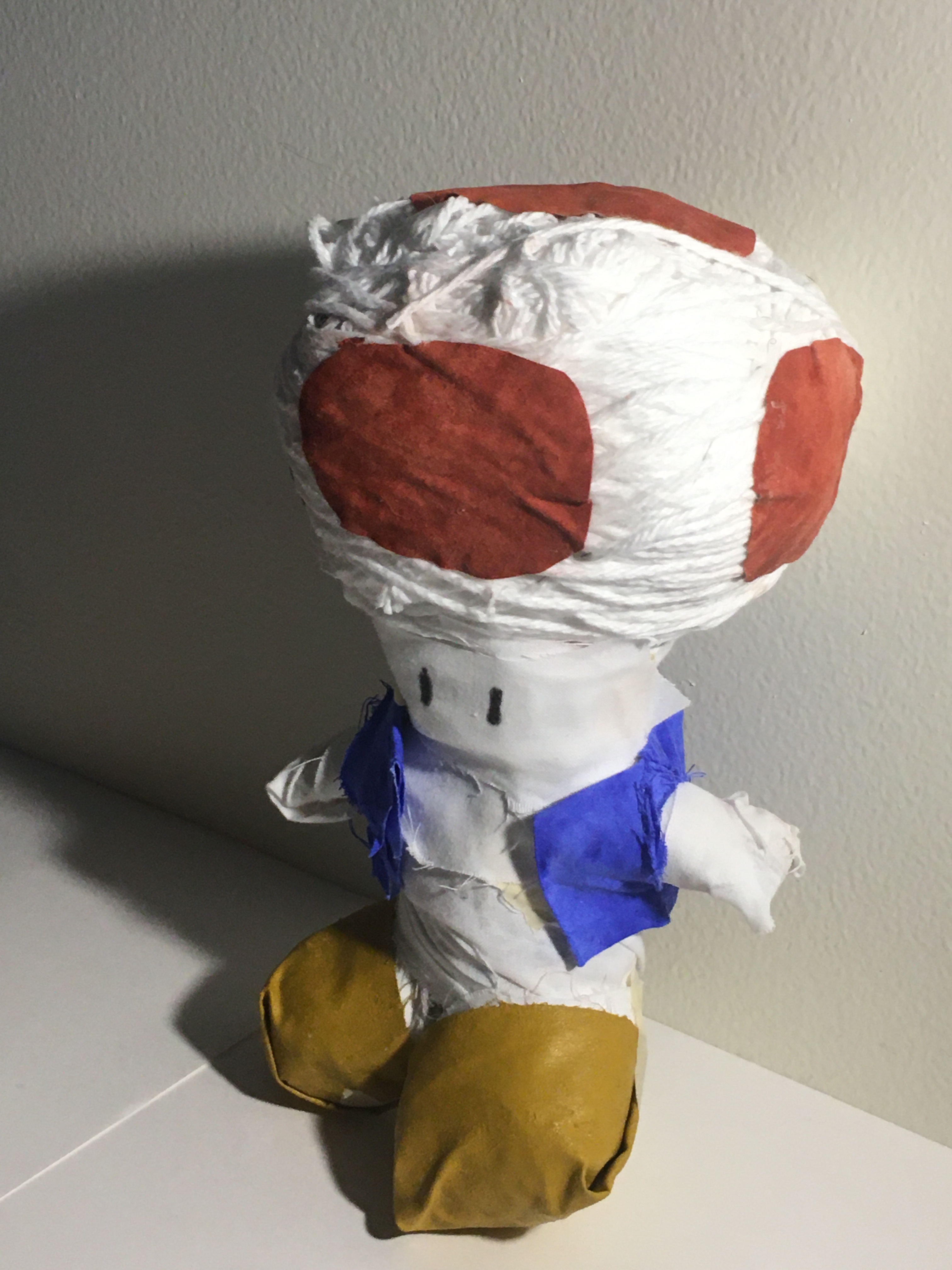
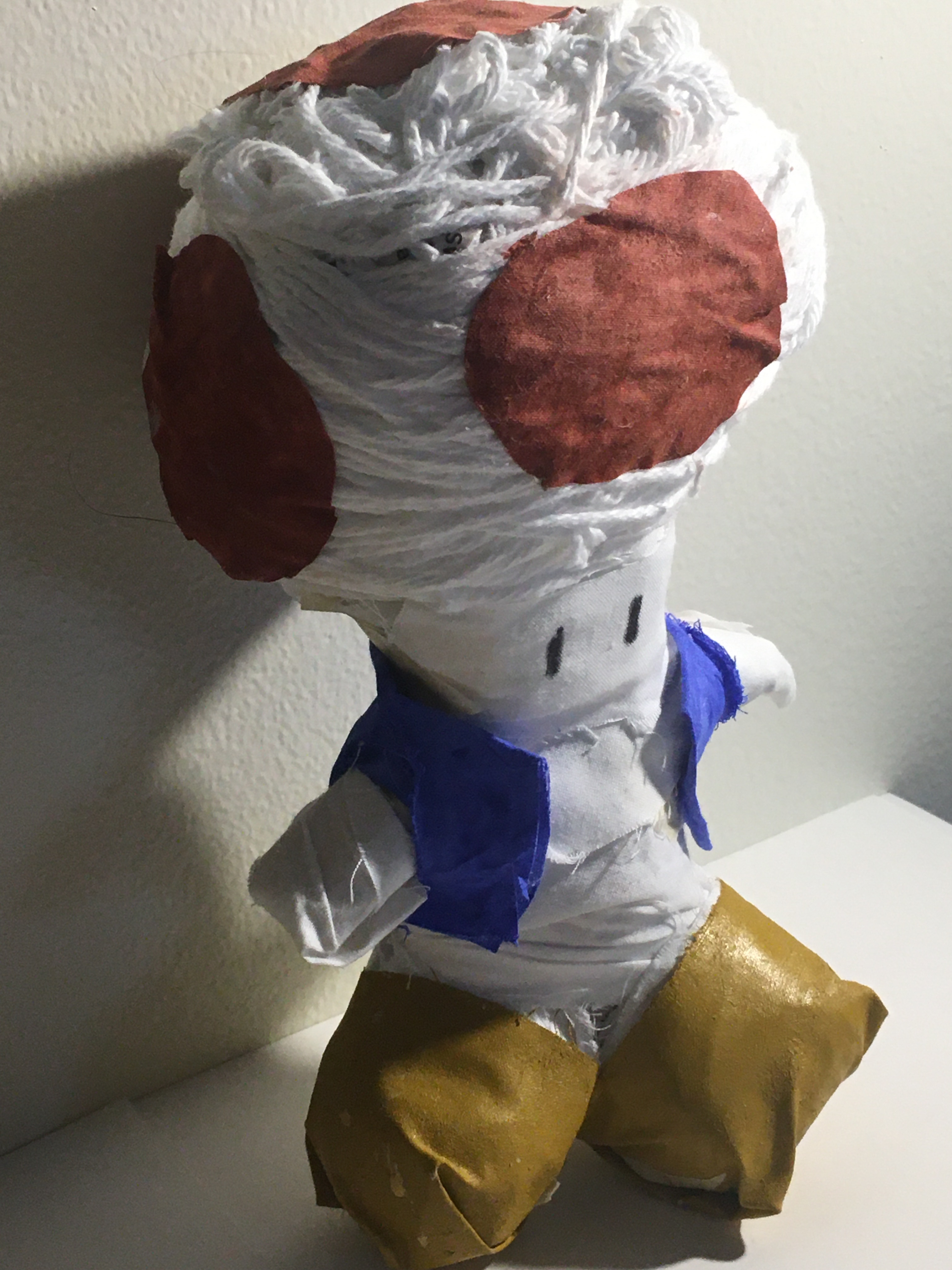
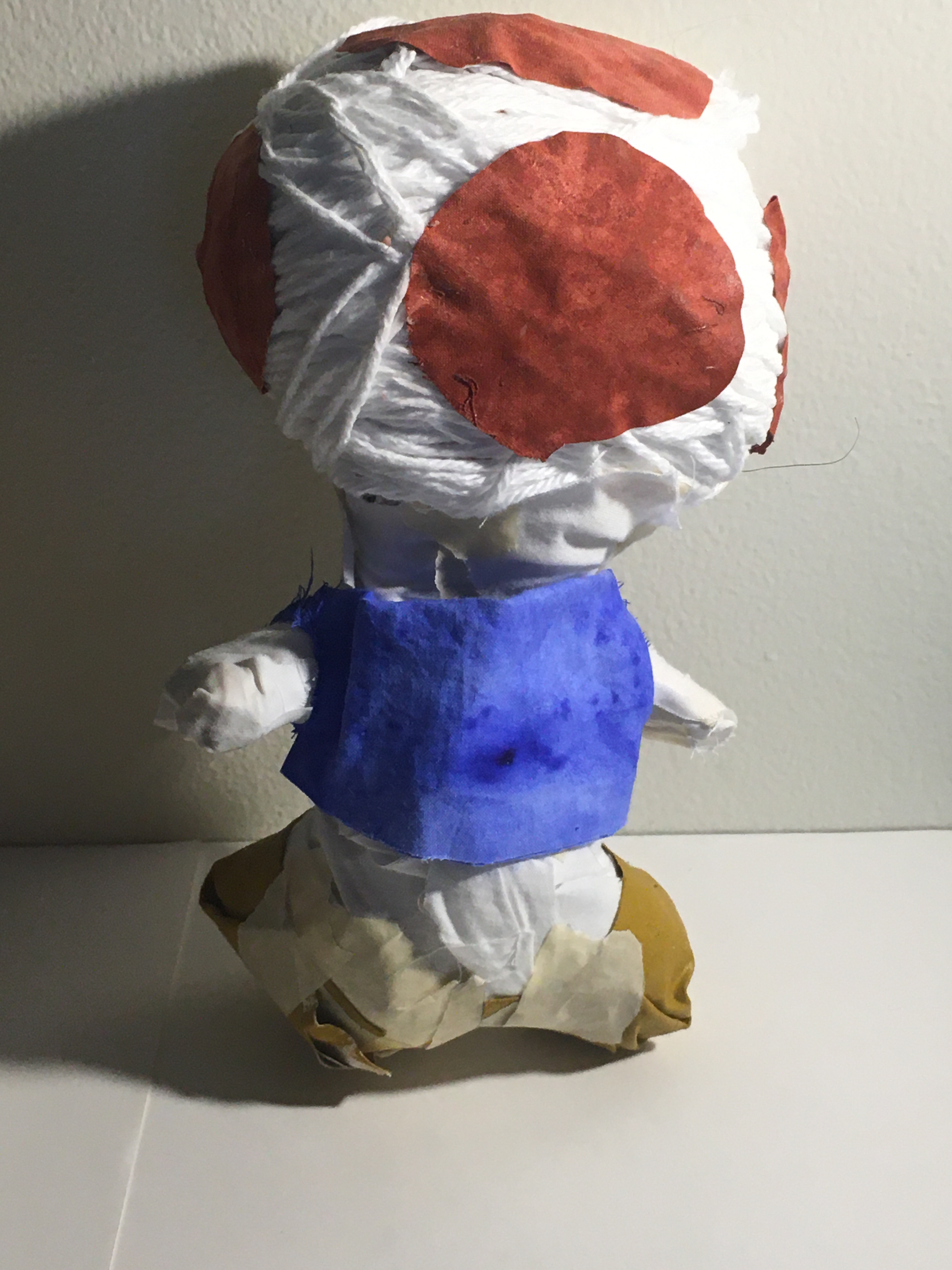
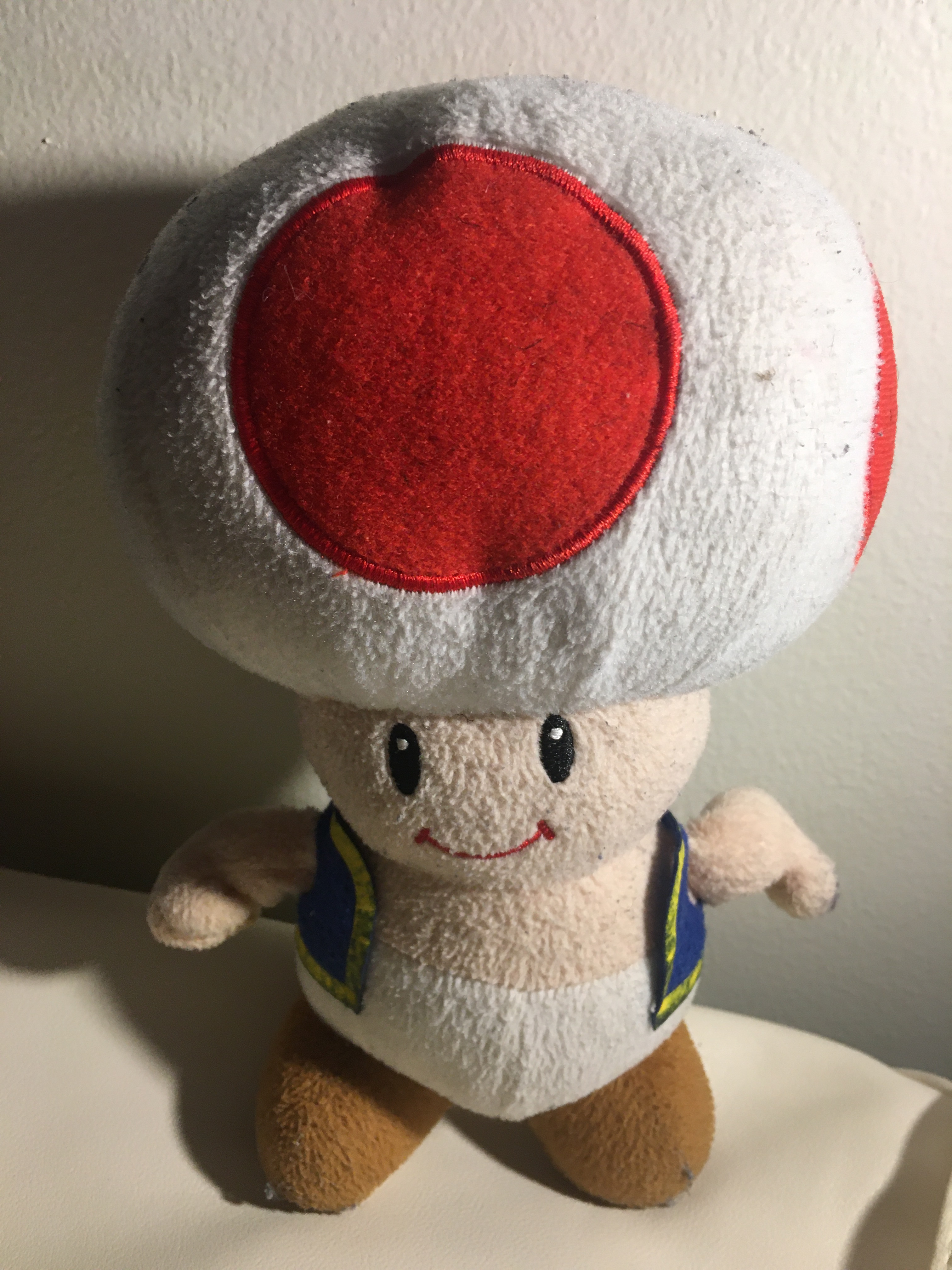
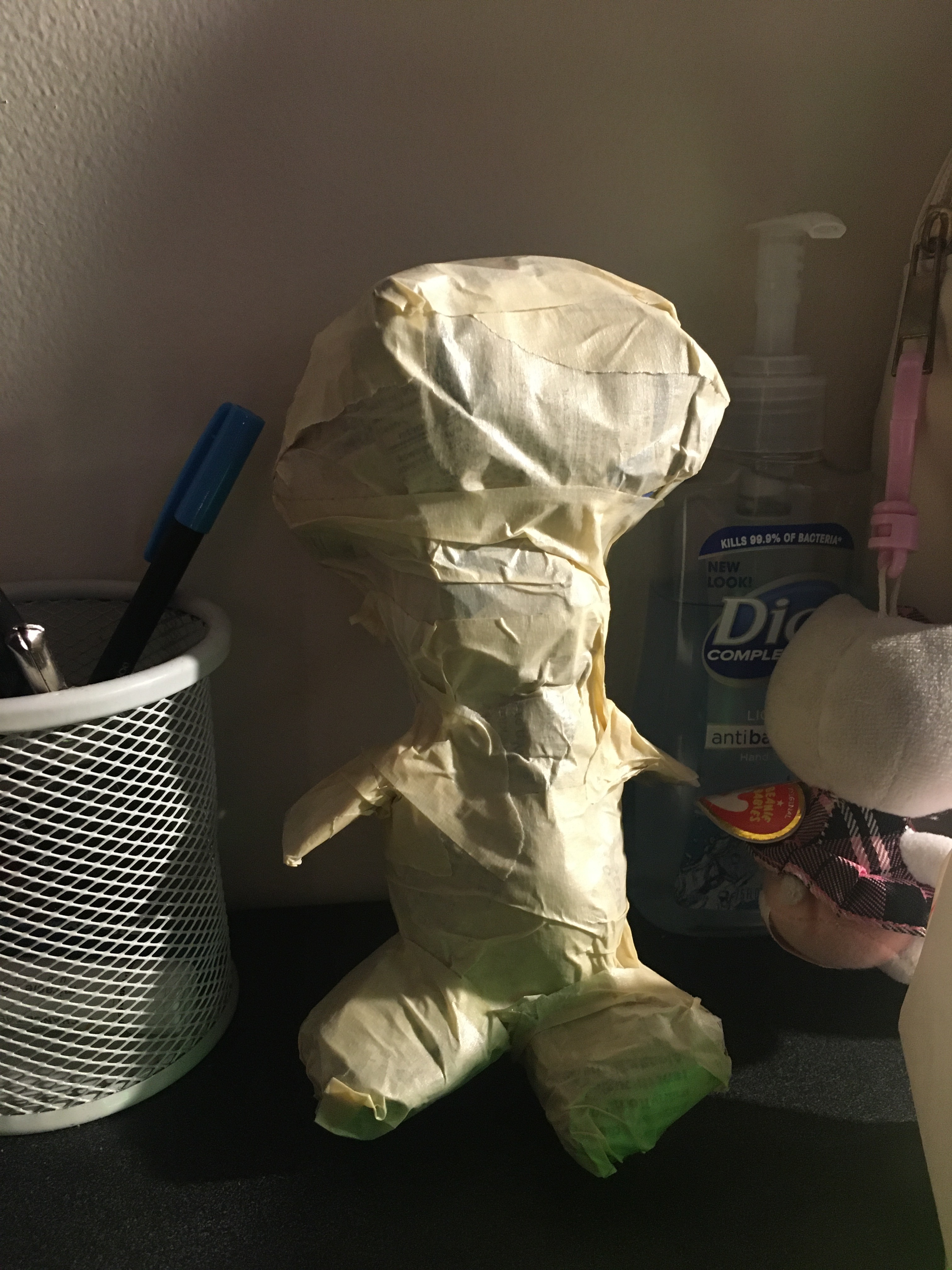
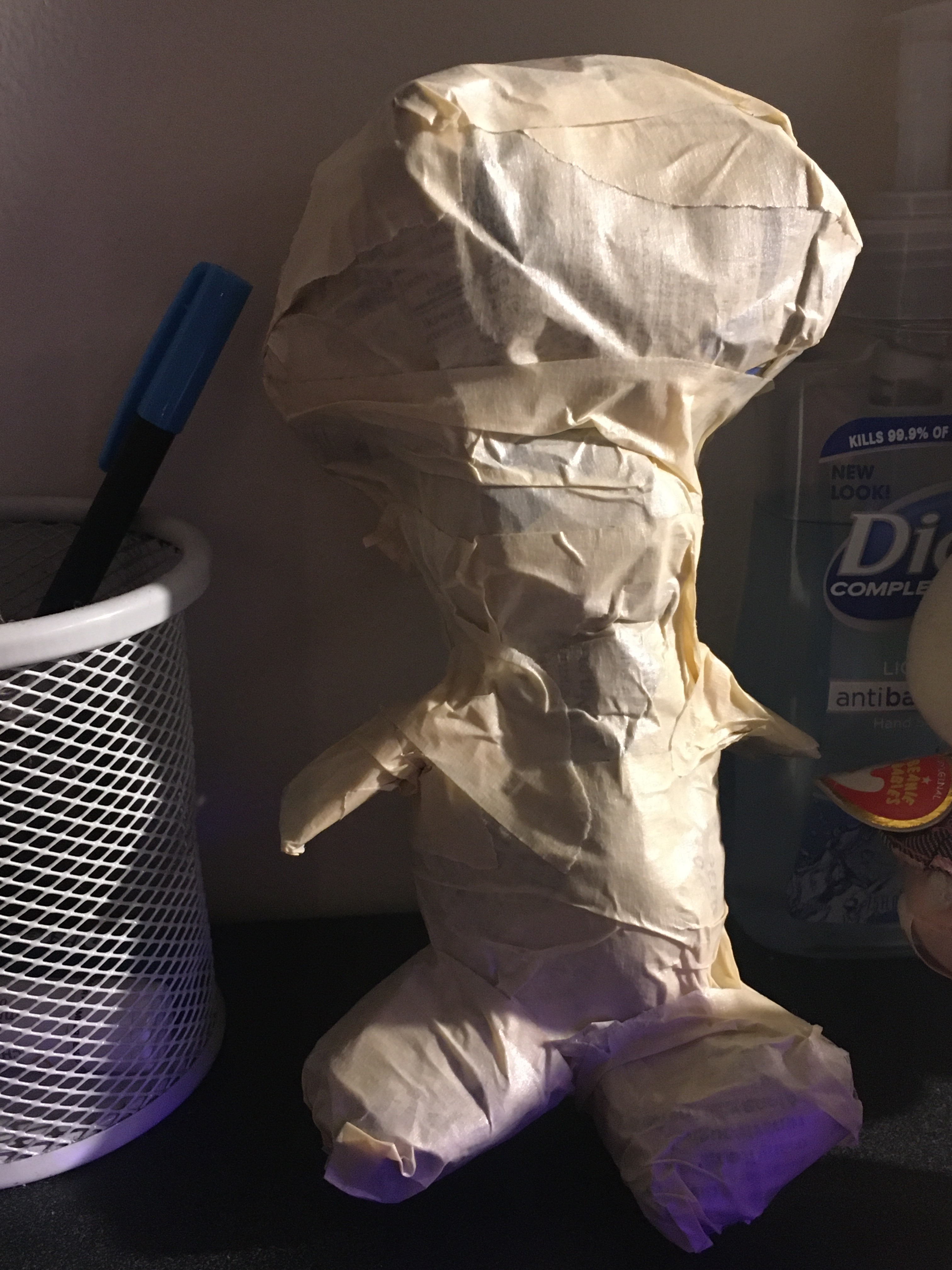
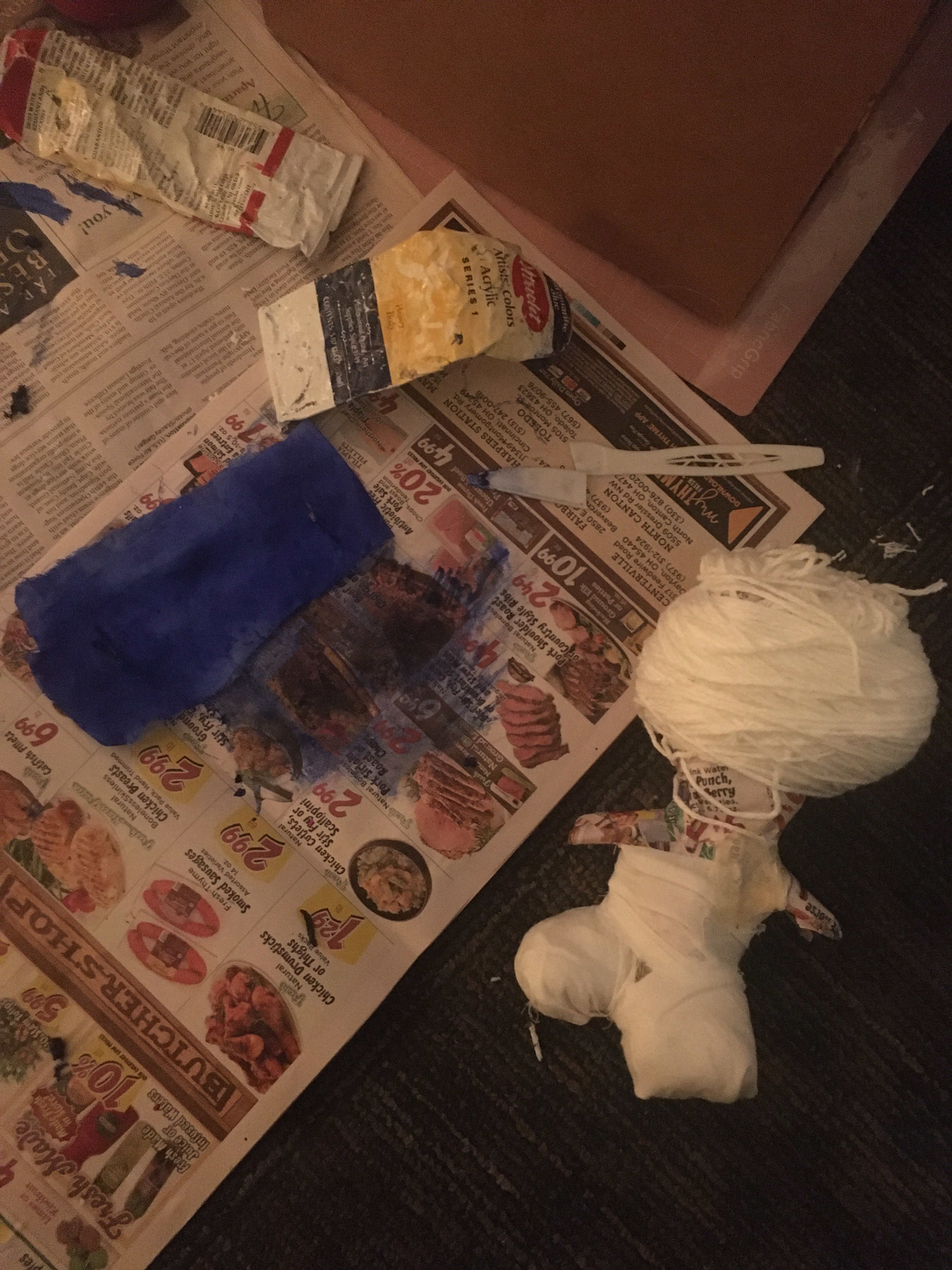
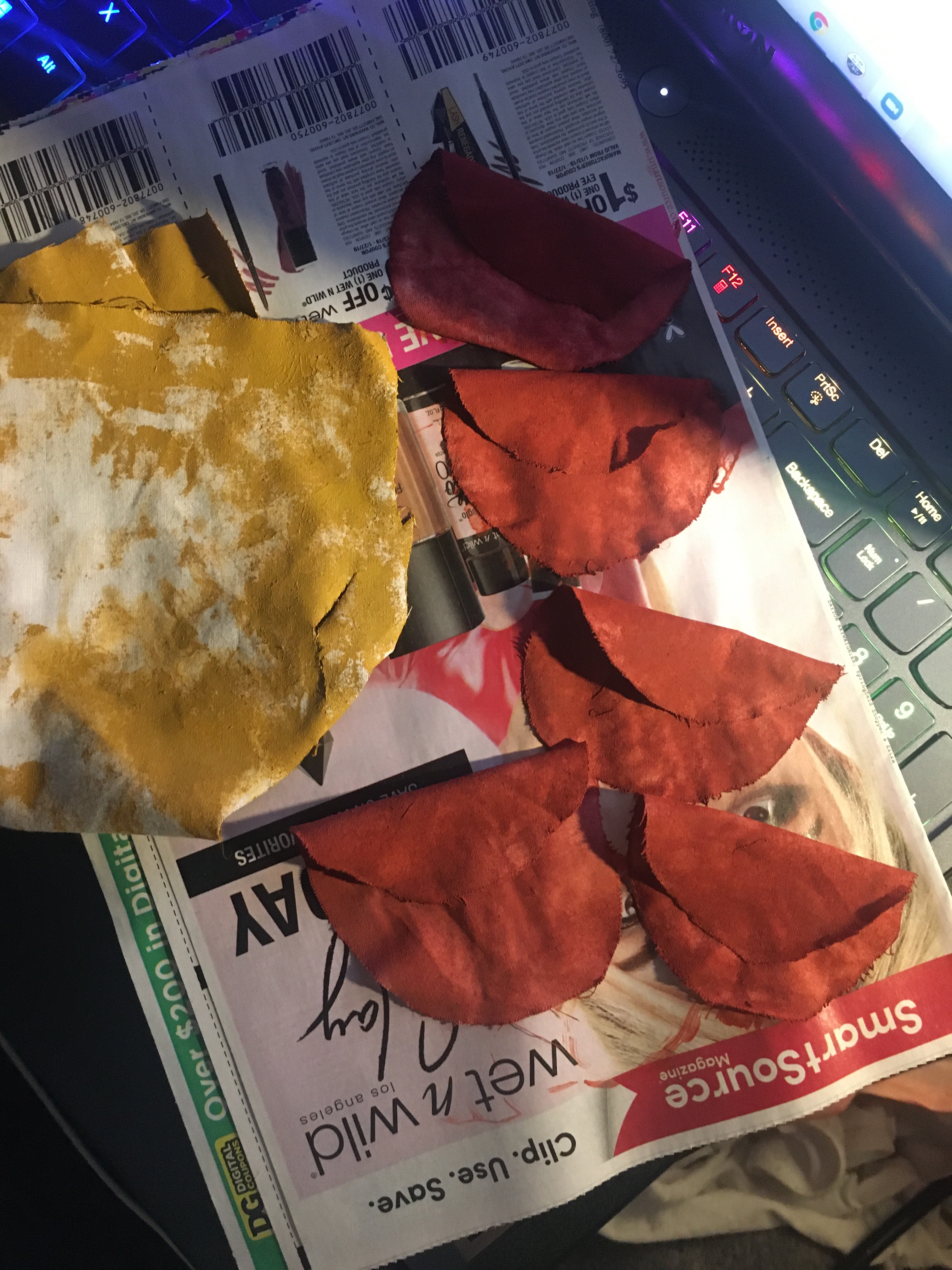
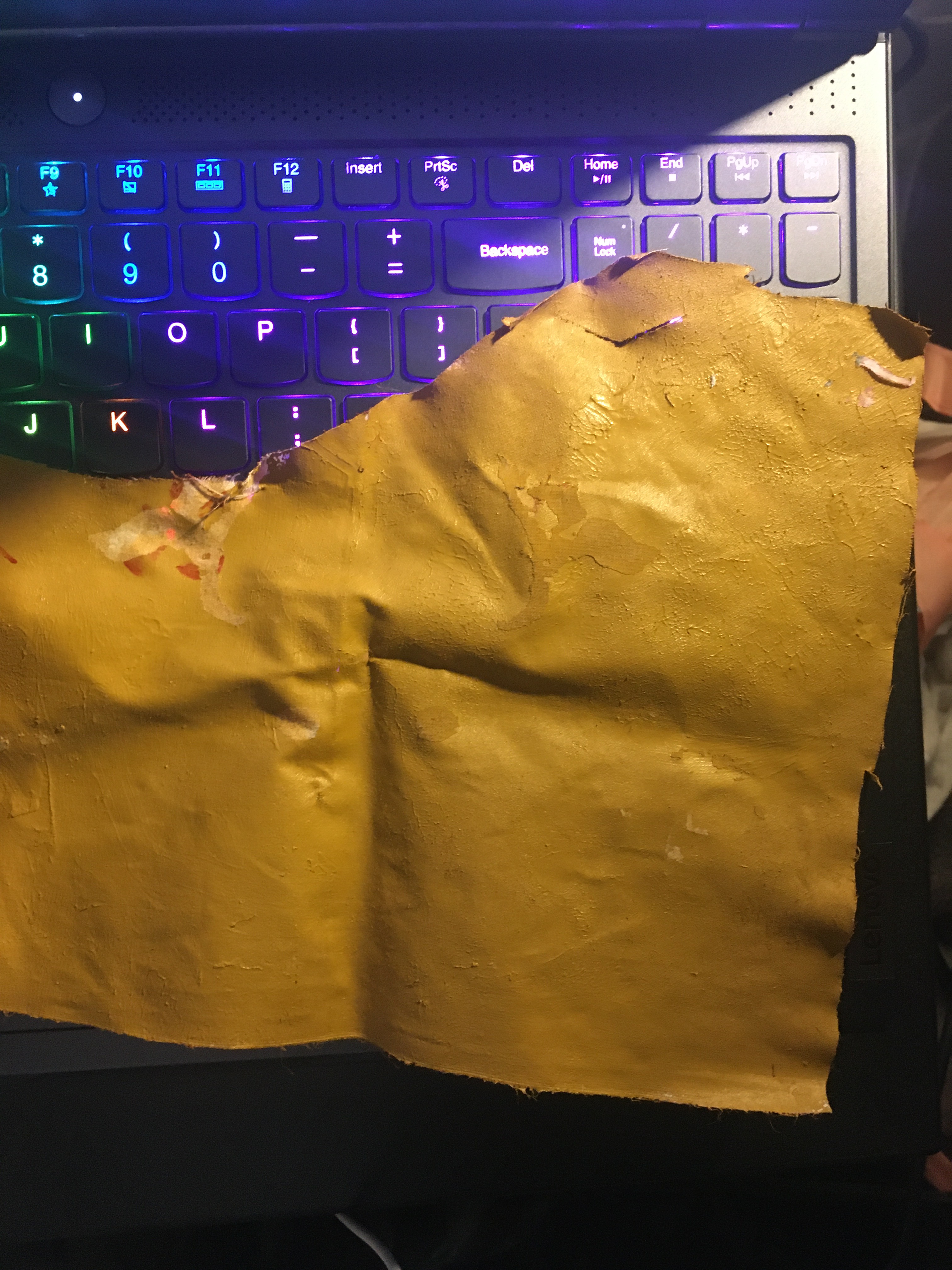
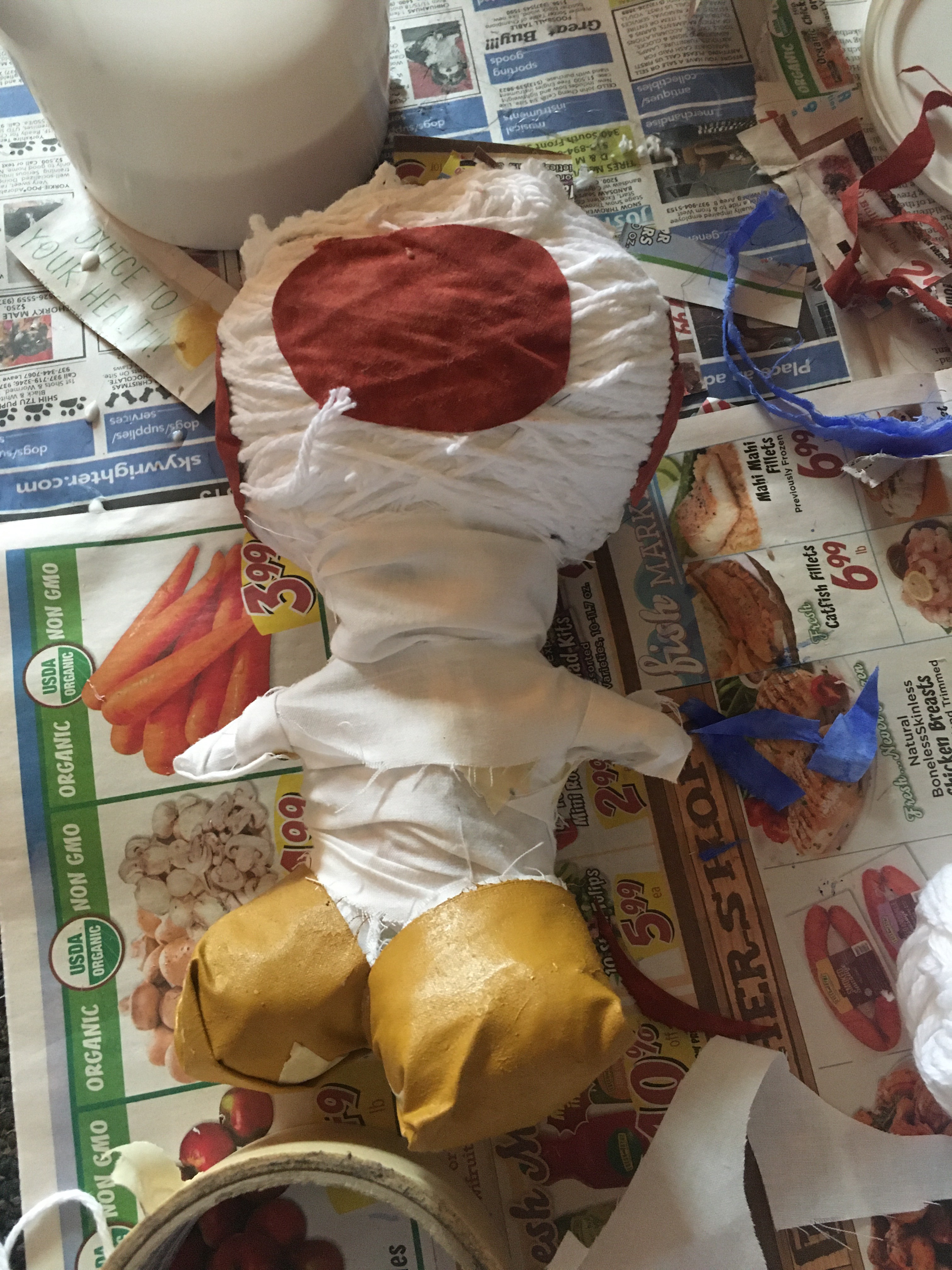
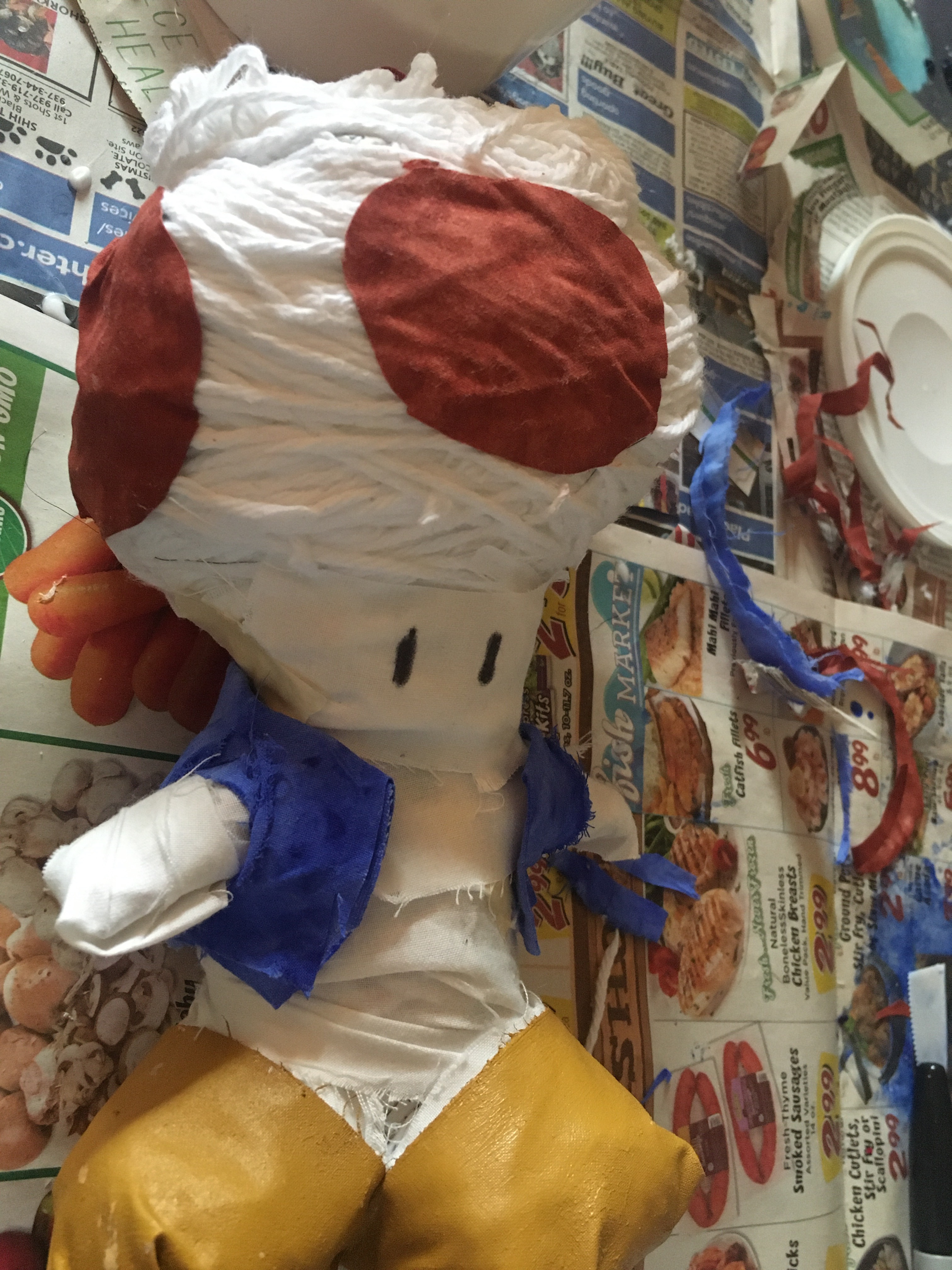
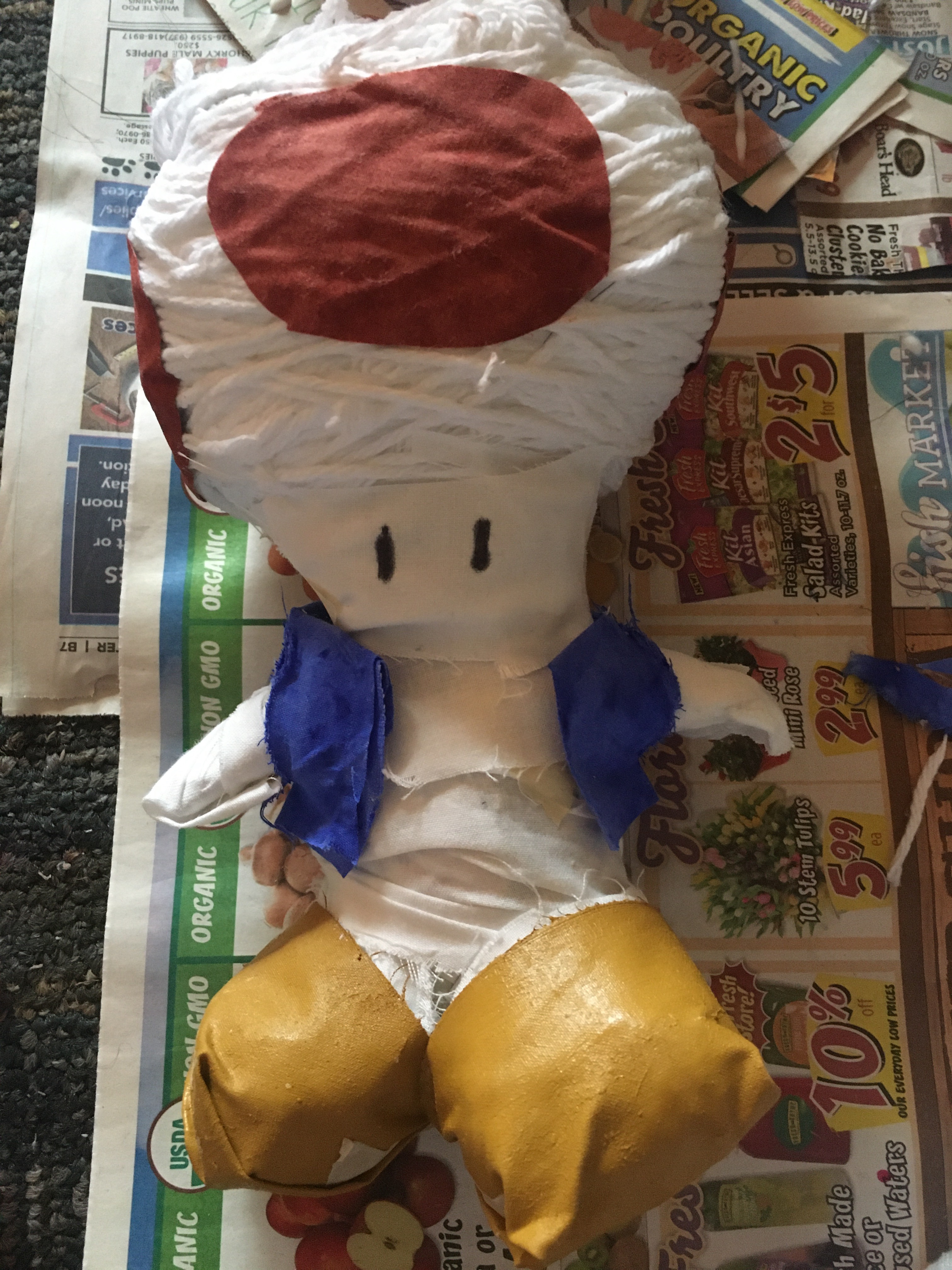
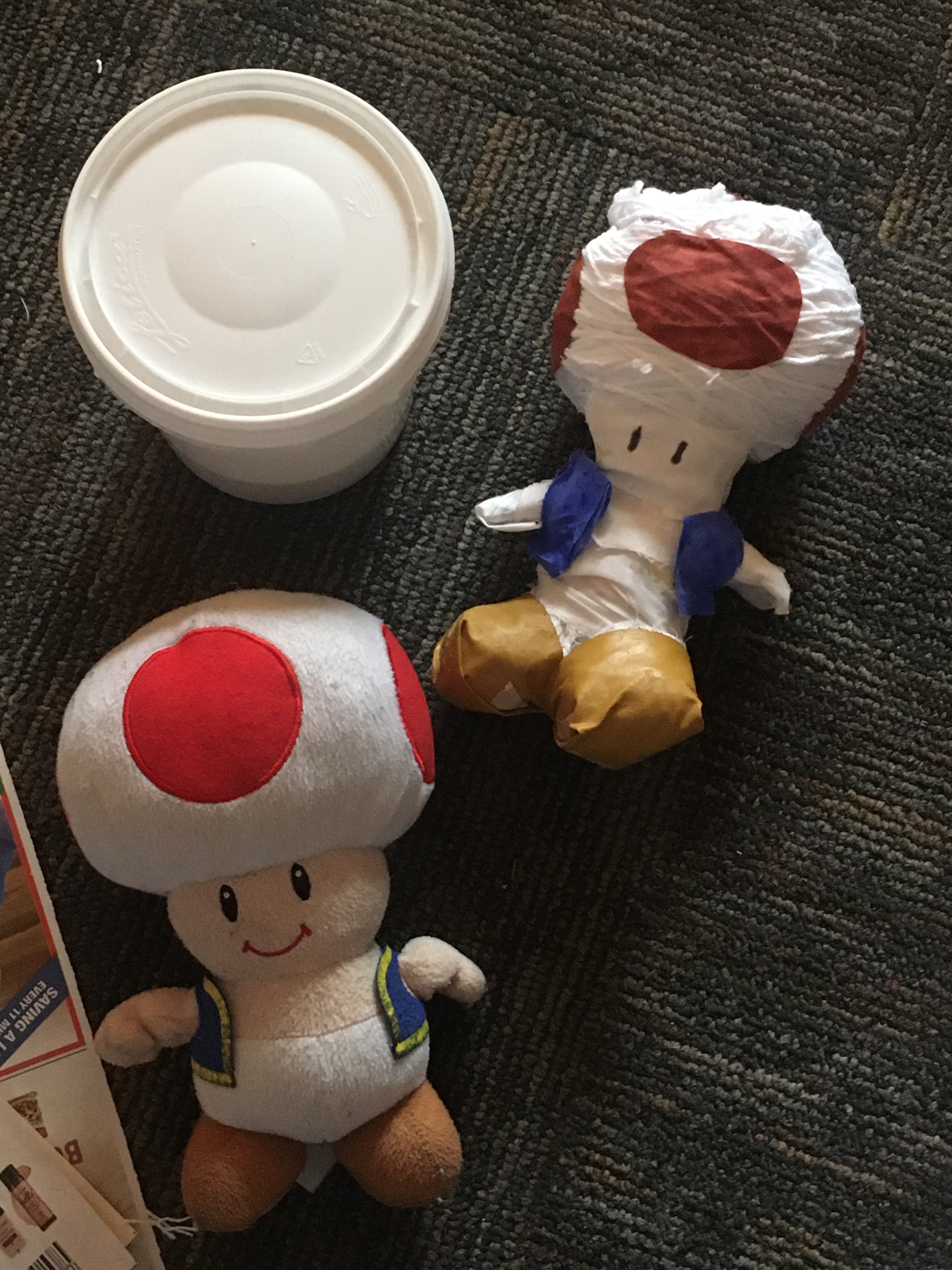
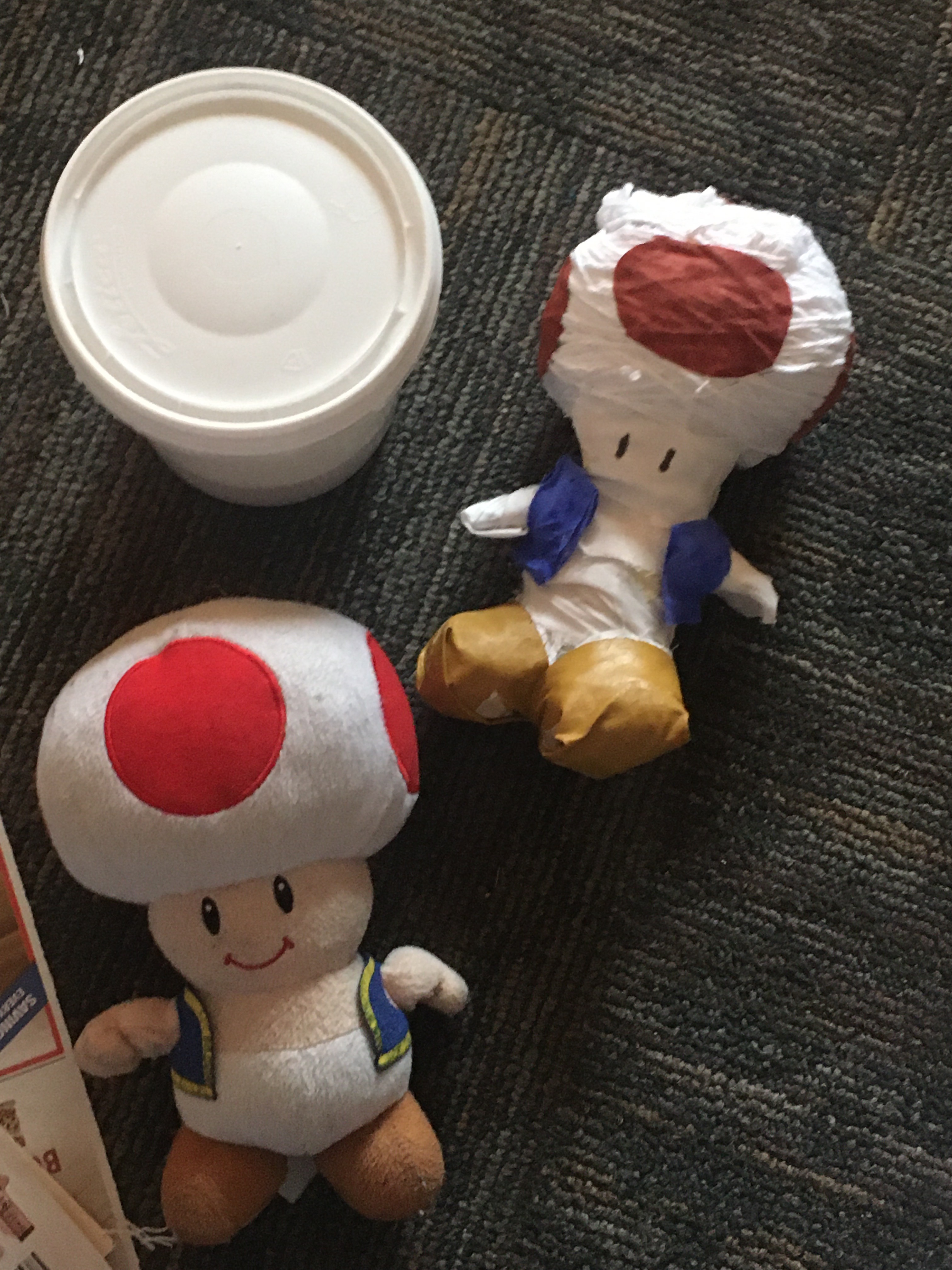
- What object did you choose to replicate and why did you choose it?
- I chose to replicate a cherished Toad plushie! I reflected on how I obtained each of my plushies on my bed—and for some of them I couldn’t remember where! A toad plushie I own falls in that category as a squishy, bouncy joy over four-ish years. I specifically chose toad as my object as we have a habit of waking up to him repeatedly on my floor every morning—originally on my bed. How he meets the floor is a mystery every morning despite my attempts to keep him above. This happens so often I kind of feel bad for the guy and mentally wish him a 6 month break, twice a year. There are many other important layers for Toad as my important object, but I feel this is my most prominent.
- How did you treat the surface of this object and why?
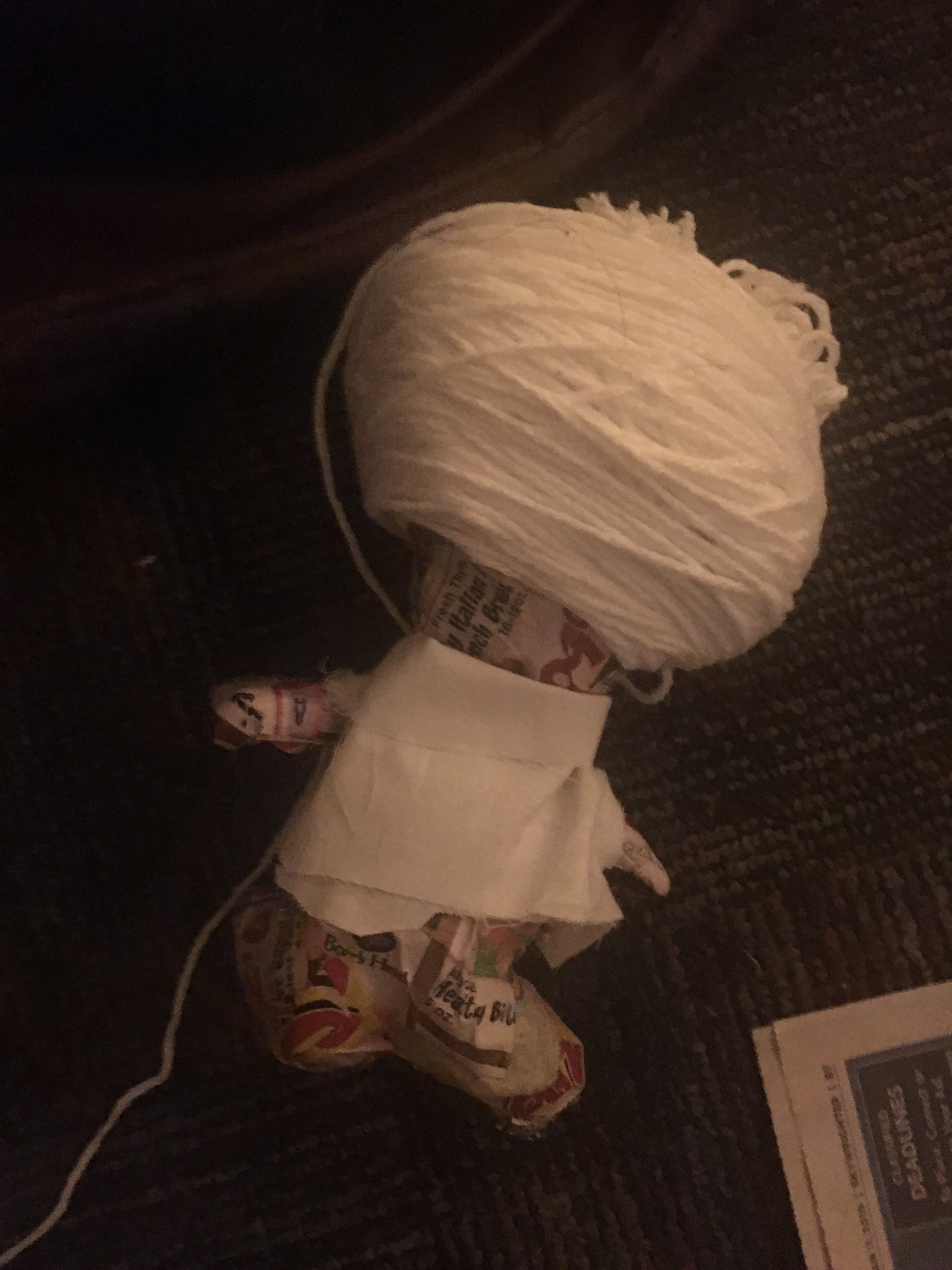
- Toad softness was intentionally indicated through wrapped yarn around his figure, as I want to emphasise his softness as a long time kept plushie. I wanted to paint a soft, squishy, approachable image despite the many hardened materials made to replicate Toad.
- What was your intention?
- My intention is to mirror Toad’s simplicity and reflect on just how much I cherish the plushie, along with his humored backstory. I made sure to simplify his face to enable a simplified and much cuter image to further paint lovability.
- How did you transform this everyday object into something new?
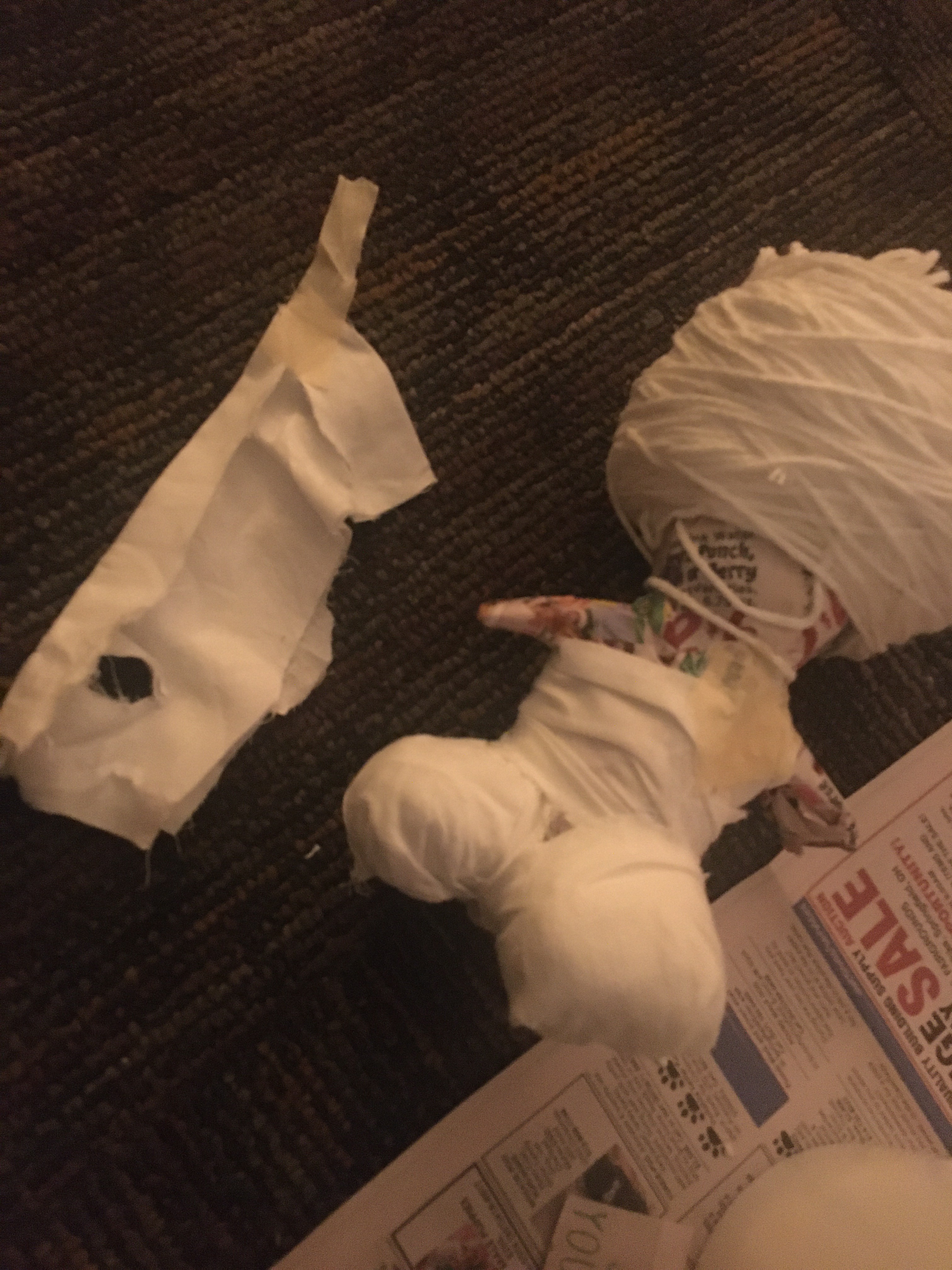
- By using everyday objects and leftover paint that regularly collects dust in my room, I replicated the many physical and story-based layers of a well cherished and appreciated plushie. With everyday found studio appliances, such as tape, worn fabric, acrylic paint, yarn, and newspaper, I was able to paint a somewhat cute Toad. Yarn was used to especially replicate Toad’s softness in a visual (and hopefully physical) means.
- What do you hope your audience gets from your Object?
- I really hope the audience finds Toad a little adorable. I especially hope the kid like, cherish-able qualities of my Toad plushie shines through, and people can maybe draw “well kept plushie that’s seen and been through a lot” as a suitable backstory.
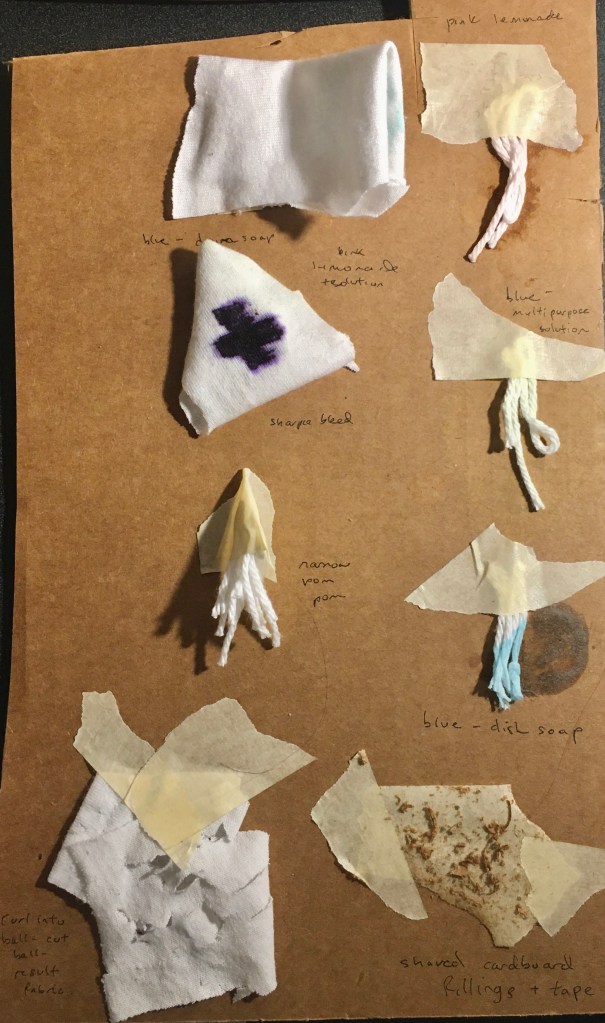
About the making process: Wrapping toad’s head with yarn solved both how to coat his surface with a soft, surface quality AND build and reshape his head to a more Toad-like shape. The main thing to focus on was wrapping Toad until there weren’t any gaps or holes on his head. I sealed, tied and coated the end of the yarn with glue. I made note not to add too much glue or the softness of the yarn would recede and create a hard surface on Toad again. So I used the glue very minimally. Any very loose areas were applied with glue to flatten. His feet endured a similar process, pushing back the yarn occasionally to ensure no open gaps. His jacket had a stranger process: coating a piece of fabric with incredibly dry, worn out and untouched-for-years Ultramarine Utrecht Paint. My “palette knife” broke in the process!
For Toad’s colors I cut out slips of fabric and handcoated them with leftover paint. When transporting them back to my room (as the painting process was done in a bathroom) I used a newspaper to carry the material. The fabric dried to a crisp, making it hard to peel without flaky paper leftovers! I glued the messier sides to Toad’s figure to conceal them. Some were a little too big and were trimmed down. I tried wrapping yarn around Toad’s face, but quickly lost his identifiable shape and figure while layering yarn. A layer of fabric and sharpie served well enough to replicate Toad’s face simplicity.
9/7 Object of Affection – Sonja Clark
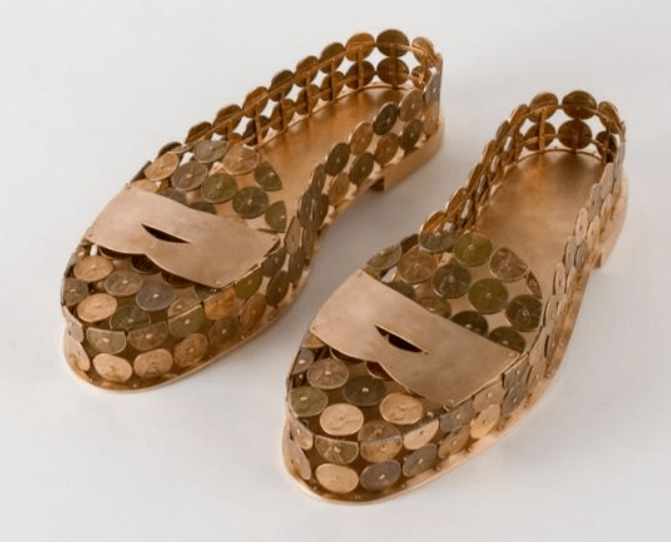
Sonja Clark’s Afro-Carribean heritage may already serve pointers to her recurring materials used in her work. Her widely known use of human combs, hair and commonly held items such as pennies draw hints of African Lifestyle– the above image’s penny structure signals ideas of what it means to live as a Black person in America. Pennies are cold, thrown and commonly held on a day to day basis– as a standalone item they hold very little value, and yet it’s something my grandma tells me to collect in a piggy bank until I have enough to cash in at a bank. In less wealthy cultures a few pennies can make or break someone’s meal. The shoes are nothing special, but mirror that of what my grandma would wear to Church, something she’d always make and wrangle time for no matter how high the bills got. It was her main drive for getting through an otherwise gruesome week, working multiple jobs from 9 to before midnight on a good day. Clark’s work immediately enables me to remember those aspects of my life, and how proudly poverty resides within black culture.
- What object did they replicate? What does this object make you think of? Why?
- The above image replicates dress shoes worn for formal events. It reminds me of shoes dedicated for Sunday Church meetings.
- Why do you think this object was chosen by the artist to replicate? What might the object mean to the artist?
- The shoes themselves may be dedicated to shoes that aren’t wealthy or branded by any means, but absolutely get the job done, in which my grandma and a lot of black women wore and made do with. Having pennies as a material solidifies this concept.
- What material was used to make or cover the object? What descriptive words can you attach to the material?
- Having pennies as a main material solidifies the overbearing power poverty holds on black culture, it’s overbearing weight sitting over people who can barely afford this type of shoe.
- How does the combination of object and material create a new meaning for you?
- Clark’s work immediately enables me to remember small aspects of my family life, the common routine and lifestyle for living as a Black person in America, and how proudly poverty resides within black culture.
9/1 The Silver Pin + This American Life
Reading The Silver Pin reminds me just how deep an object’s layers or layered context can be. The llama plushie sitting next to me on my bed has lived four years now and it took reading this article to realize that. My guardian bought it at my first comic con in Chicago, and was perfectly handled save for a small unnoticeable tear from recently. I hadn’t realized there was a tear until placing it on my bed from when it’d fallen again—a number of my plushies fall on the floor. And then I started wondering when did I obtain all of them and how—for two of them I couldn’t remember!
The Silver Pin immediately layers the importance of objects and how they’re found. Handling them, carrying them across borders and countries while barely wearing them every month. I have a lot of items sitting in my room that are touched maybe thrice on a generous month. It’s really fun imagining all the characteristics of an Item I have—like reading an imaginary profile.
Listening to a firsthand podcast of an object running around a students wallet was humorous! The American Life immerses a world I hadn’t considered before, it’s kid-like energy similar to Toy Story, but engaging and fun nonetheless. Hearing the item’s confession of wanting to be a balloon while meeting the student’s GameStop card is fun. In watching this comedic transition I learn about how gradual changes in someone’s life occur. From a college students wallet to multiple beds to a very warm shoebox, the strange object becomes a veteran multiple times until they happily reside in a peaceful, stilled retirement. This pattern paints a vivid picture of human transition and how all of our lives reform. With little changes, old parts of ourselves chip away little by little, replaced by newer defining items that serve as our identity.
8/30 3D Design Project Recap
Here is a link to my DIB where my Main Forms Final Composition is placed.
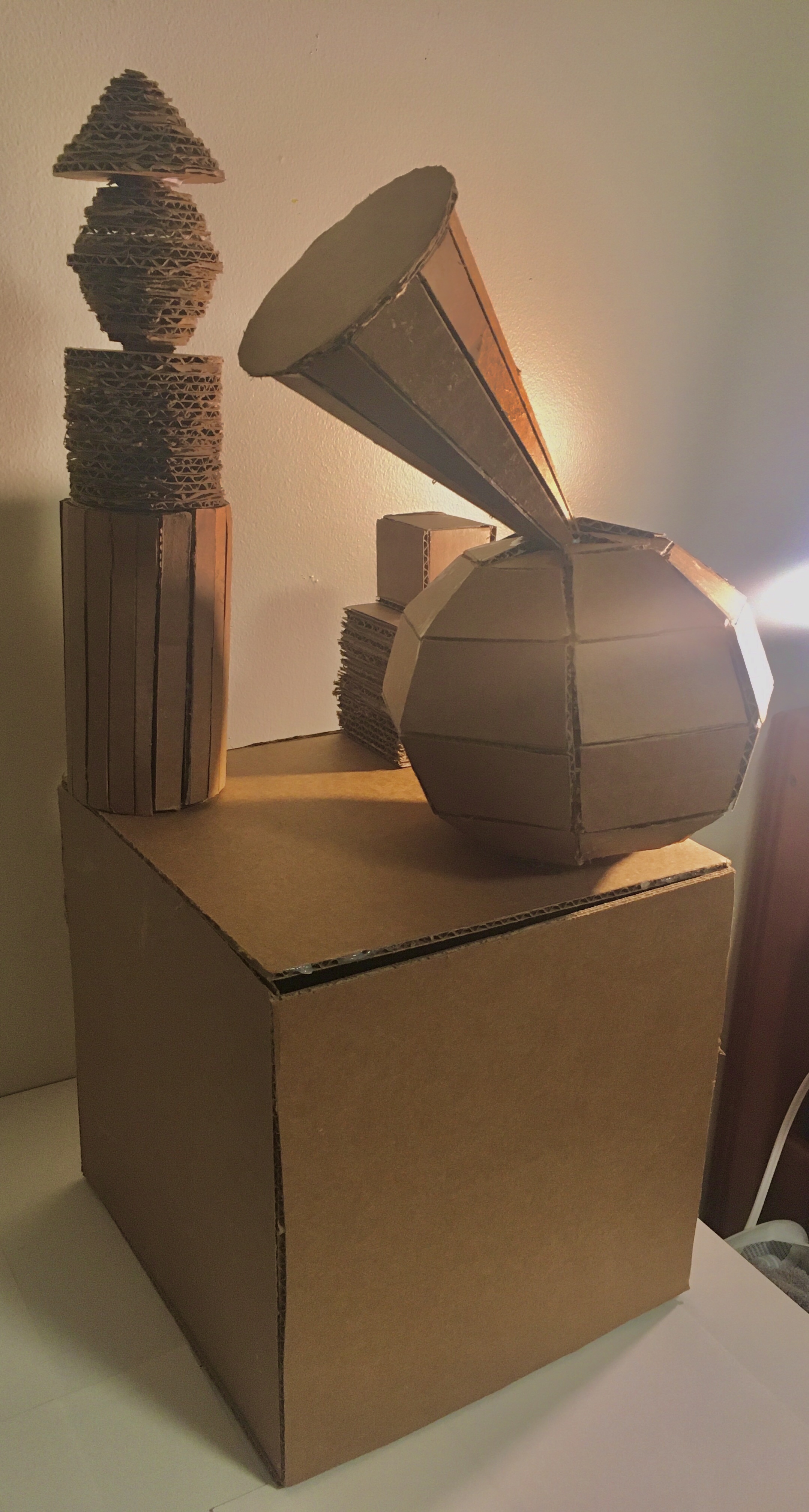
Reading my peer feedback made me realize how happy it would feel to have a makeshift gramophone or dancefloor, in which my project best resembles if I tried associating it with something real. I’d shrink in size then dance along the corners and any open spaces of my cube if able, on top of my smaller hollow cube like it was a performance stage, and my hollow cube would act as a speaker and play fun music. Exploring my peer’s visual world of music is already fun!
The final process in assembling and gluing my final objects together was fun. By the time I finished my larger cube I realized I had a fun, sizable cube I could place anywhere in my dorm, and it’s lightweight-ness was very refreshing to handle. The Hollow cube itself was harder to make as it is much larger than my smaller hollow cube, but my end result was satisfying. This made the building process all the more worth it as I began setting up a white space to document my work. I used my desk and lamp to create a white photographing space to the best of my ability.
While I am wary of my craftsmanship especially when handling my larger Hollow cube, I am very satisfied with the world I was able to create. Being able to incite large, imaginative dreams like what my peer’s feedback suggested was most fulfilling about this project (aside from writing fun blog posts). This is my exact takeaway of what I wanted to do after researching Anish Kapoor’s work—I wanted to spread happiness, inspiration and personal growth and all the wonderful things that come with sharing art, never gate-keep it. Seeing Anish’s background history with Semple albeit hilarious allowed me to be more selfless about my work from now on.
9/21 Laminated Cone + Final Composition Sketches

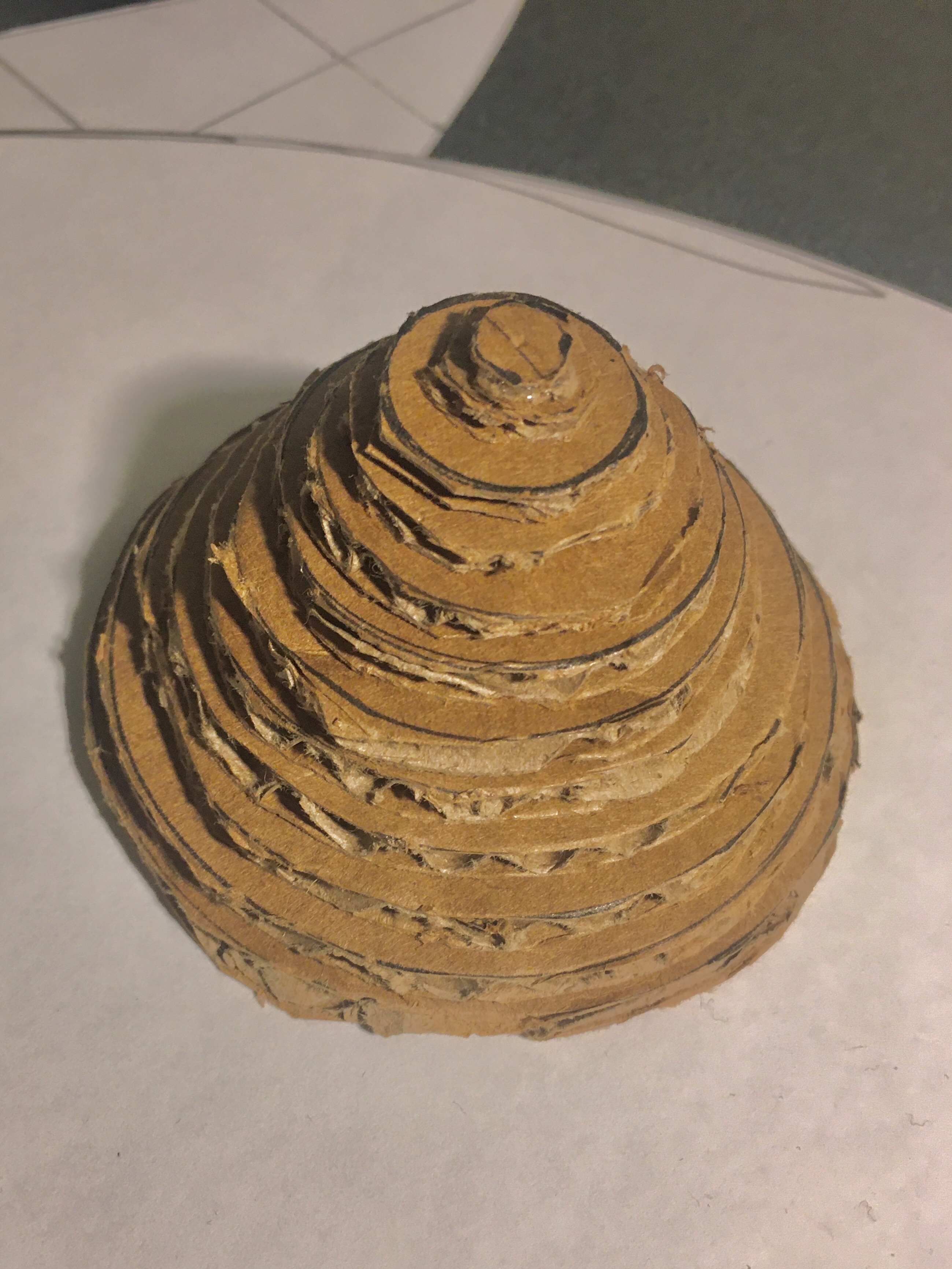
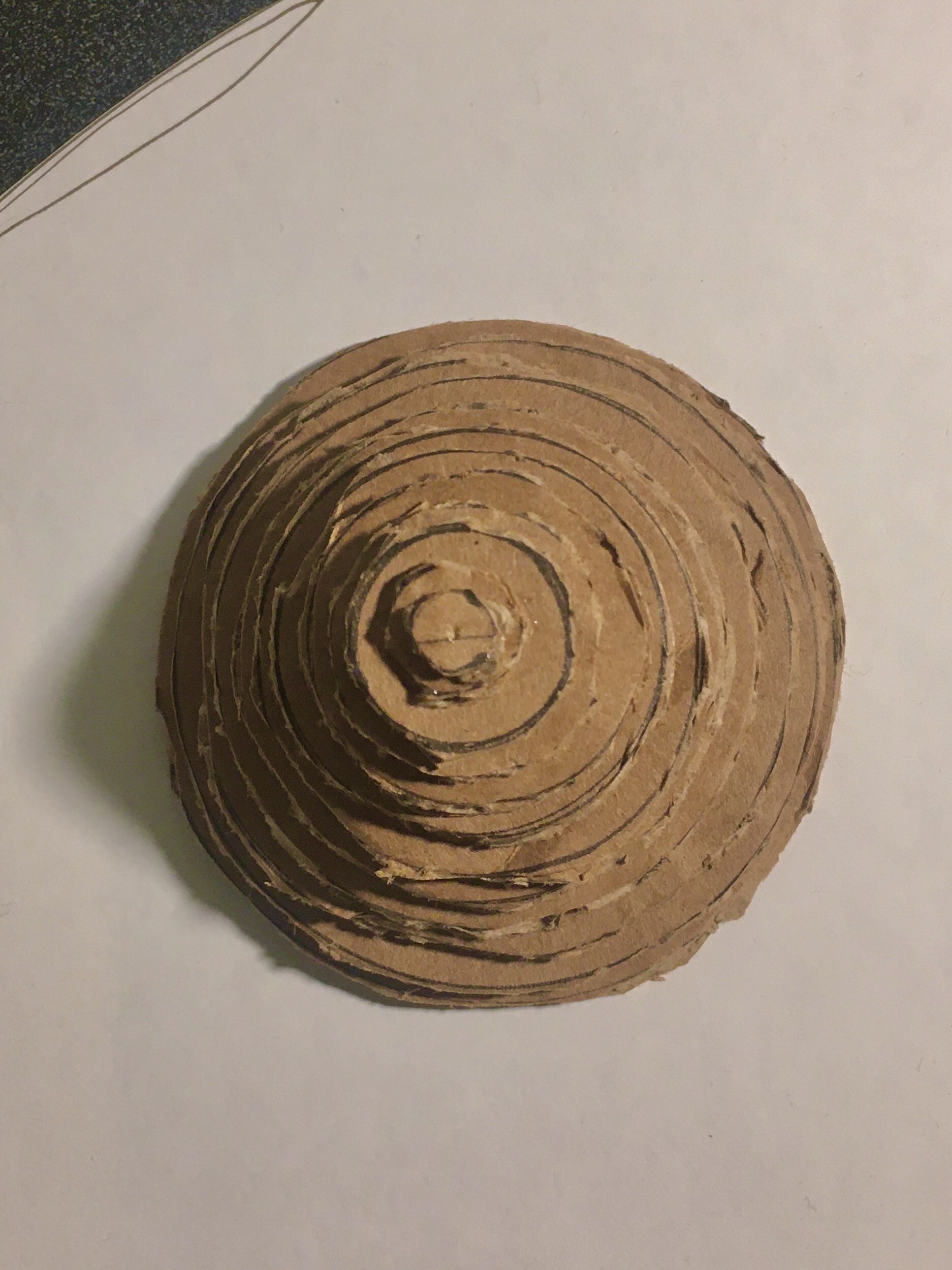
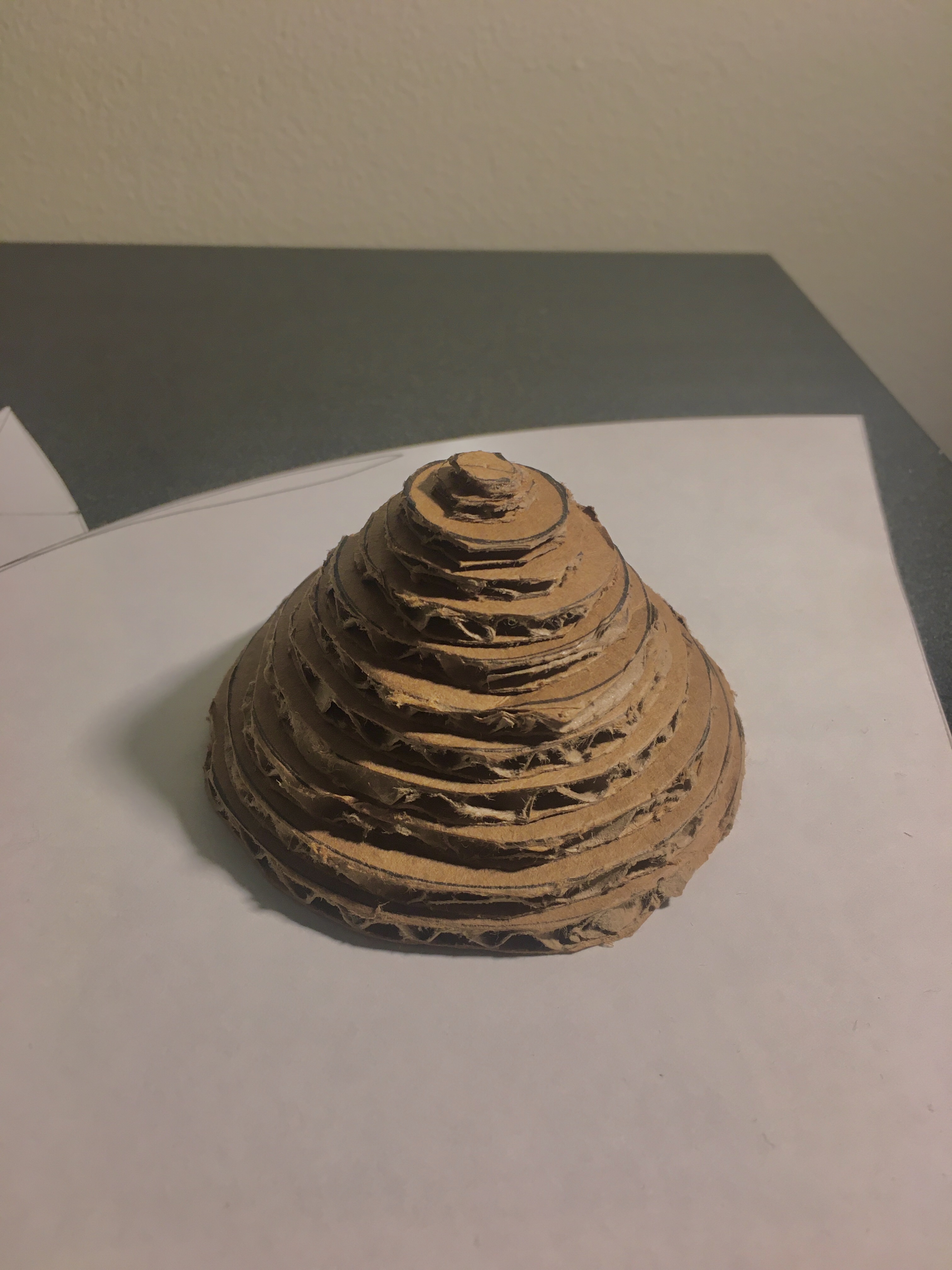
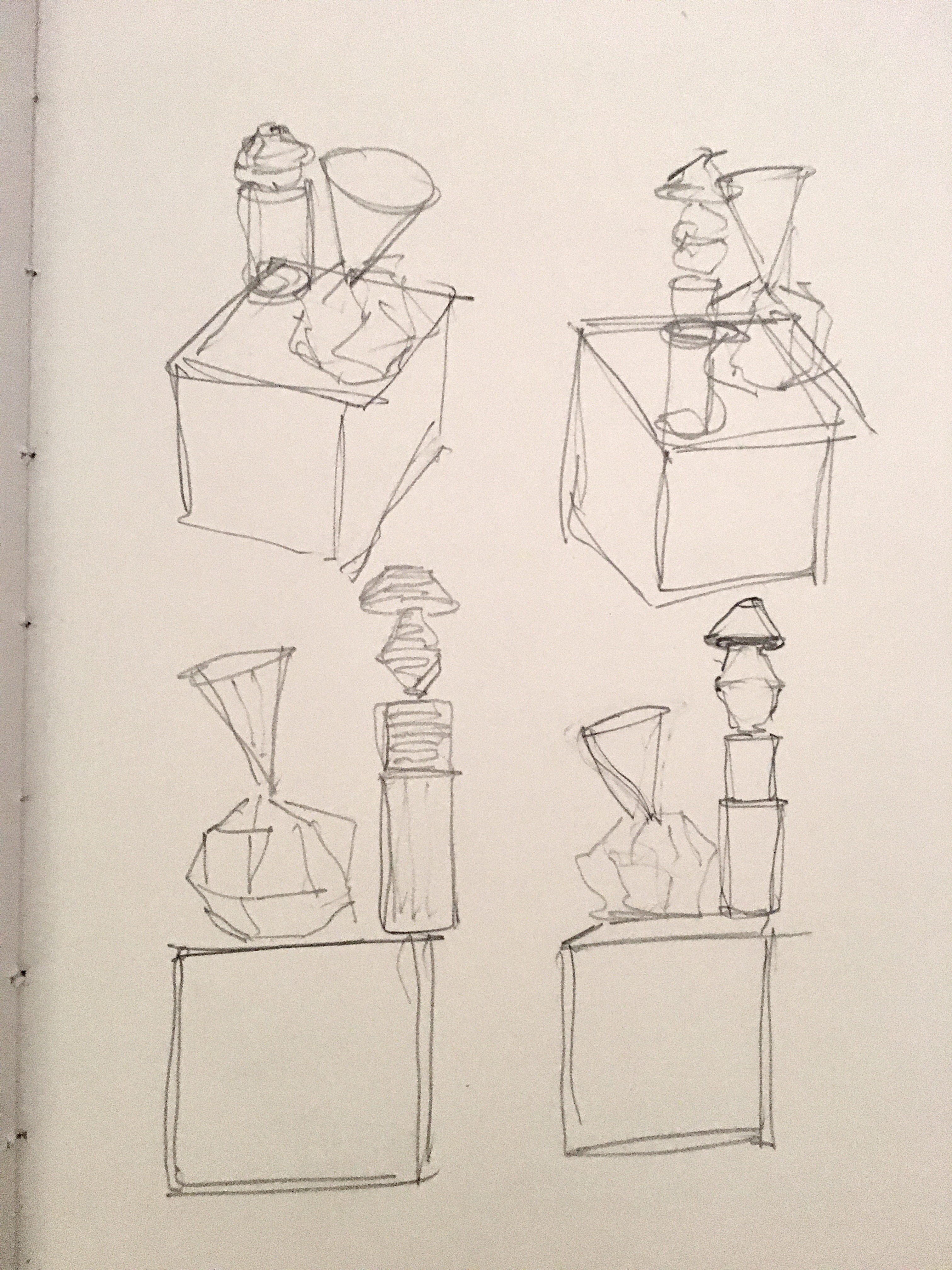
9/14 10 Sketches + Hollow Sphere, Laminated Cone, Hollow Cone + The Case of Abstraction
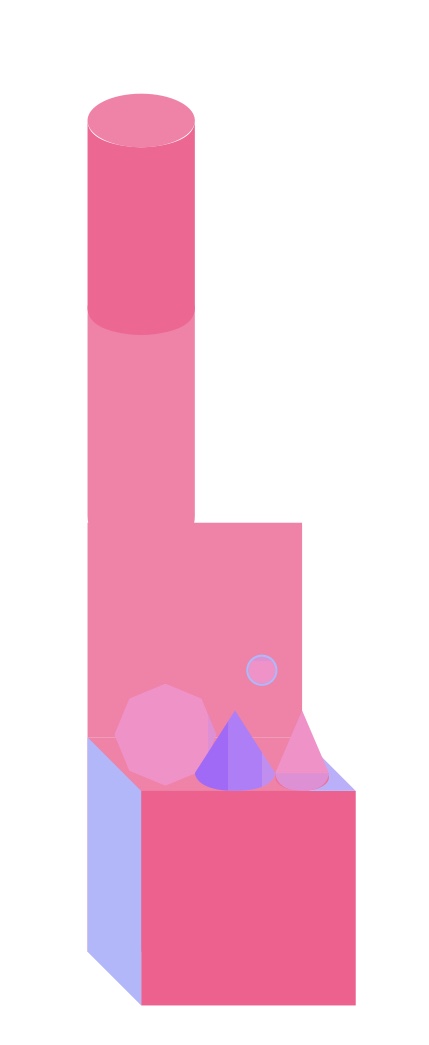
(1/10) 
(2/10) 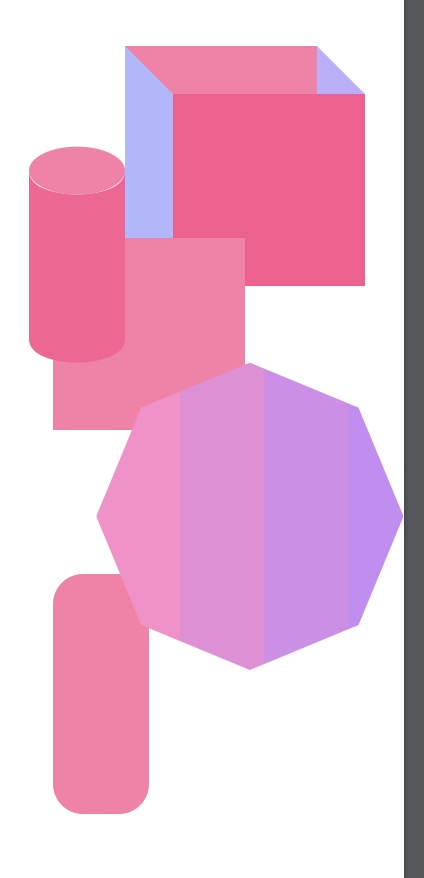
(3/10) 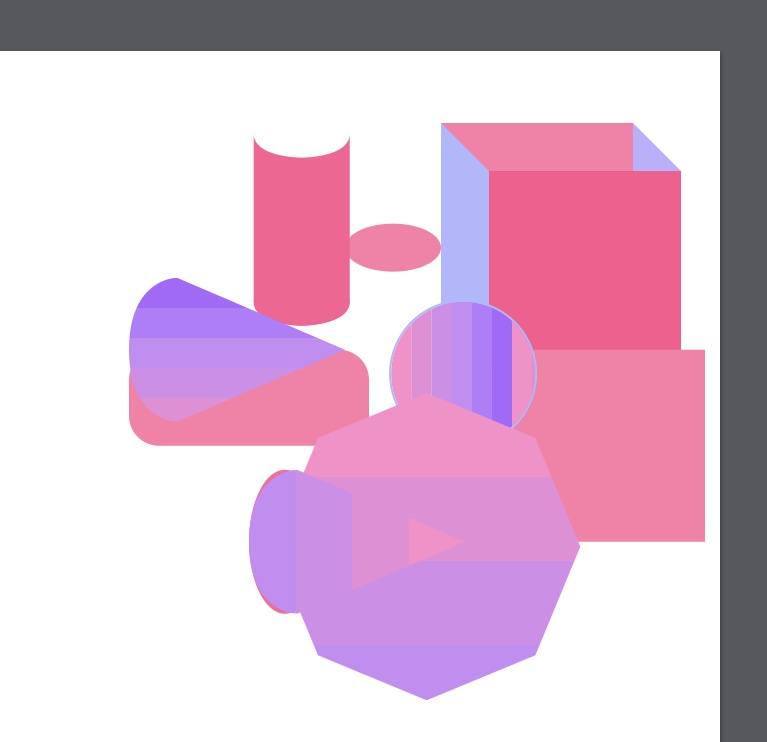
(4/10) 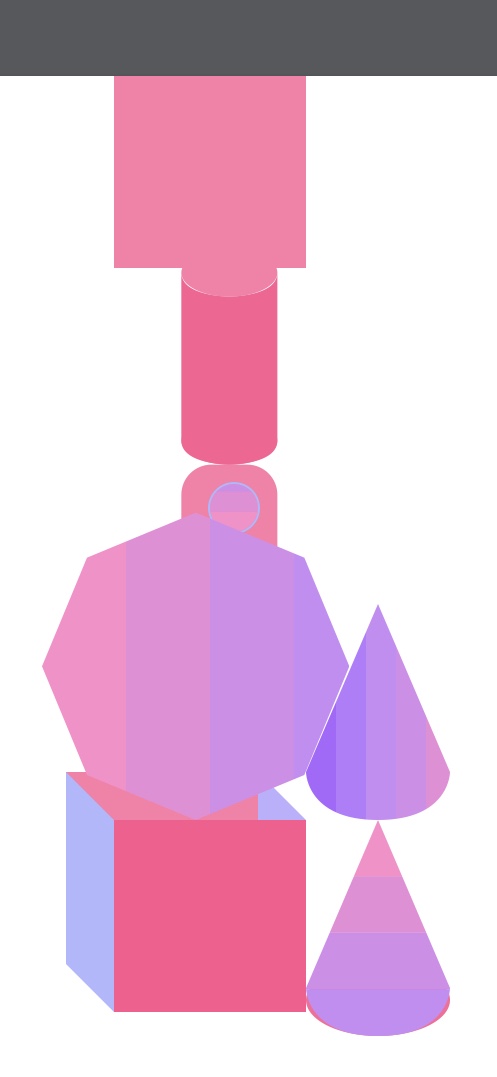
(5/10) 
(6/10) 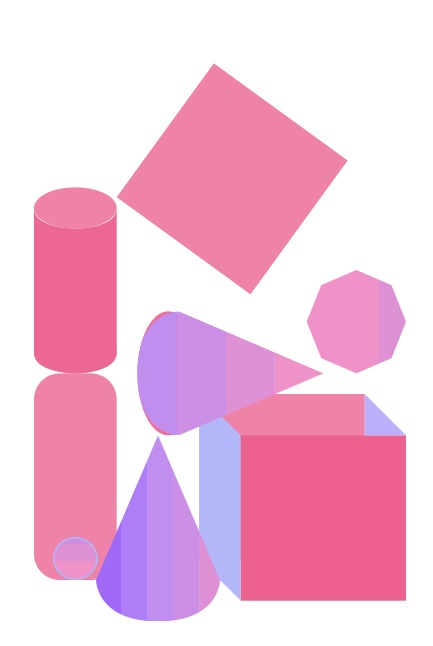
(7/10) 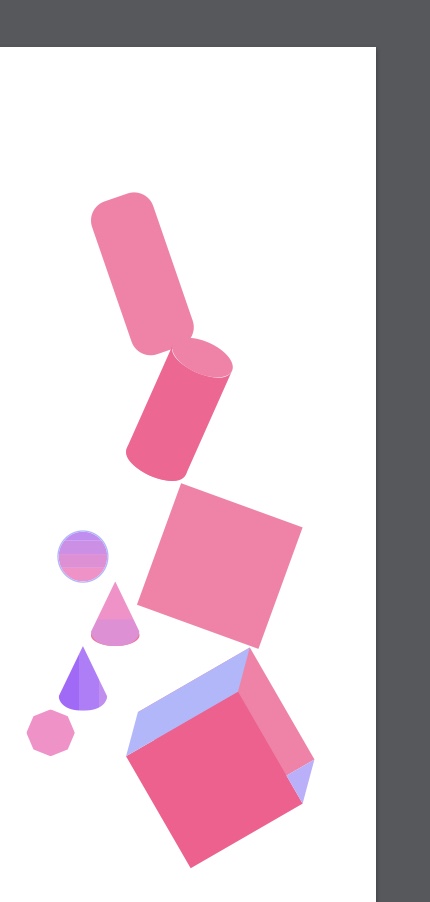
(8/10) 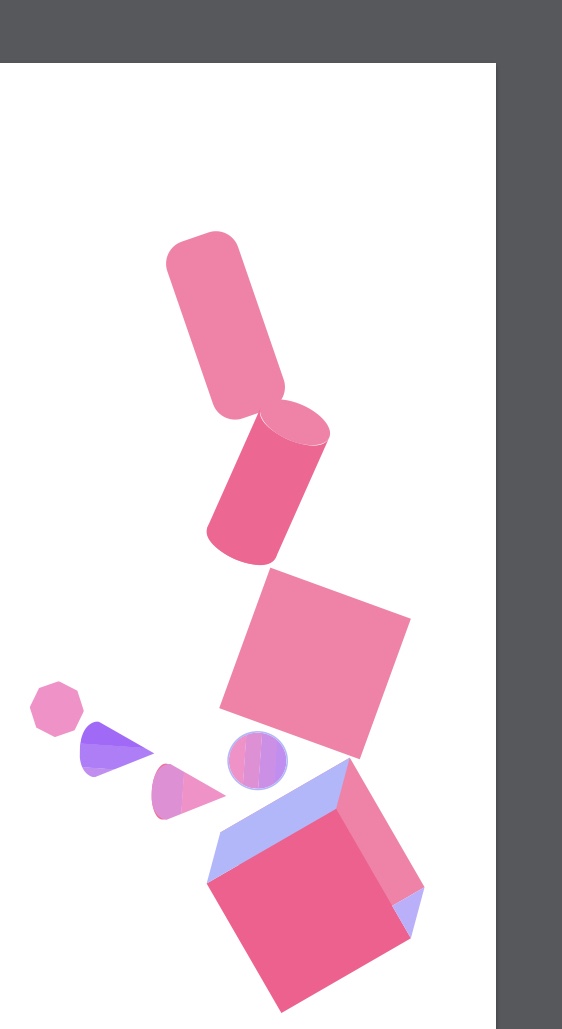
(9/10) 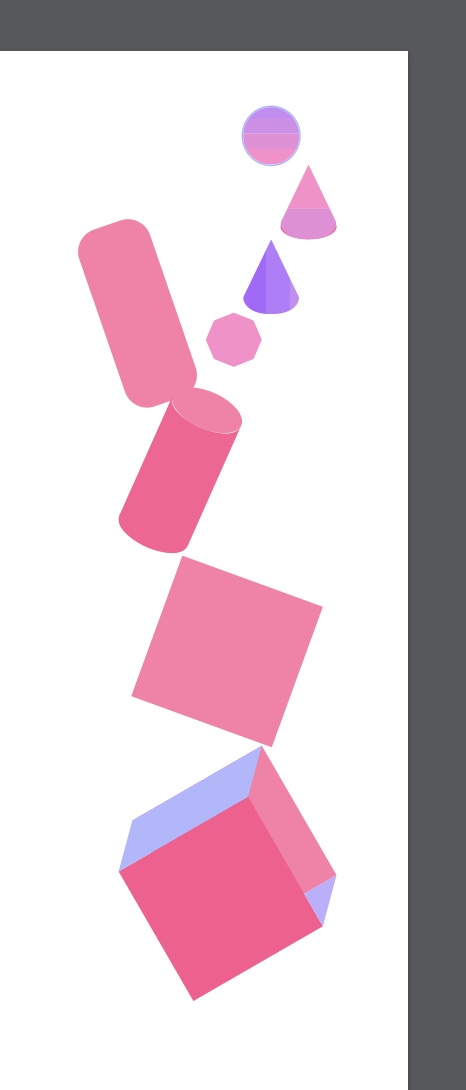
(10/10)
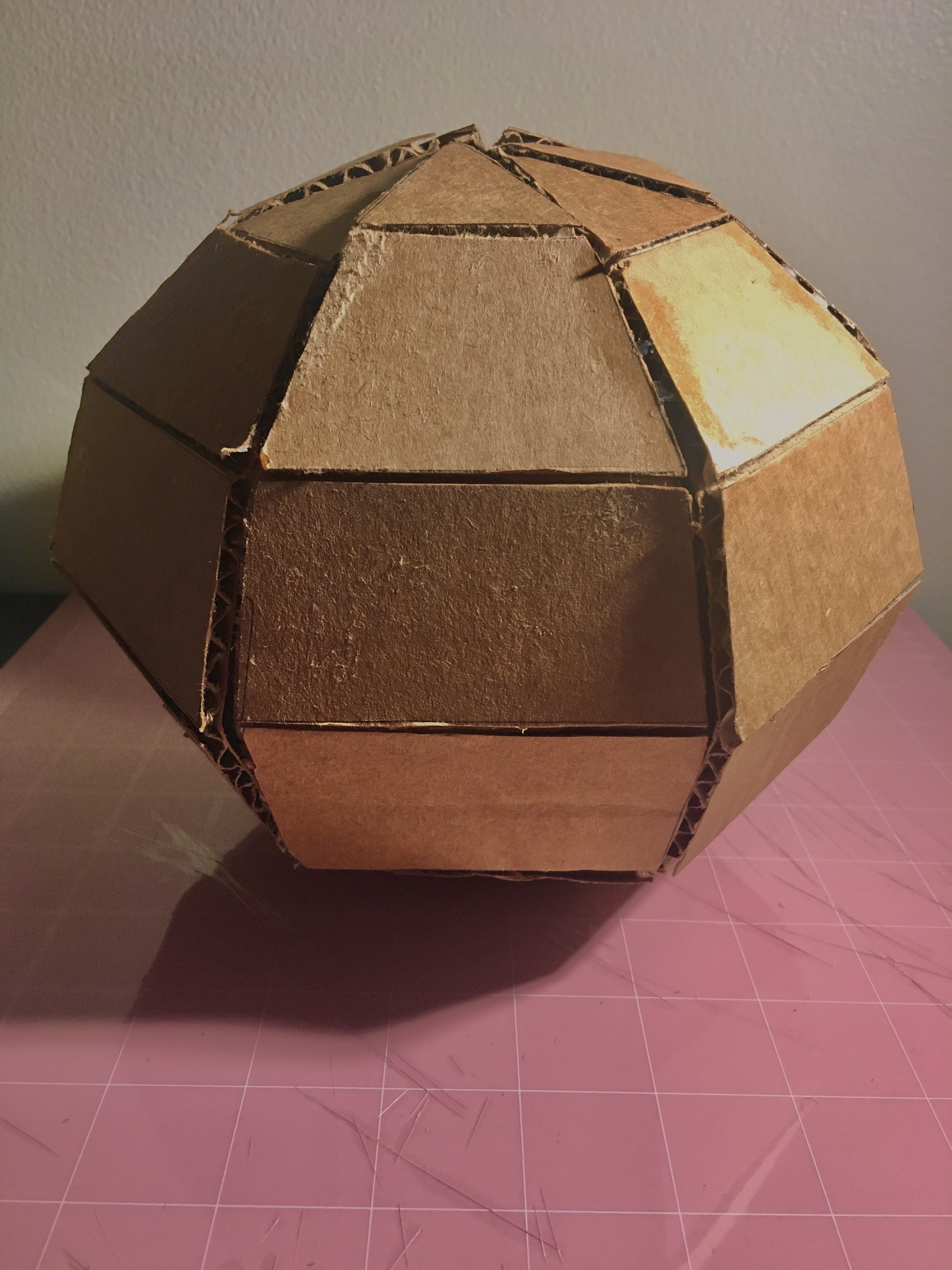
Hollow Sphere 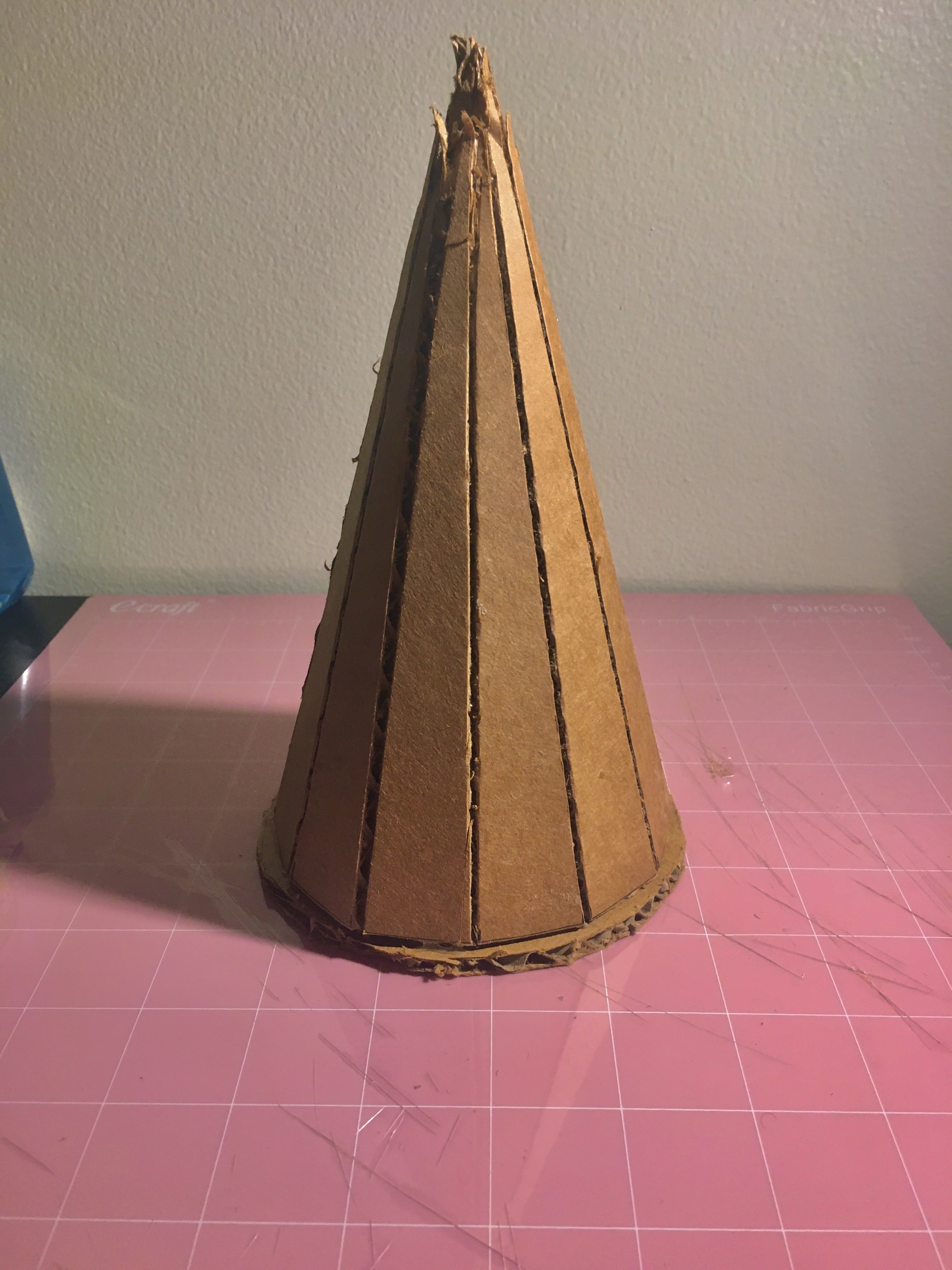
Hollow Cone 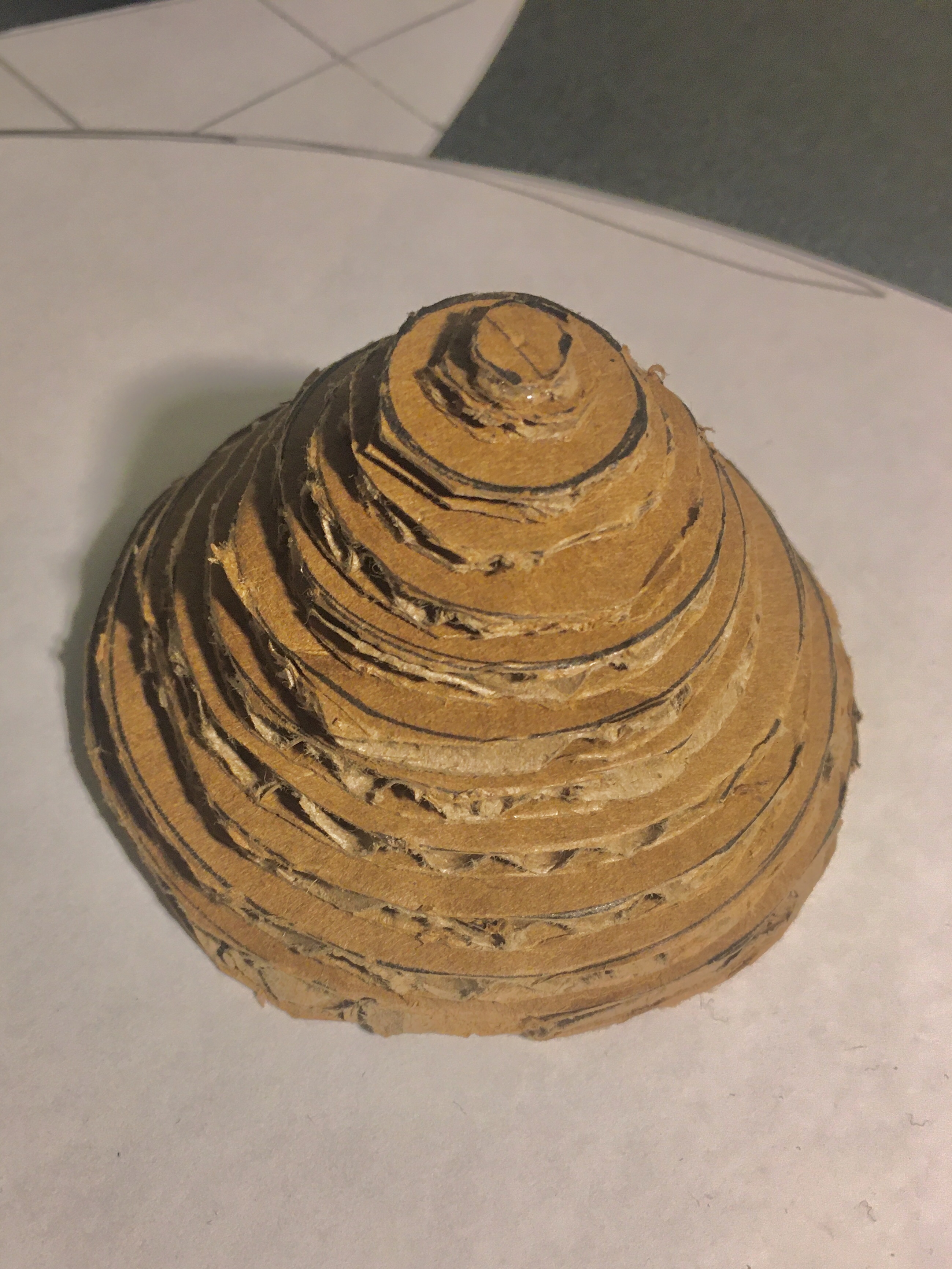
Laminated Cone
The Case of Abstraction
The Case of Abstraction highlights varied utilization of abstraction as a concept over time, with it’s earlier uses dating back to both World Wars into more present documentation today. Abstraction itself is used to communicate while breaking visual cues or rules with organization involved, and uses the complete disregard of organization and unity to create effective art. The removal of unity and visual organization allows for new exploration and takes on what effective art can be, in which abstract artists took full advantage of, making messy and unlinear features and every clashing color scheme imaginable to communicate visual messages. Abstract artists directly tackle “What is the right and wrong ways to make art?” What’s especially interesting from the video is each artwork had a variety of messy to almost strangely clean handiwork. None of their abstract worlds were the same.
9/9 Four Main Forms + Artist Research
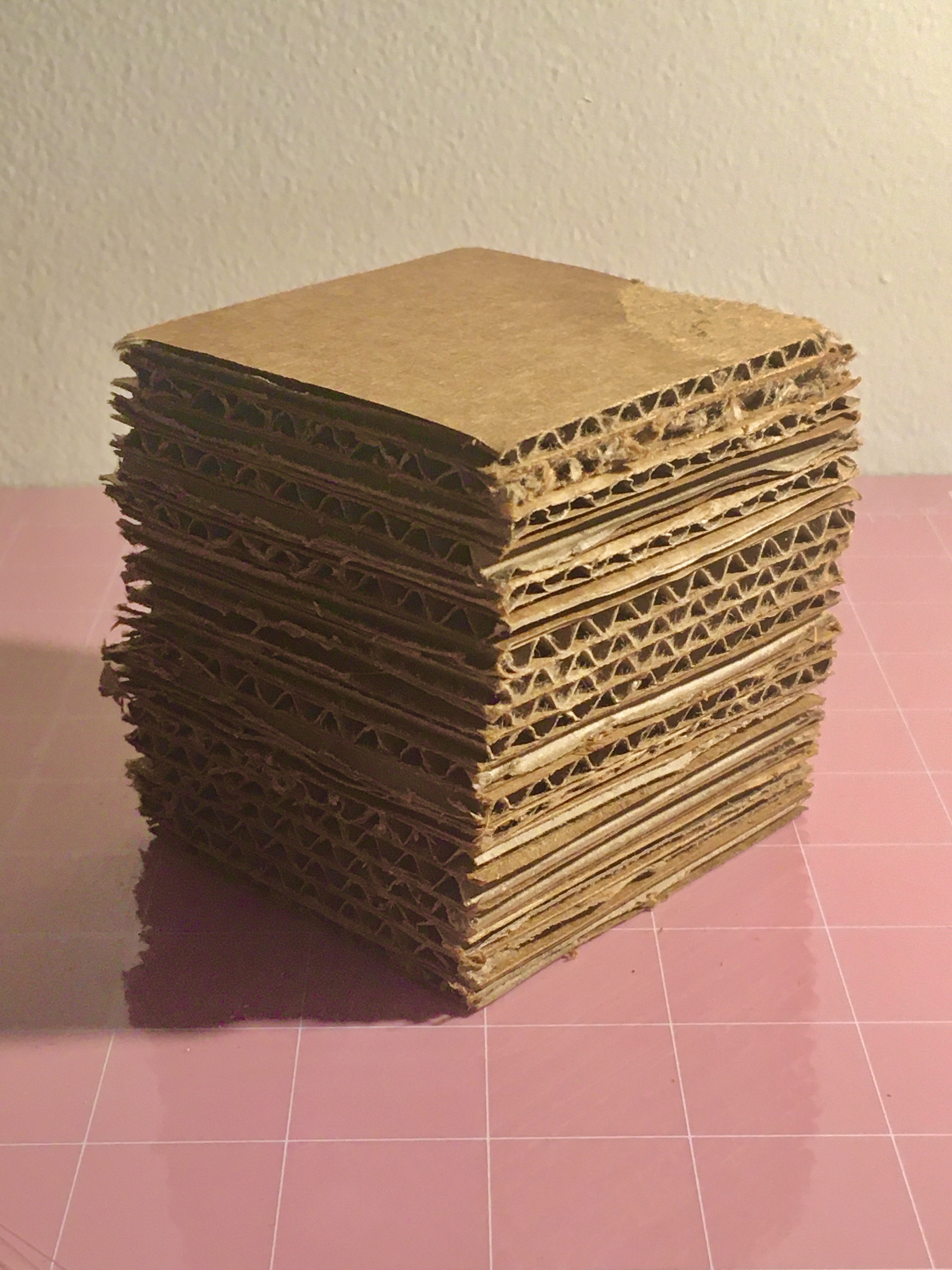
Laminated Cube 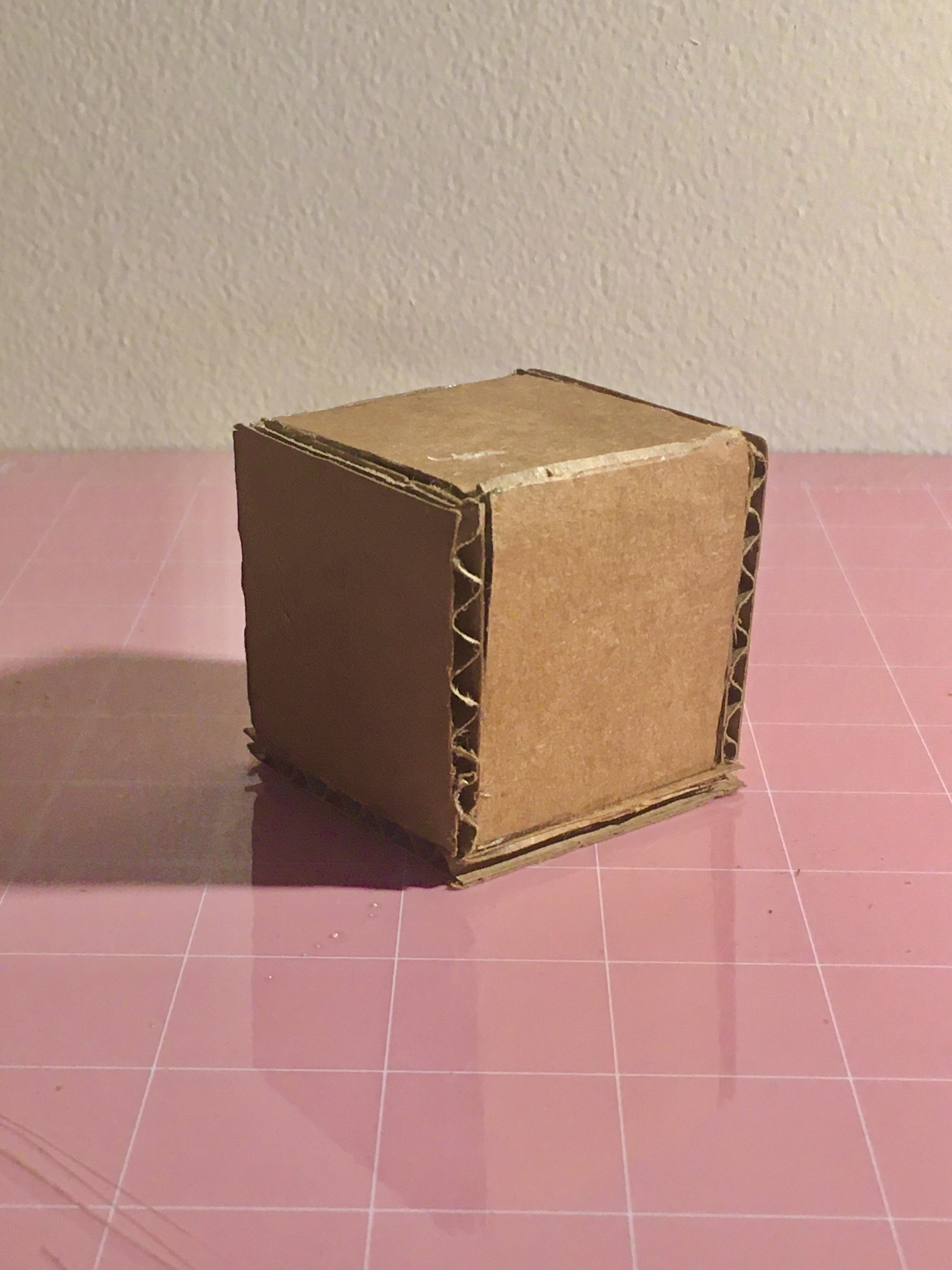
Hollow Cube 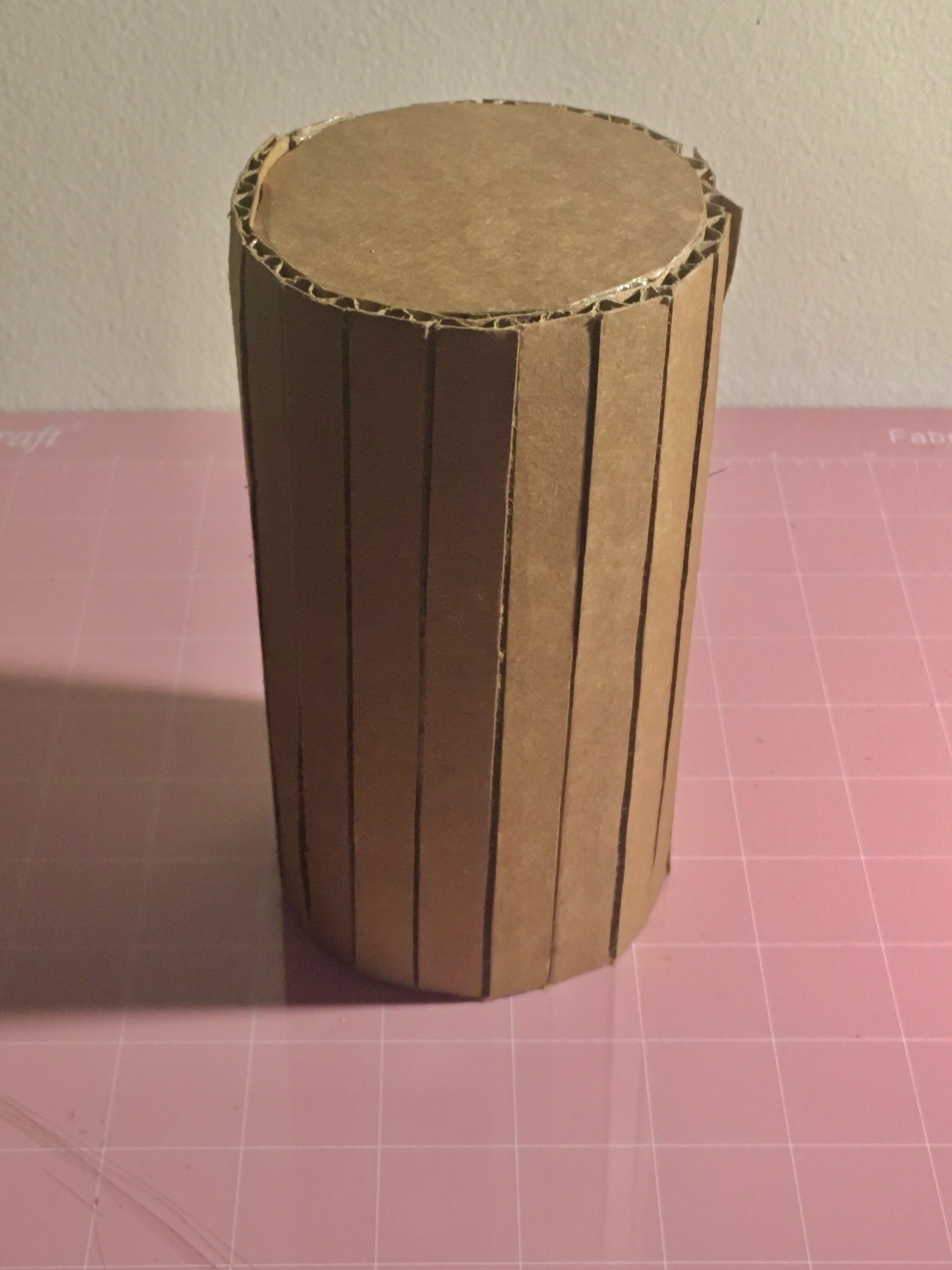
Hollow Cylinder 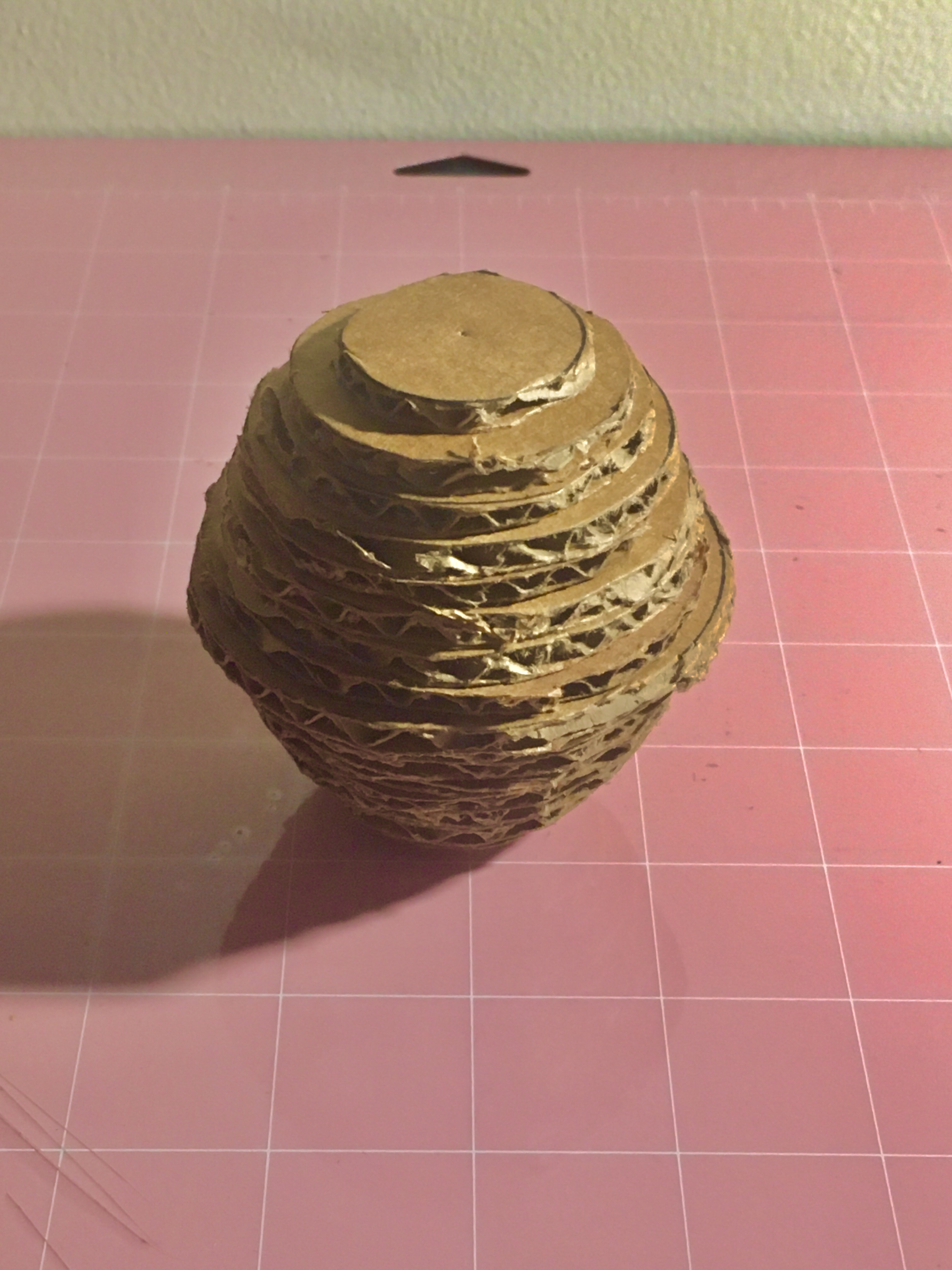
Tash’s “Egg” (1/2) – Laminated Sphere 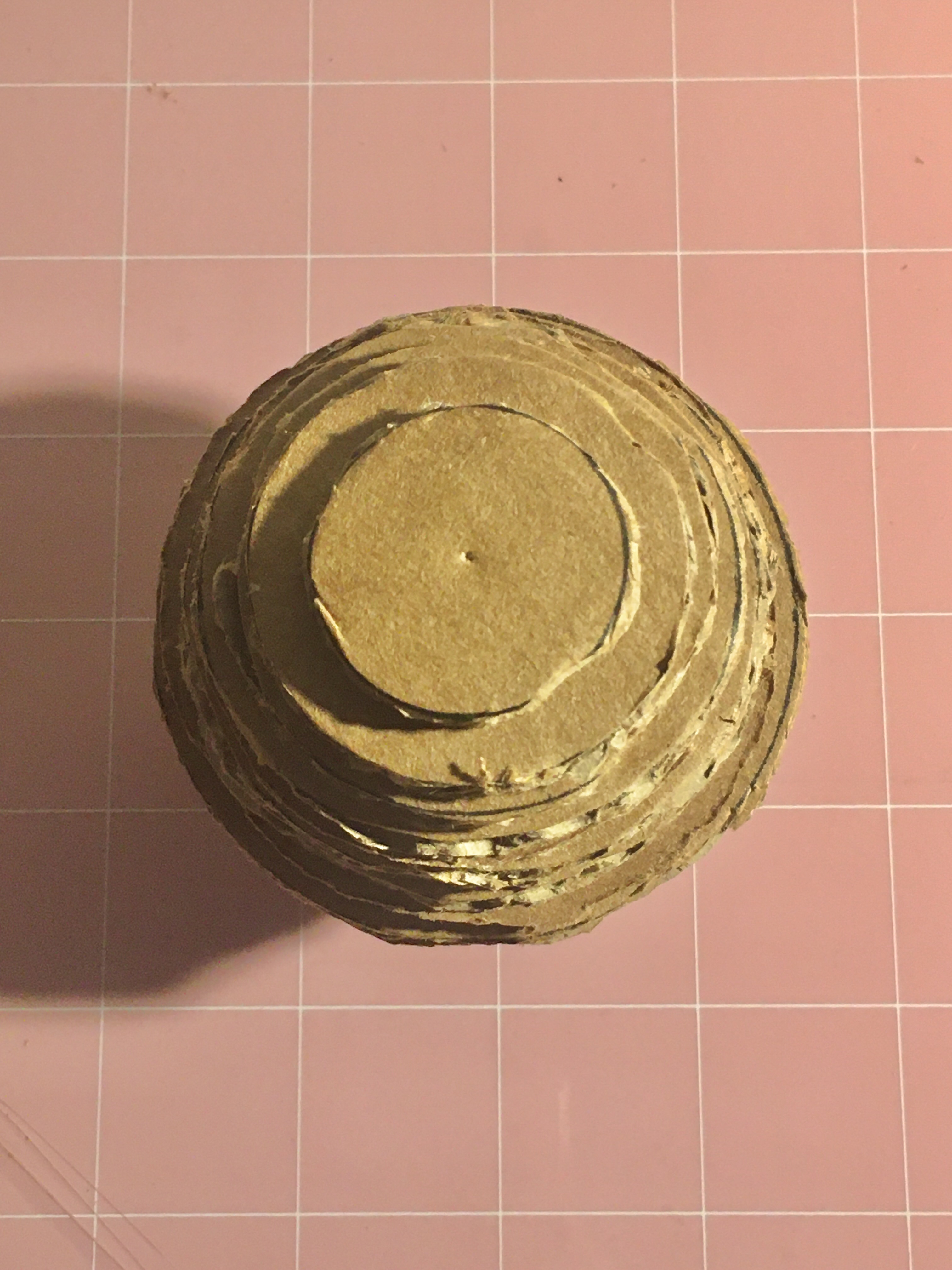
Tash’s “Egg” (2/2)
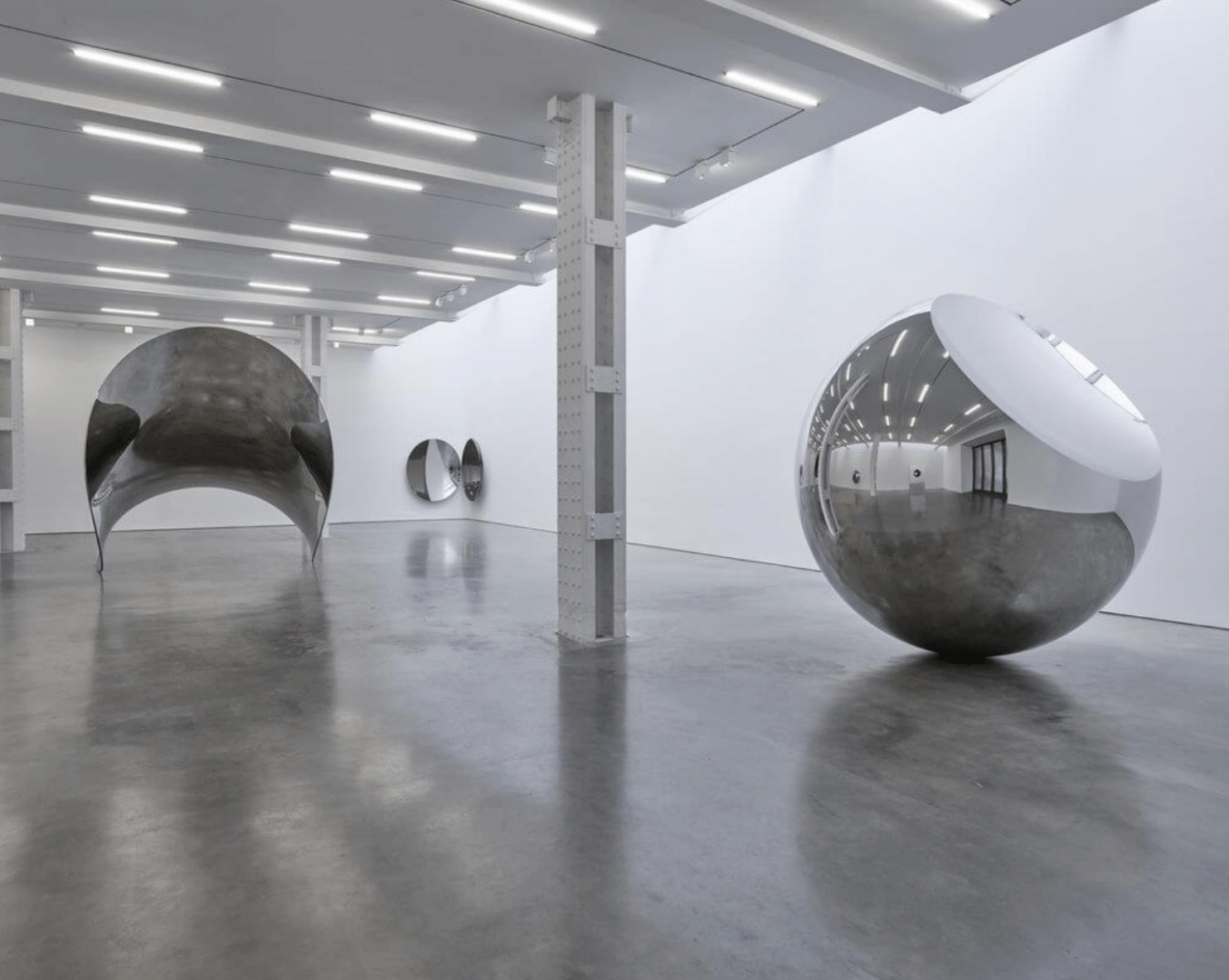
Artist Research — Amish Kapoor
Amish Kapoor is comically known for his Bean located in Chicago and much larger gatekeeping of the darkest black across the world. I’m already excited to explore how I learned about his work.
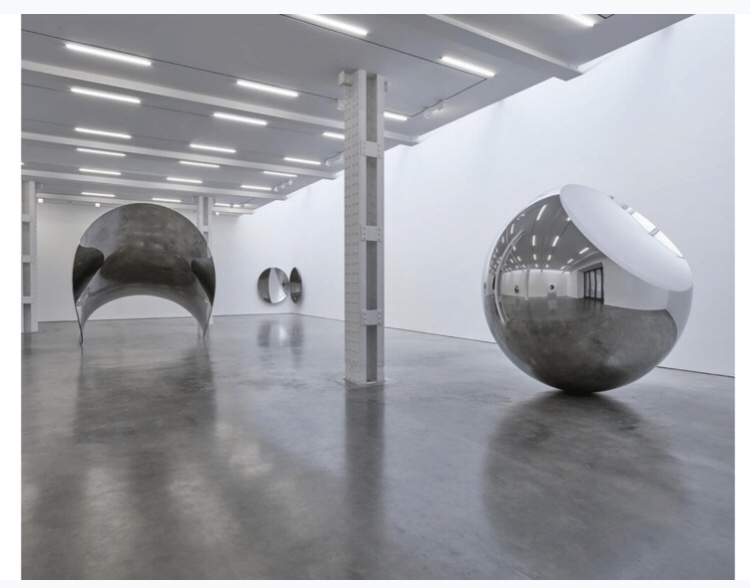
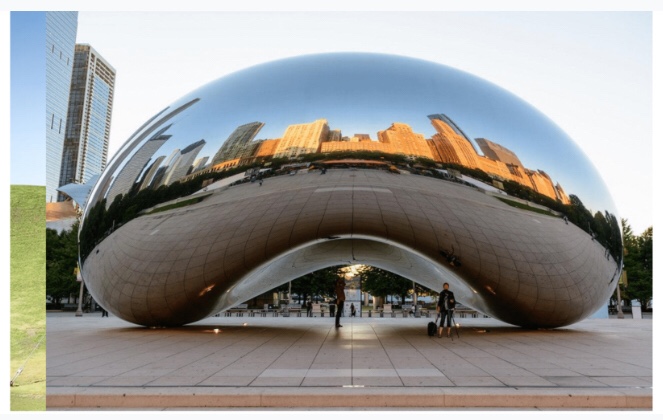
It’s comical as I’ve never found the Bean especially astonishing as I live in Chicago, and bypass it nearly everyday while walking home from school. After learning about Stuart Semple’s video highlighting his Pinkest Pink, Anish’s legal gatekeeping of the Blackest Black added a colorful context that entertained my daily walk home from school. Semple legalizes use of The Pinkest Pink to anyone other than Anish, who pettily snaps through social media. What I find especially entertaining is Anish has the capability to lute viewers into these wonderful, translucent bubbles his work creates, but he’s the first to begin excluding people from something just as wonderful (the Blackest Black). I find this strong contrast of his character versus his work’s effects especially intriguing.

 nemo
nemo 