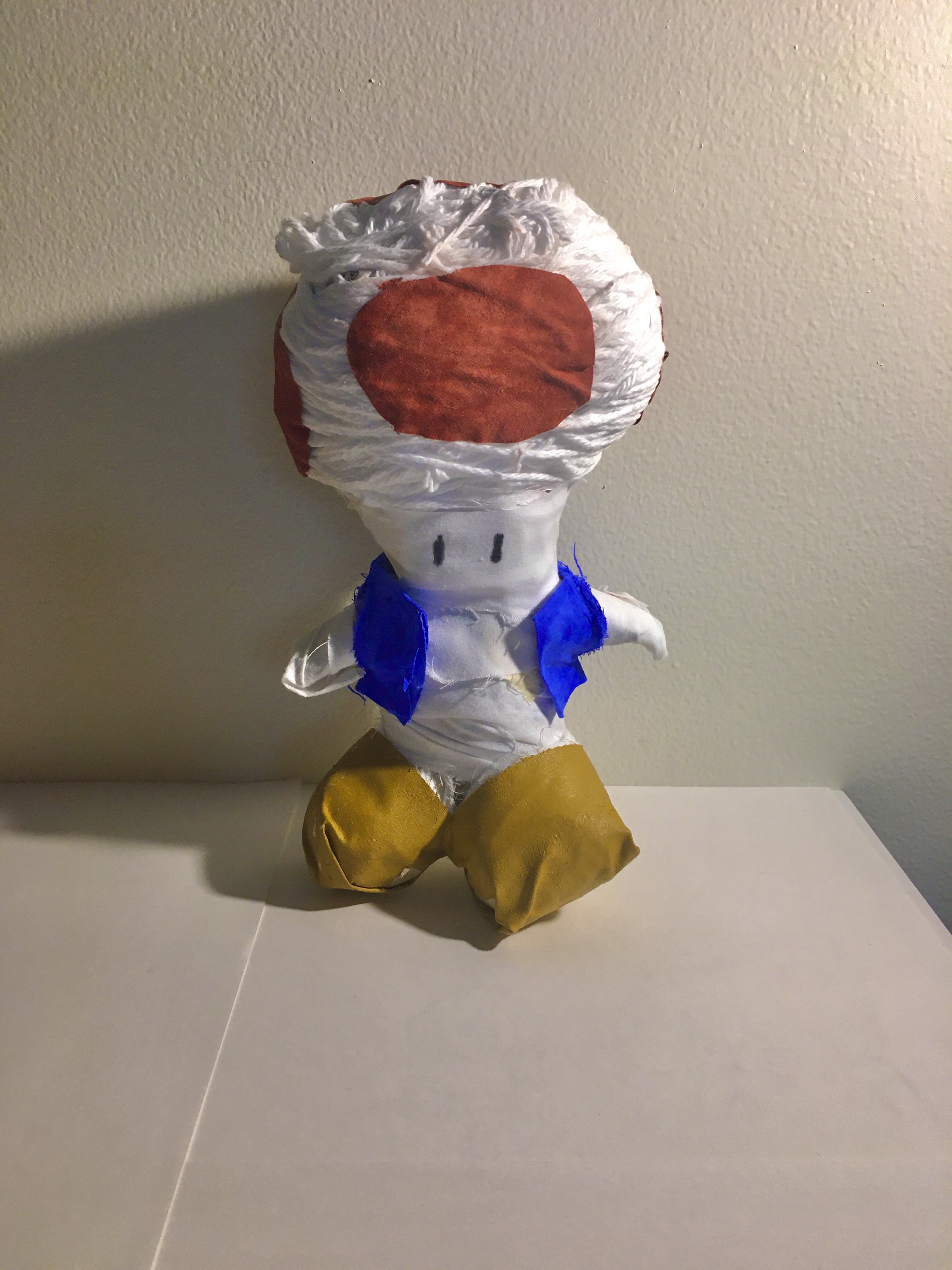
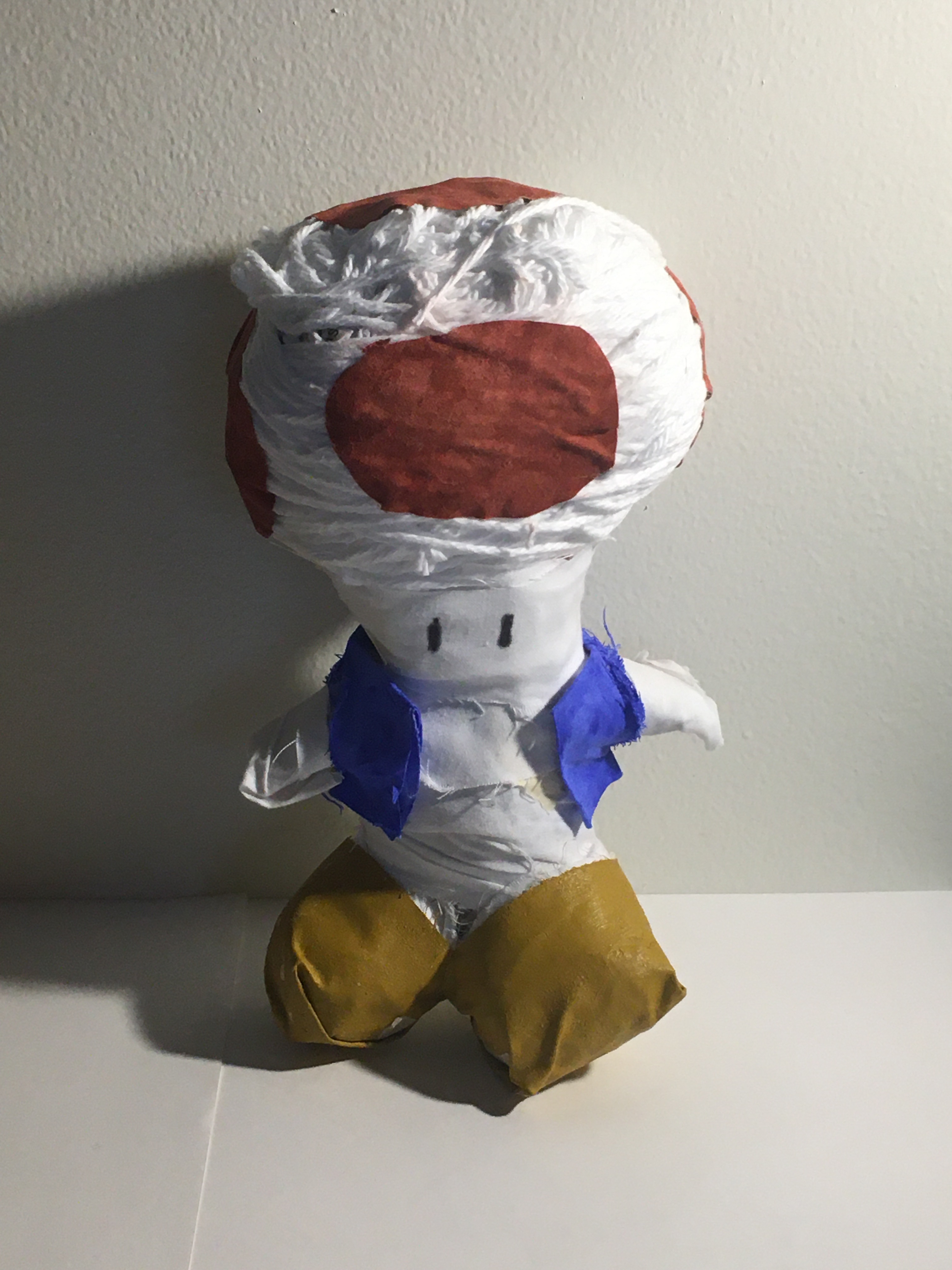
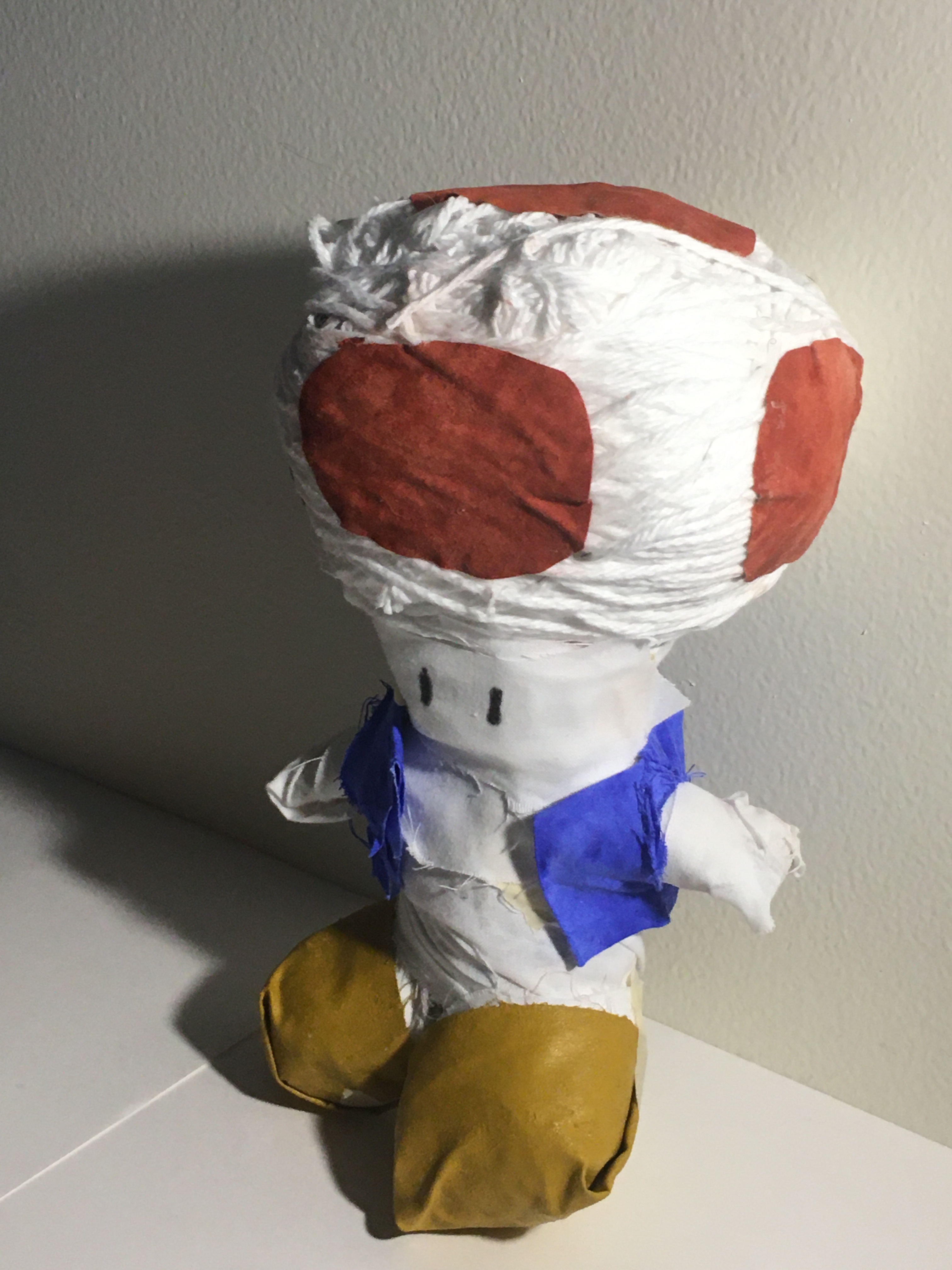
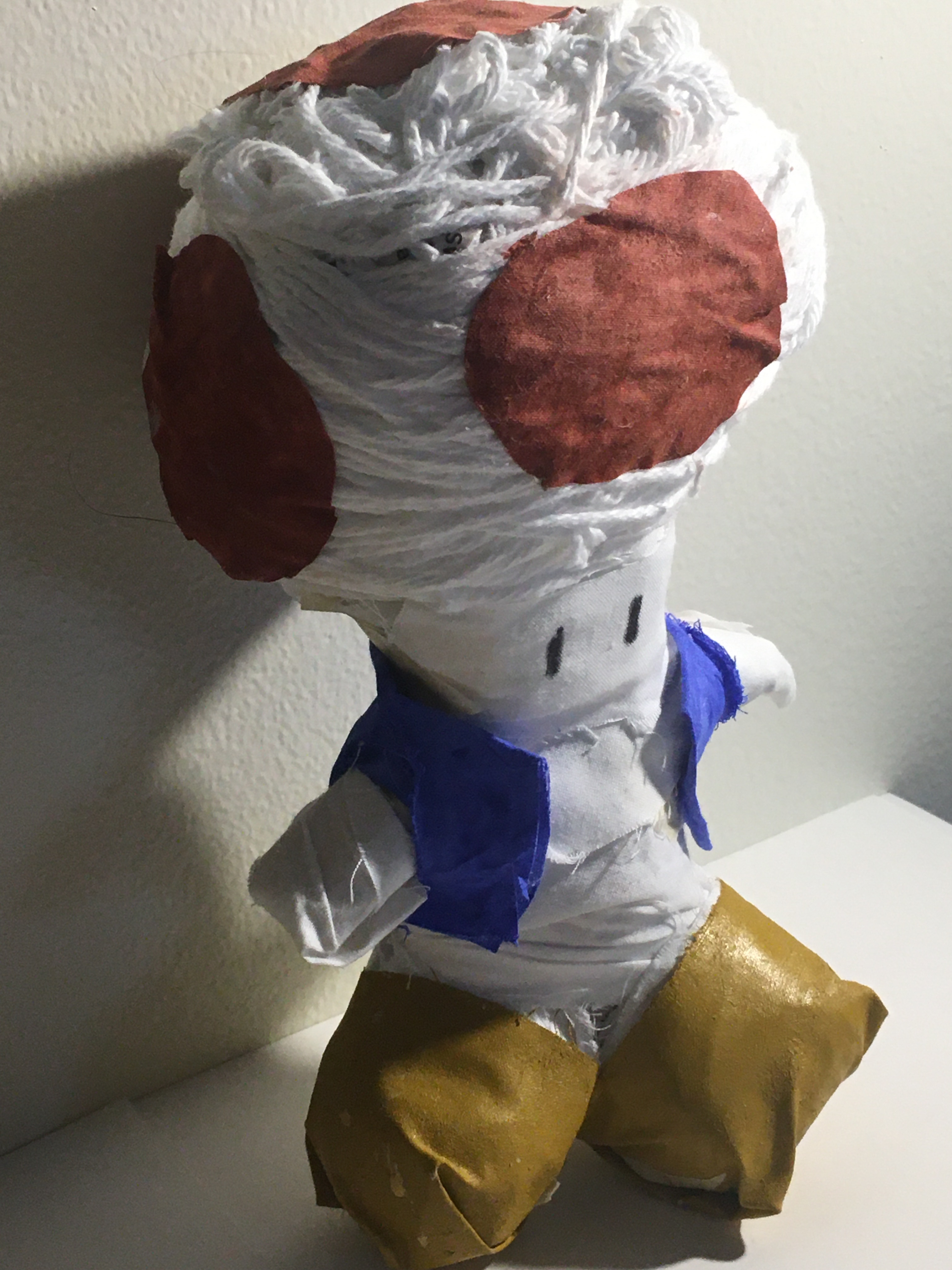
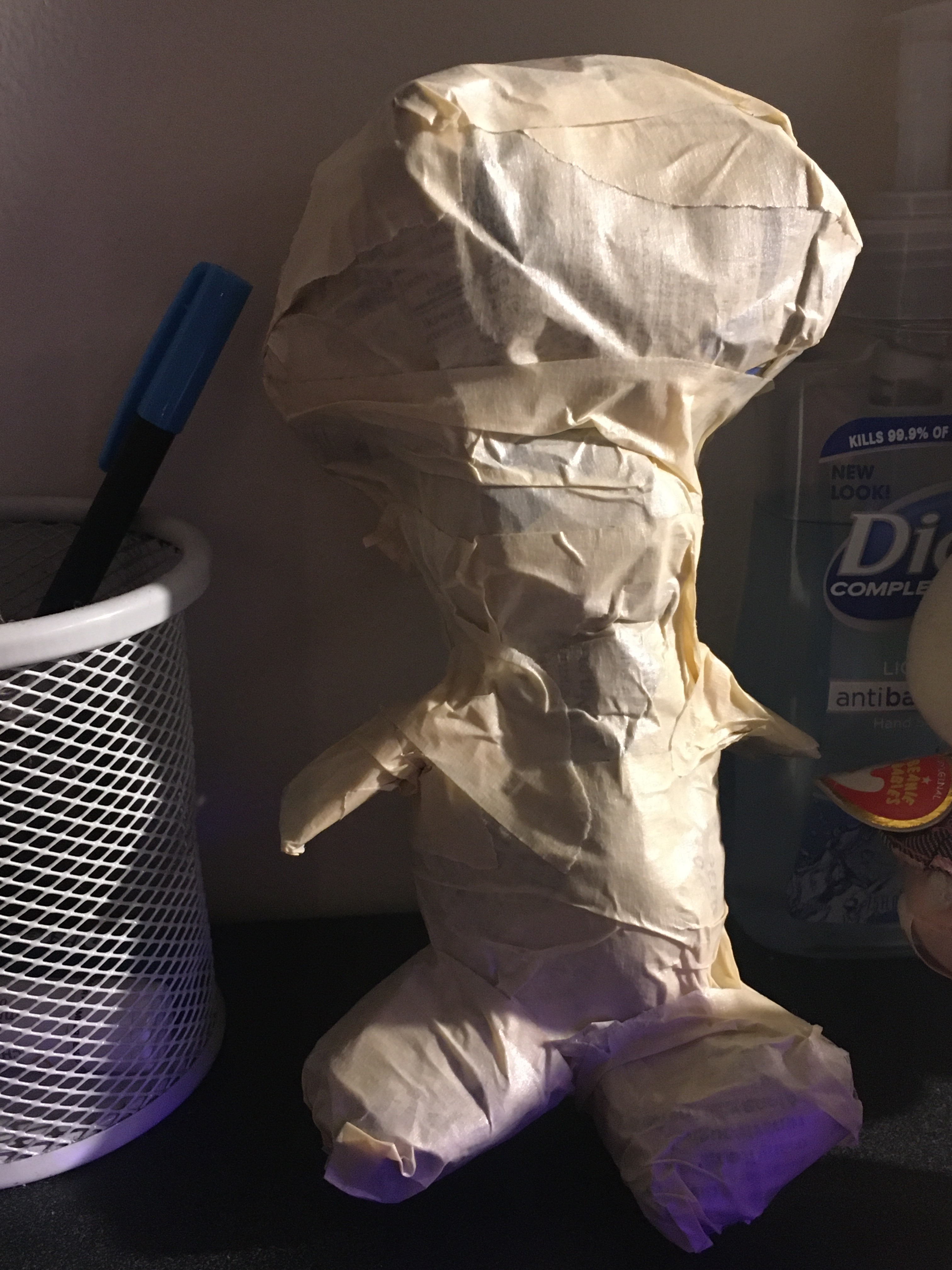
- What object did you choose to replicate and why did you choose it?
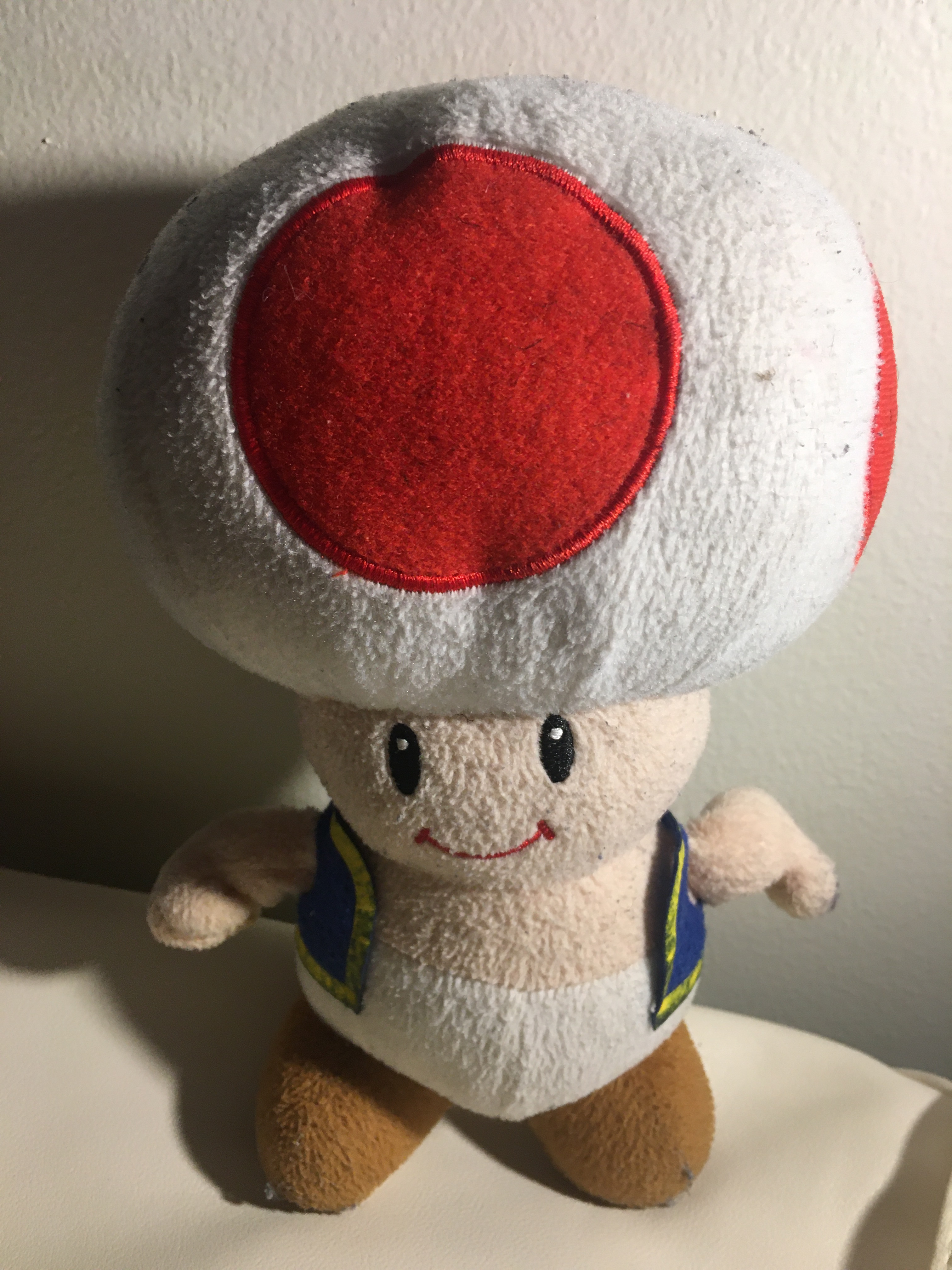
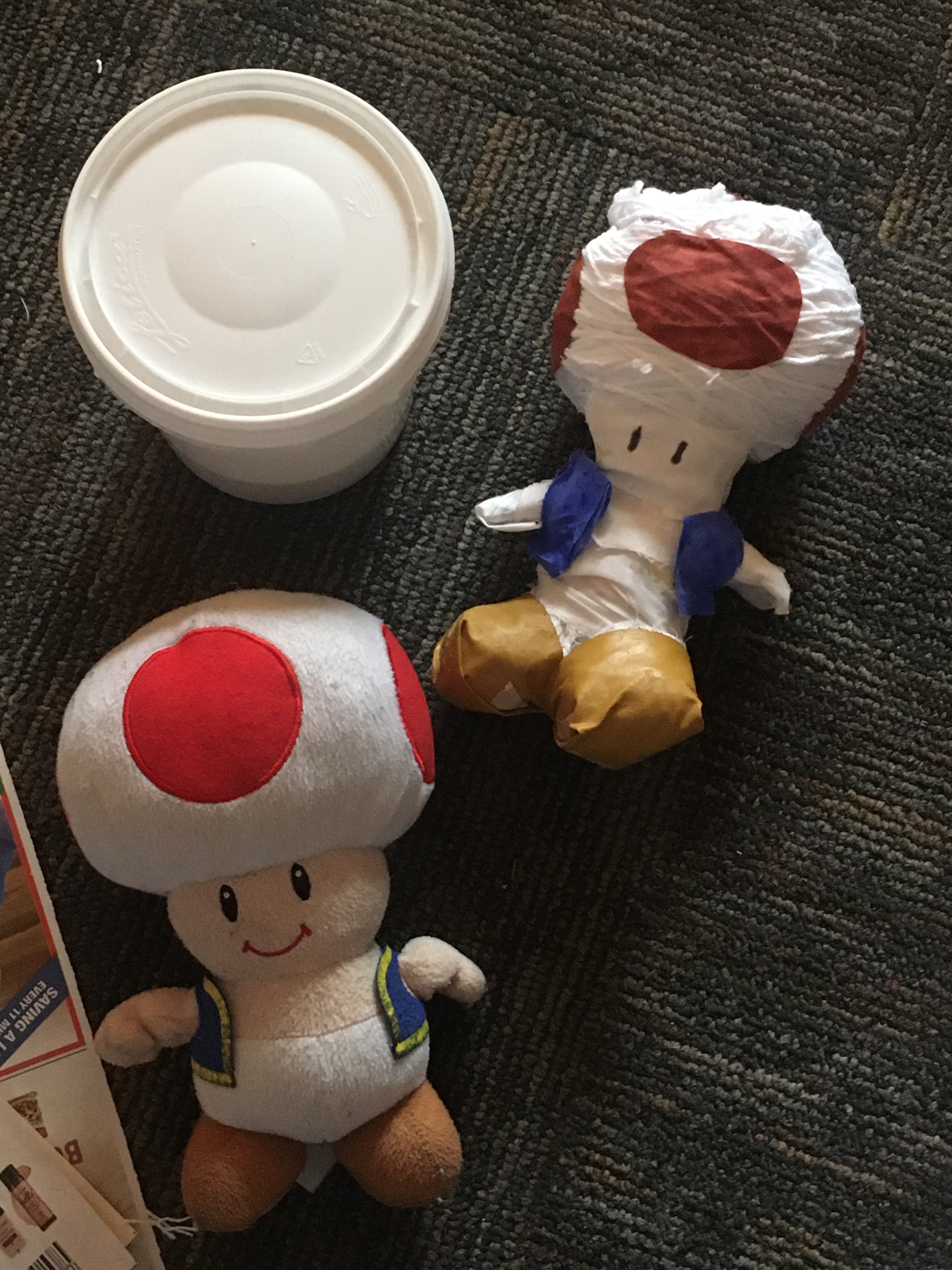
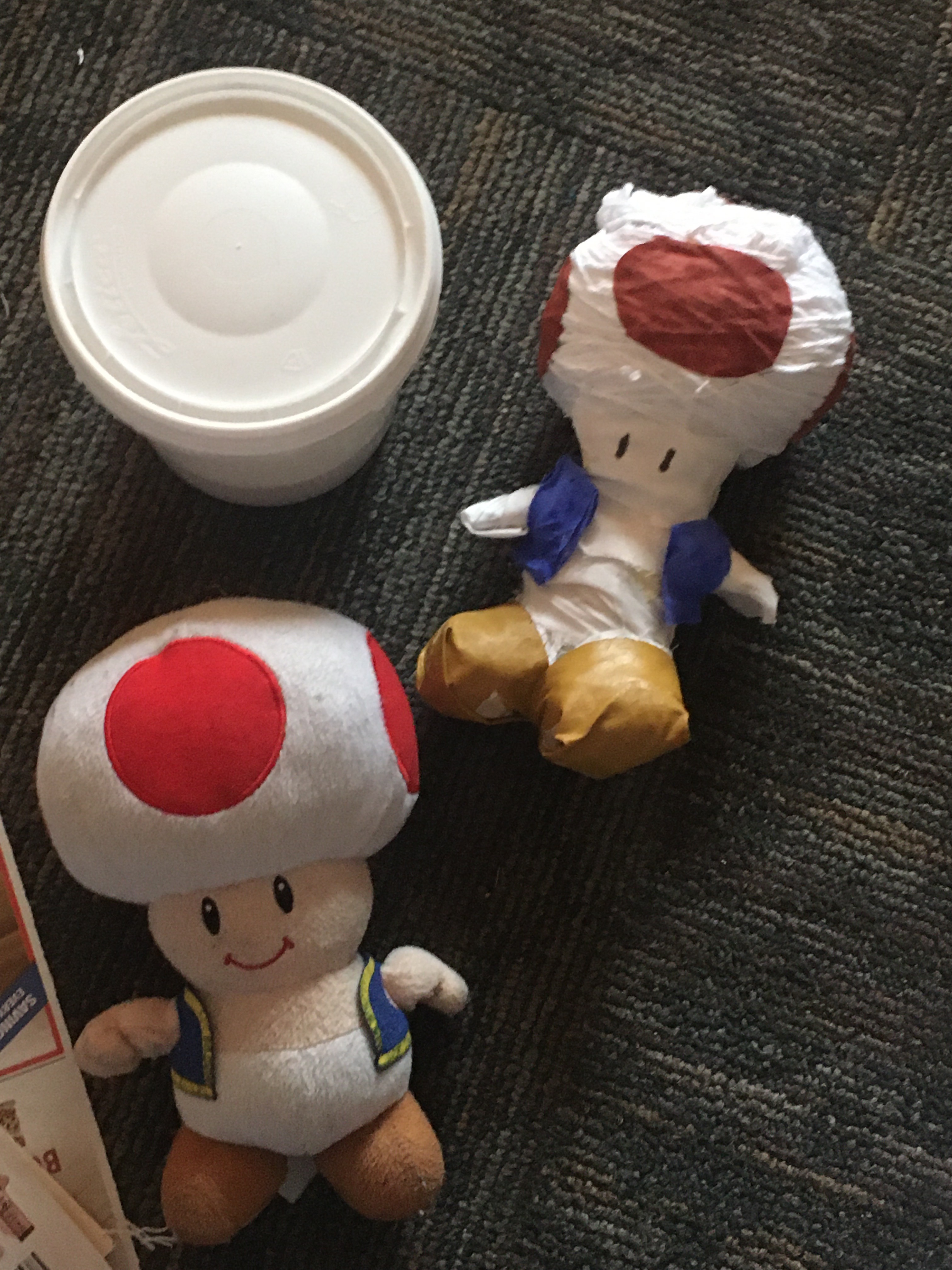
- I chose to replicate a cherished Toad plushie! I reflected on how I obtained each of my plushies on my bed—and for some of them I couldn’t remember where! A toad plushie I own falls in that category as a squishy, bouncy joy over four-ish years. I specifically chose toad as my object as we have a habit of waking up to him repeatedly on my floor every morning—originally on my bed. How he meets the floor is a mystery every morning despite my attempts to keep him above. This happens so often I kind of feel bad for the guy and mentally wish him a 6 month break, twice a year. There are many other important layers for Toad as my important object, but I feel this is my most prominent.
- How did you treat the surface of this object and why?
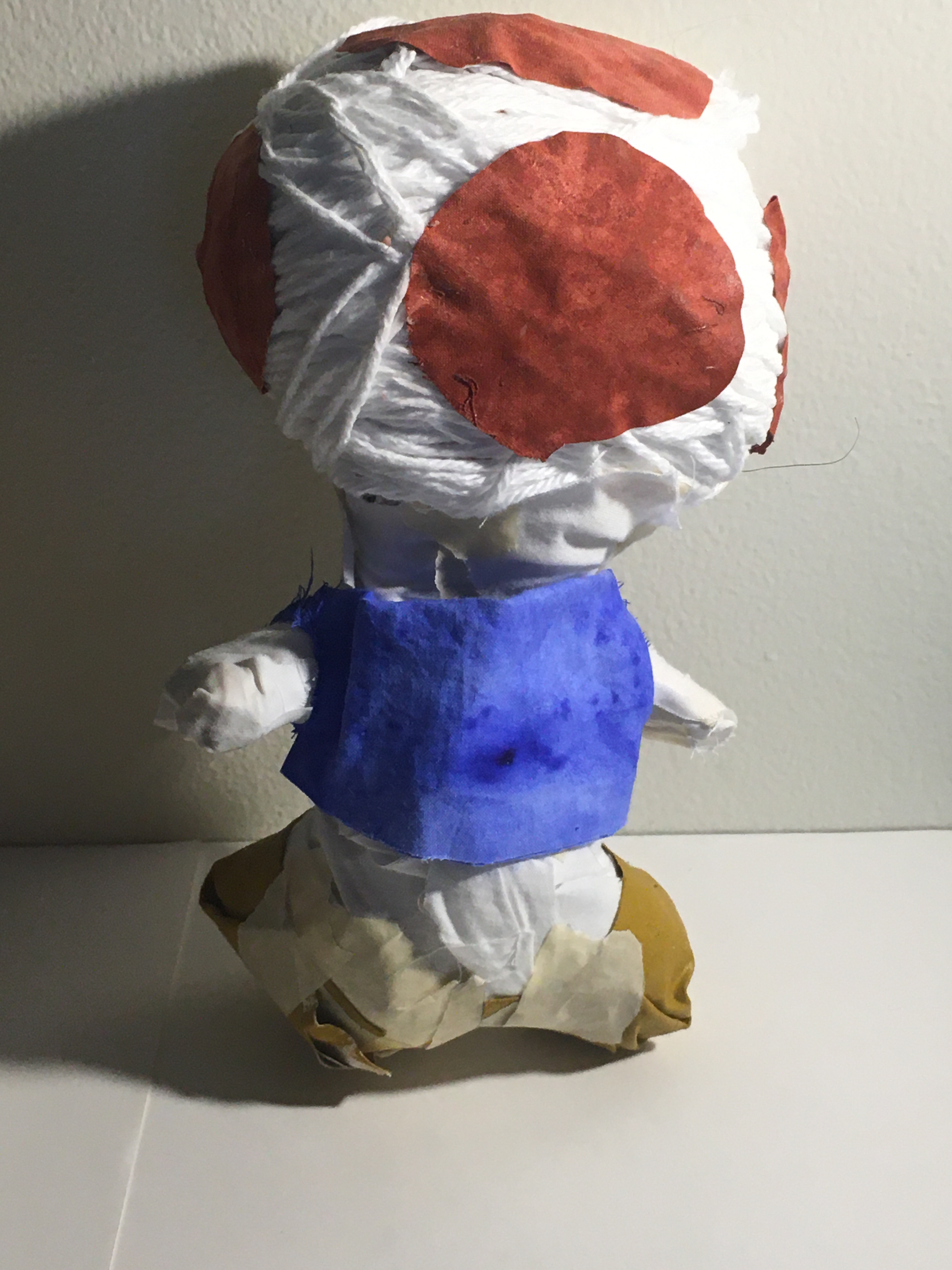
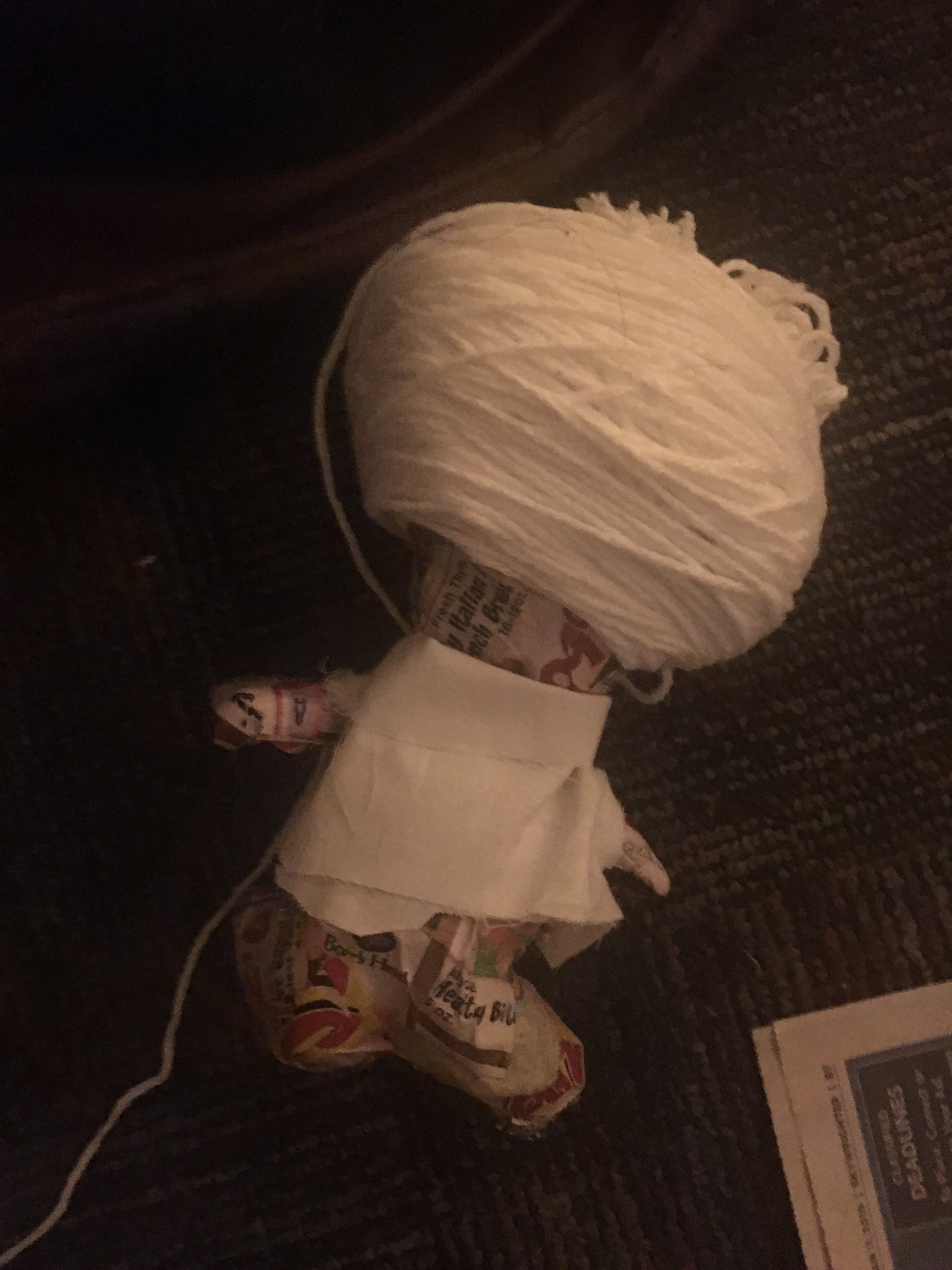
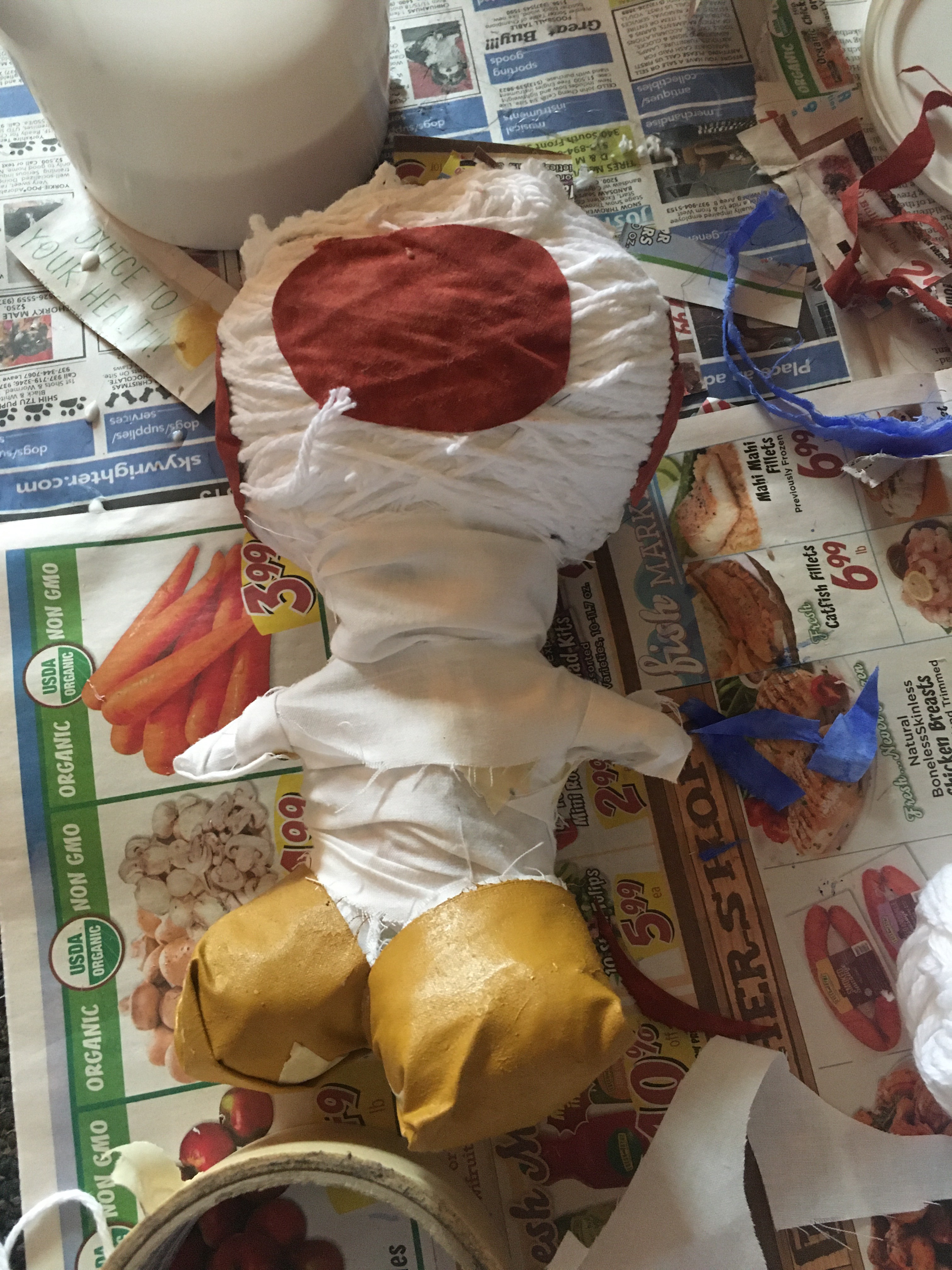
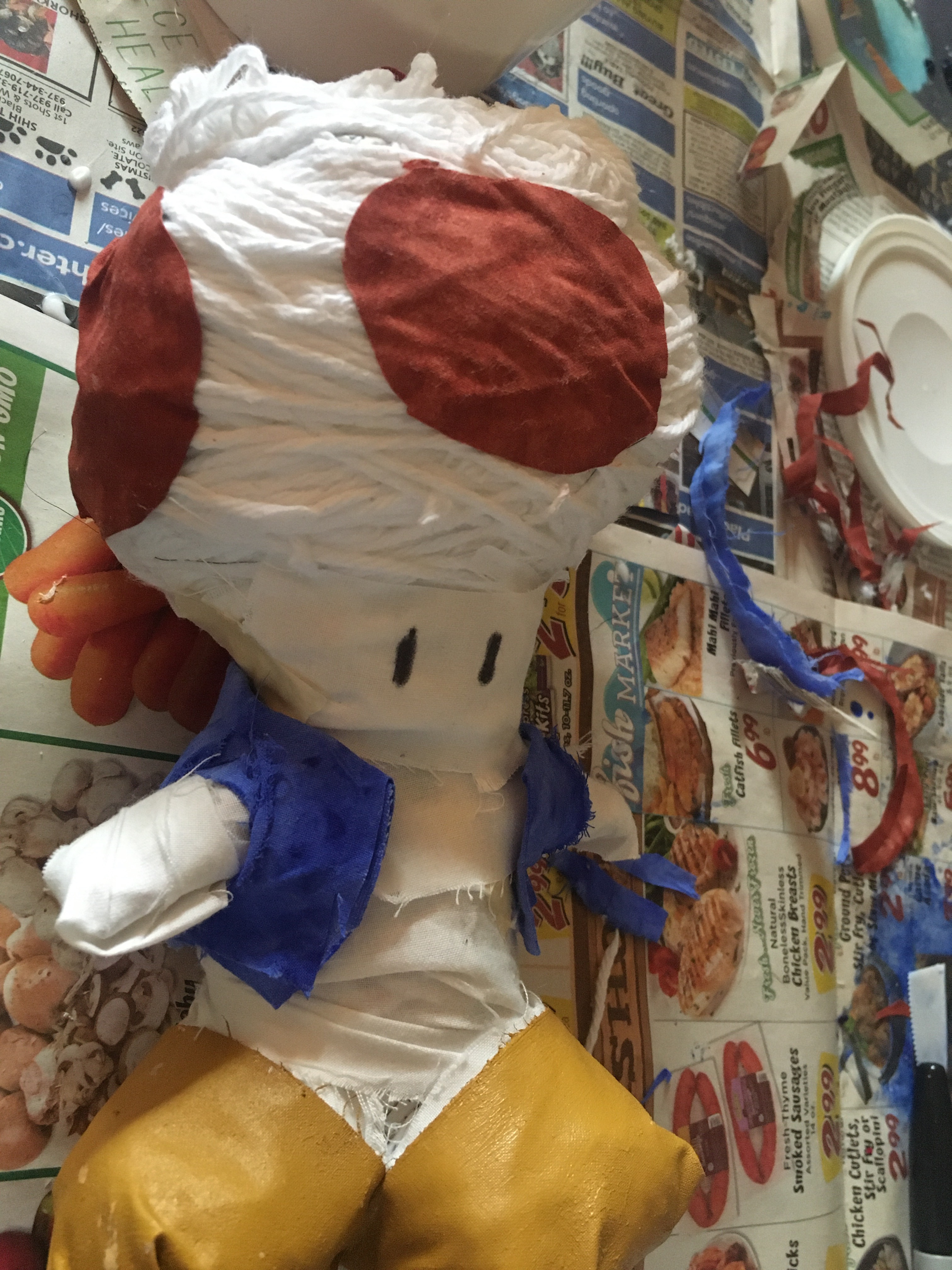
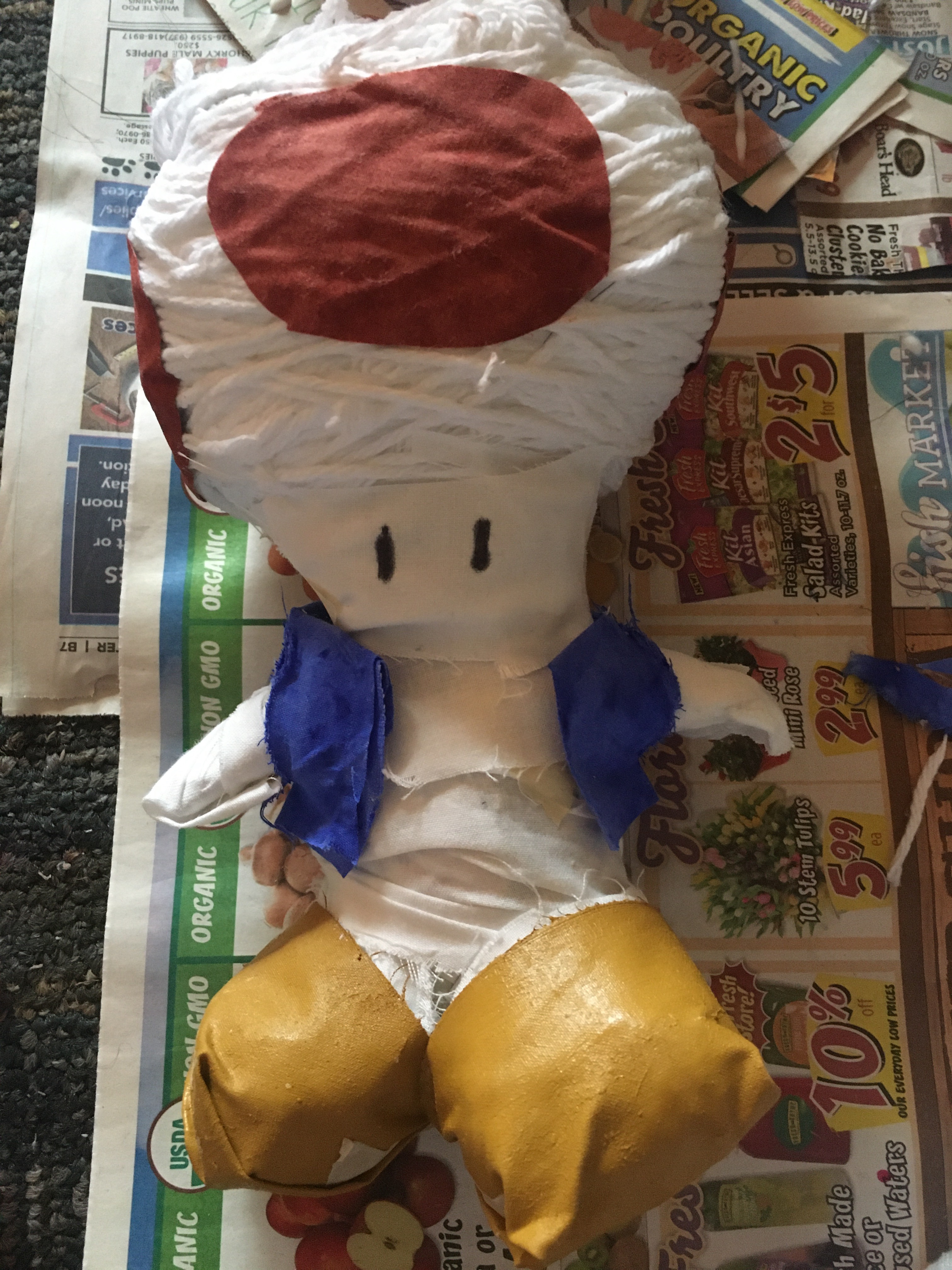
- Toad softness was intentionally indicated through wrapped yarn around his figure, as I want to emphasise his softness as a long time kept plushie. I wanted to paint a soft, squishy, approachable image despite the many hardened materials made to replicate Toad.
- What was your intention?
- My intention is to mirror Toad’s simplicity and reflect on just how much I cherish the plushie, along with his humored backstory. I made sure to simplify his face to enable a simplified and much cuter image to further paint lovability.
- How did you transform this everyday object into something new?
- By using everyday objects and leftover paint that regularly collects dust in my room, I replicated the many physical and story-based layers of a well cherished and appreciated plushie. With everyday found studio appliances, such as tape, worn fabric, acrylic paint, yarn, and newspaper, I was able to paint a somewhat cute Toad. Yarn was used to especially replicate Toad’s softness in a visual (and hopefully physical) means.
- What do you hope your audience gets from your Object?
- I really hope the audience finds Toad a little adorable. I especially hope the kid like, cherish-able qualities of my Toad plushie shines through, and people can maybe draw “well kept plushie that’s seen and been through a lot” as a suitable backstory.
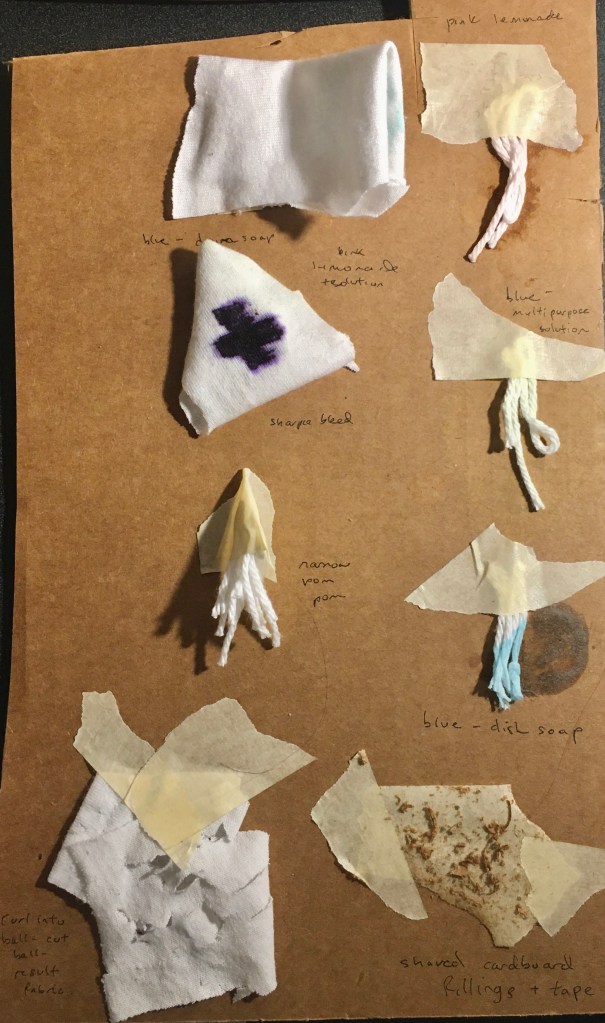
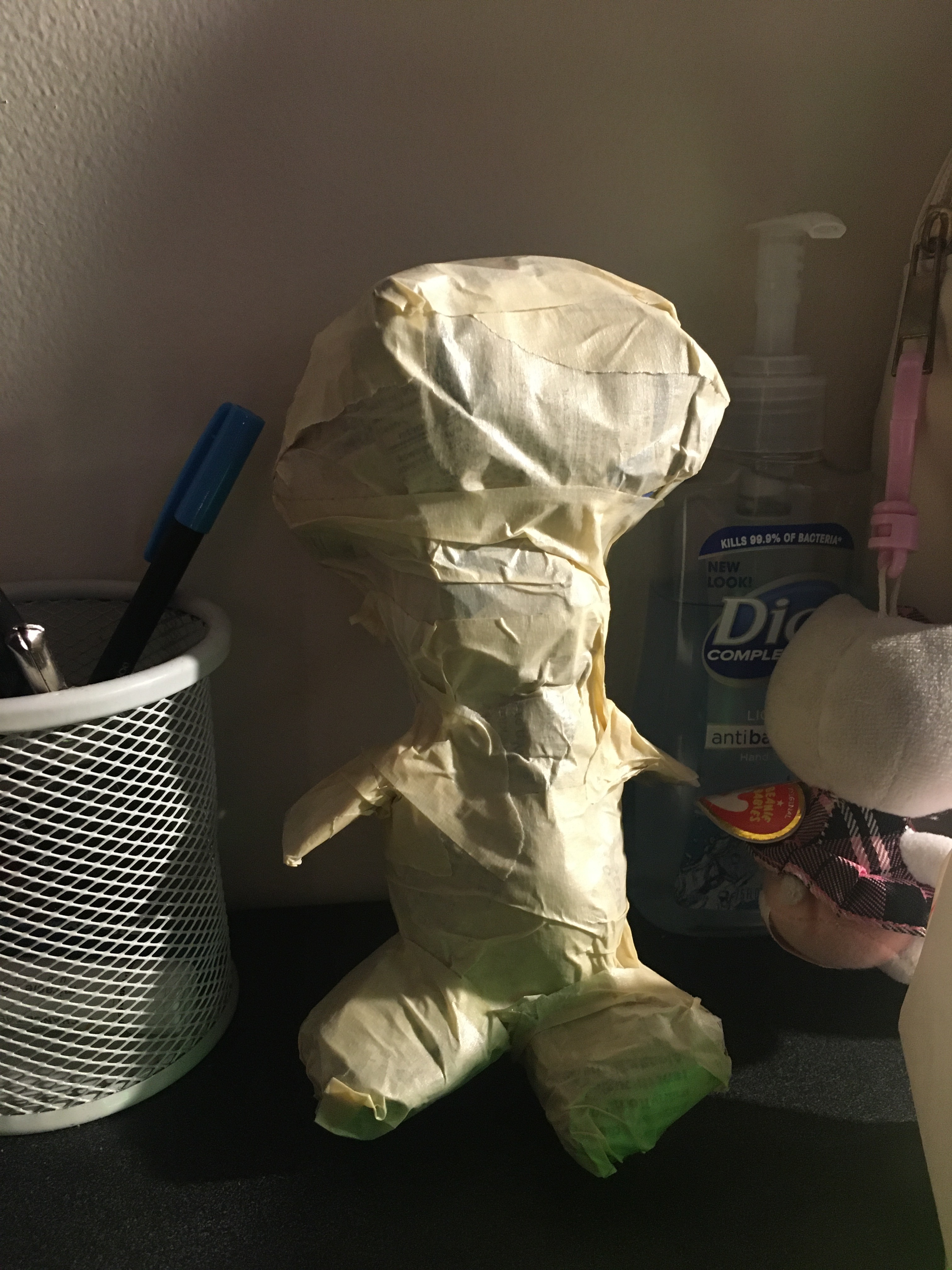
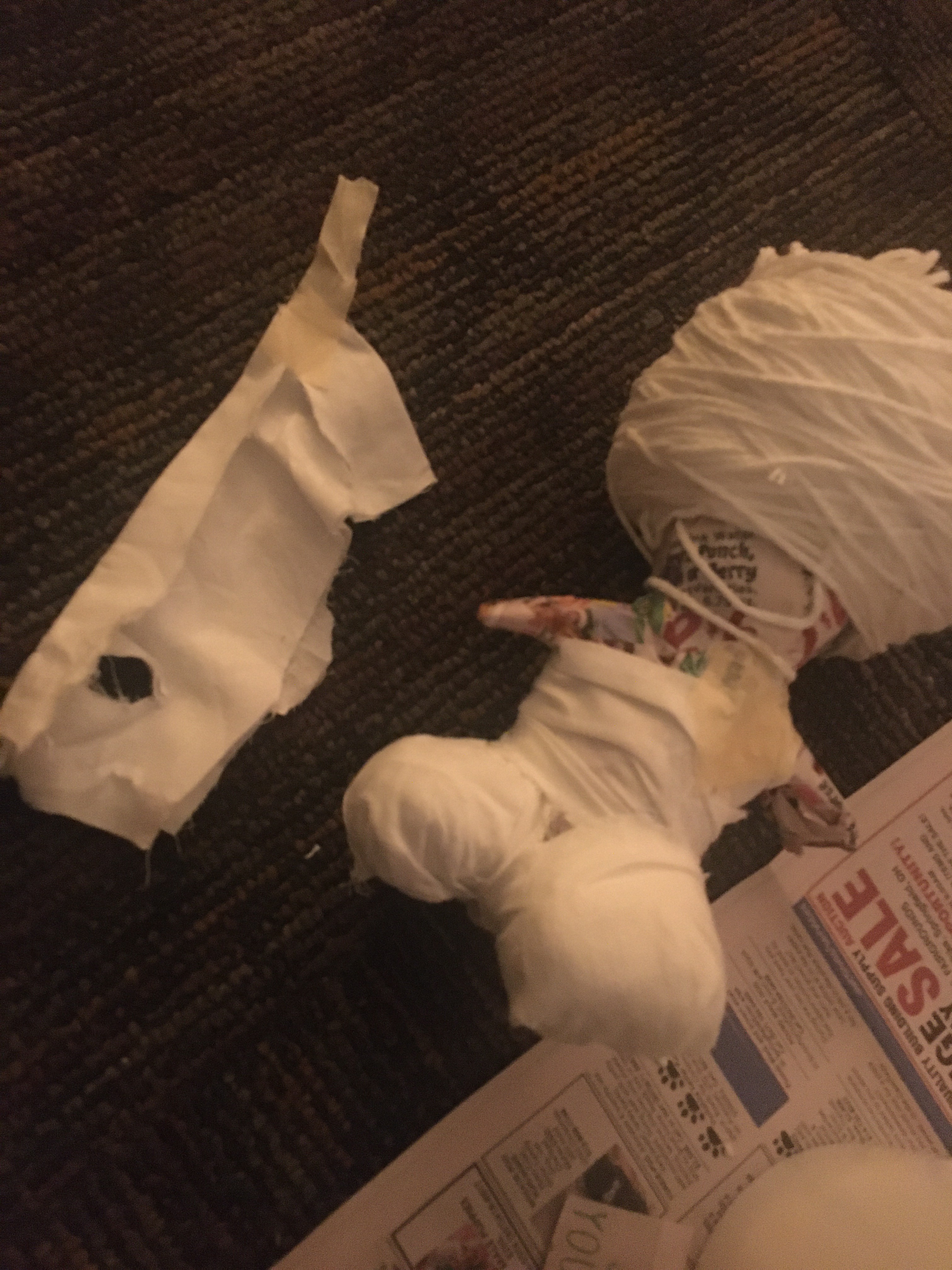
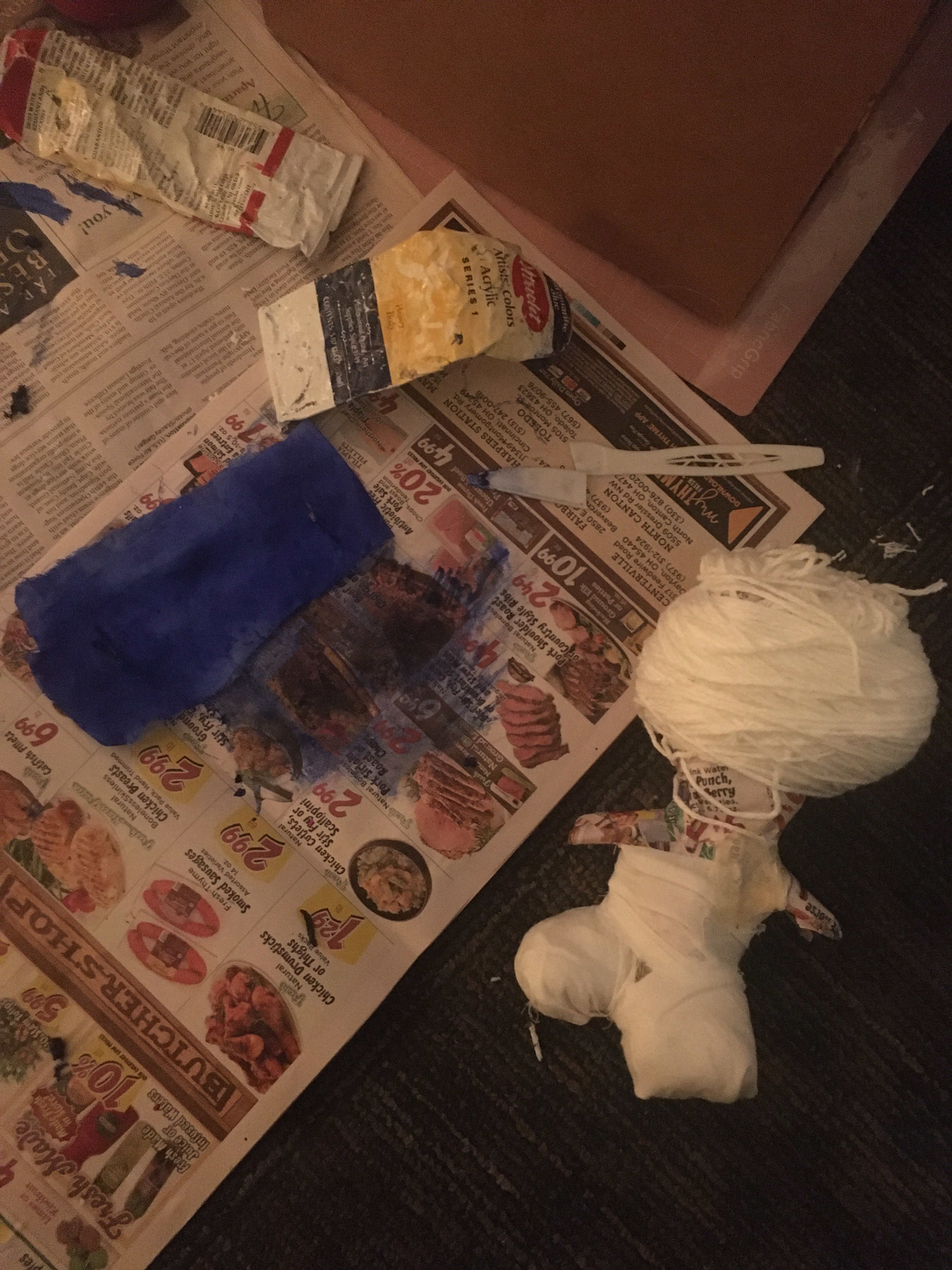
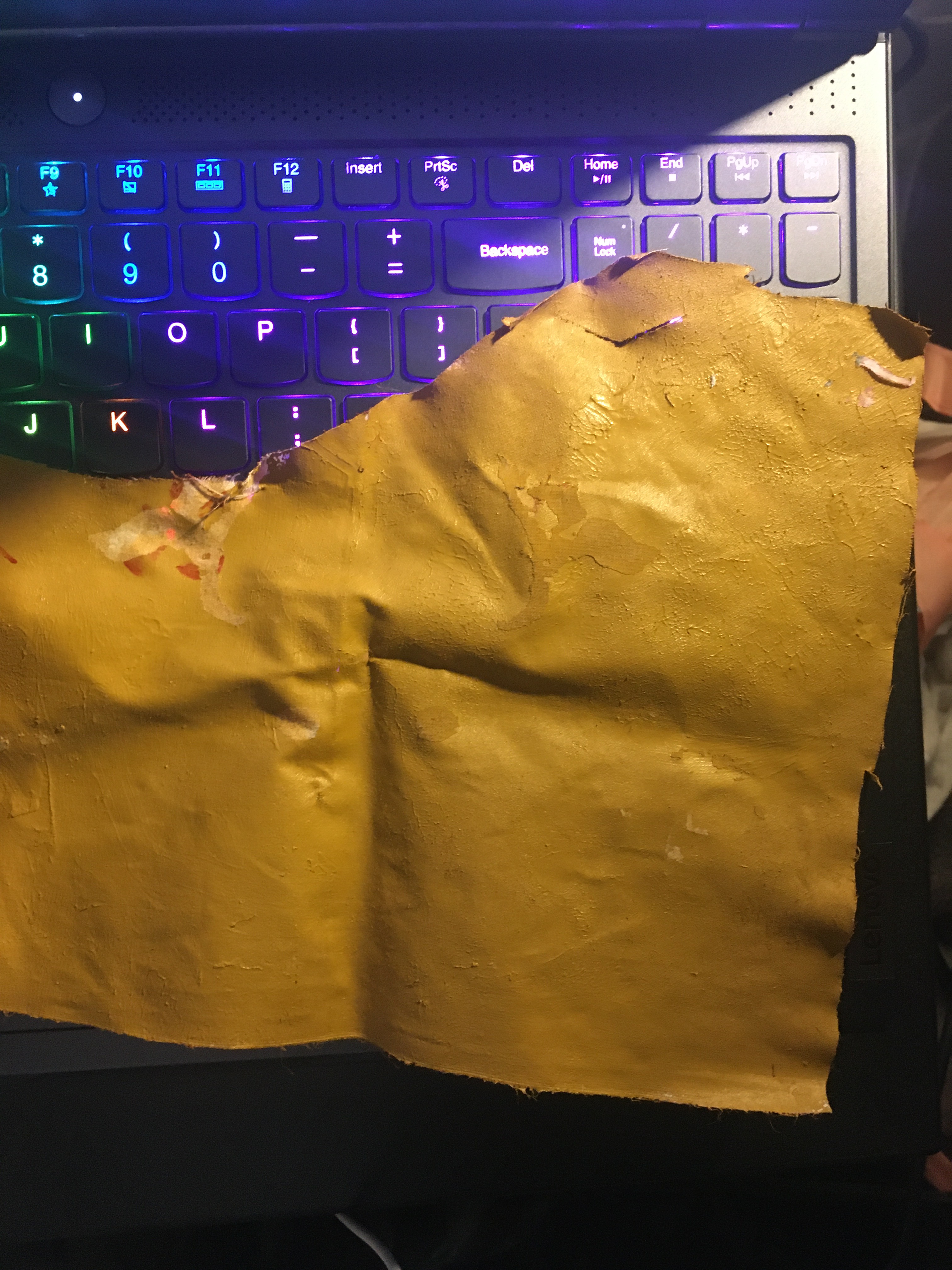
About the making process: Wrapping toad’s head with yarn solved both how to coat his surface with a soft, surface quality AND build and reshape his head to a more Toad-like shape. The main thing to focus on was wrapping Toad until there weren’t any gaps or holes on his head. I sealed, tied and coated the end of the yarn with glue. I made note not to add too much glue or the softness of the yarn would recede and create a hard surface on Toad again. So I used the glue very minimally. Any very loose areas were applied with glue to flatten. His feet endured a similar process, pushing back the yarn occasionally to ensure no open gaps. His jacket had a stranger process: coating a piece of fabric with incredibly dry, worn out and untouched-for-years Ultramarine Utrecht Paint. My “palette knife” broke in the process!
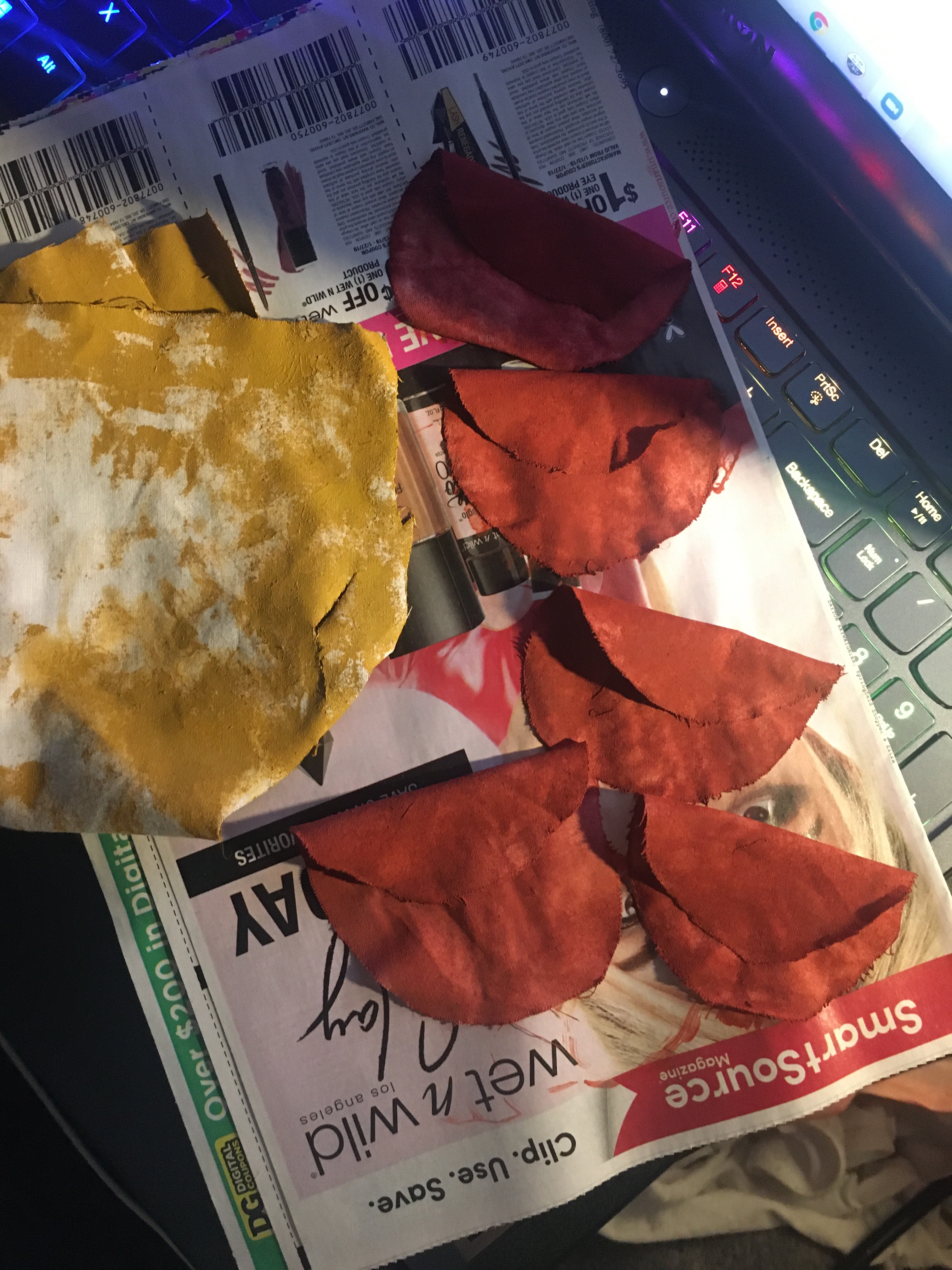
For Toad’s colors I cut out slips of fabric and handcoated them with leftover paint. When transporting them back to my room (as the painting process was done in a bathroom) I used a newspaper to carry the material. The fabric dried to a crisp, making it hard to peel without flaky paper leftovers! I glued the messier sides to Toad’s figure to conceal them. Some were a little too big and were trimmed down. I tried wrapping yarn around Toad’s face, but quickly lost his identifiable shape and figure while layering yarn. A layer of fabric and sharpie served well enough to replicate Toad’s face simplicity.
 nemo
nemo 